


Web Scraper API
Fetch real-time data from 100+ websites,No development or maintenance required.
SCRAPING SOLUTIONS
Get accurate and in real-time results sourced from Google, Bing, and more.
With 120+ prebuilt and custom scrapers ready for any use case.
No blocks, no CAPTCHAs—unlock websites seamlessly at scale.
Execute scripts in stealth browsers with full rendering and automation
PROXY INFRASTRUCTURE
Over 100 million real residential IPs from genuine users across 190+ countries.
Reliable mobile data extraction, powered by real 4G/5G mobile IPs.
For time-sensitive tasks, utilize residential IPs with unlimited bandwidth.
Fast and cost-efficient IPs optimized for large-scale scraping.
SCRAPING SOLUTIONS
PROXY INFRASTRUCTURE
DATA FEEDS
Full details on all features, parameters, and integrations, with code samples in every major language.
LEARNING HUB
ALL LOCATIONS Proxy Locations
TOOLS
RESELLER
Get up to 50%
Contact sales:partner@thordata.com
Products $/GB
Fetch real-time data from 100+ websites,No development or maintenance required.
Get real-time results from search engines. Only pay for successful responses.
Execute scripts in stealth browsers with full rendering and automation.
Bid farewell to CAPTCHAs and anti-scraping, scrape public sites effortlessly.
Dataset Marketplace Pre-collected data from 100+ domains.
Over 100 million real residential IPs from genuine users across 190+ countries.
Reliable mobile data extraction, powered by real 4G/5G mobile IPs.
For time-sensitive tasks, utilize residential IPs with unlimited bandwidth.
Fast and cost-efficient IPs optimized for large-scale scraping.

Data for AI $/GB
Pricing $0/GB
Docs $/GB
Full details on all features, parameters, and integrations, with code samples in every major language.
Resource $/GB
EN $/GB
产品 $/GB
AI数据 $/GB
定价 $0/GB
产品文档 $/GB
资源 $/GB
简体中文 $/GB
Blog
blognew-trends-in-web-data-scraping-in-2026-how-does-thordatas-residential-proxy-solve-the-anonymity-and-stability-challenges
When data becomes the oil of the new era, the scraping tool is your drilling platform.
Data Scraping in 2026: Why are Residential Proxy Agents Becoming a Necessity?
If you’re still using data center proxies for large-scale data scraping, you’ve probably encountered these problems:
Your IP is being banned faster than you can change it; you manage to bypass Cloudflare, only to find your data is blocked; you want to scrape precise data from a specific region, but you can’t get the local perspective.
This isn’t a technical problem—it’s a change in the rules of the game for the entire industry.
According to a report by security media Krebs on Security, since 2019, the rate of abuse detection for residential proxy networks has exceeded 90%. This means that with the comprehensive upgrade of anti-scraping technologies, traditional data center proxies are rapidly becoming ineffective. By October 2025, Cloudflare will have blocked all AI crawlers by default, covering more than 24 million active websites.
In this context, residential proxies are no longer an “optional” choice, but a “necessary” choice for large-scale data scraping.
What is a residential proxy? Why is it so important?
Residential proxies use ISP-assigned IP addresses from real user devices, not data center servers. These IP addresses originate from millions of real home networks worldwide, making each request appear to come from a real, ordinary user online.
This technical architecture brings two decisive advantages:
When you make a request using a residential IP, the target website sees a real user. In contrast, data center IP address ranges are publicly traceable, easily identified and blocked by any experienced anti-scraping system.
Because residential IPs are difficult to identify as “crawlers,” they can successfully access websites that heavily guard against data center proxies, helping data scraping tasks achieve stable and continuous operation.
Technical Challenges of Residential Proxies: Why Aren’t All Proxies the Same?
While the concept of residential proxies sounds simple, building a truly stable and reliable residential proxy network faces significant technical challenges:
Challenge 1: The Size and Health of the IP Pool
A healthy residential proxy network requires a massive number of real IPs distributed globally. More importantly, these IPs must be “active”—IPs that have been inactive for a long time or have been abused are also easily identifiable.
Challenge Two: Connection Success Rate and Stability The biggest fear in data collection is not slow speed, but instability. A successful collection may require tens of thousands of requests, and failure at any stage can lead to incomplete datasets.
Industry benchmark tests show that the success rate of top residential agents typically fluctuates between 60% and 70%. This means that even among the best service providers, about one-third of requests may still fail.
Challenge Three: Geographic Location Accuracy For scenarios such as cross-border e-commerce, ad verification, and localized SEO, the accuracy of IP geographic location is crucial. You need not just a “US IP,” but a “New York State IP using a specific ISP.”
Challenge Four: Response Speed and Concurrency Capability During large-scale collection, response time directly determines collection efficiency. According to actual test data, the average response time of top residential agents is between 1.2 and 2.5 seconds, while poorly performing service providers may have response times exceeding 3 seconds—a difference of more than double.
Thordata’s Technical Response: How to Address These Challenges? Thordata addressed these technical challenges from the outset. According to its official technical documentation, Thordata has built a complete solution:
In comparison, this scale is comparable to Oxylabs (100 million+) and slightly higher than Bright Data’s 72 million. For most data collection scenarios, this IP pool size is sufficient to support large-scale, high-concurrency collection tasks.
—For every 1000 requests initiated, fewer than 2 will fail.
Compared to the industry benchmark of 60%-70% for residential proxies, Thordata’s performance is top-tier. This is achieved through the combined effects of intelligent routing algorithms, real-time IP health checks, and automatic failover mechanisms.
This means that within the same time window, you can complete more data collection tasks; for the same amount of data collected, you need fewer concurrent connections and less waiting time.
For example, if you want to monitor e-commerce prices in the New York area, a typical agent might give you a California IP address, resulting in completely different search results. Thordata, however, can pinpoint the data down to the city level, ensuring you receive truly localized data.
Thordata offers two session modes for different data collection targets:
Rotating Sessions: Automatically changes IP for each request, suitable for large-scale targets with strict anti-scraping measures.
Sticky Sessions: The same IP can be used continuously for up to 30 minutes, suitable for tasks requiring consistent login status or session consistency.
This flexibility allows developers to choose the optimal strategy based on the characteristics of the target website, finding the best balance between success rate and efficiency.
Core Application Scenarios: What is Thordata suitable for?
Based on its technical characteristics, Thordata residential proxy performs exceptionally well in the following scenarios:
Scenario 1: Large-Scale Web Crawling and Search
Whether it’s e-commerce price monitoring, SEO ranking tracking, or social media data collection, Thordata’s massive IP pool and high success rate provide stable support. The intelligent rotation mechanism effectively reduces the risk of being blocked, making long-running large-scale crawling tasks more reliable.
Scenario 2: Cross-Border Market Monitoring and Competitive Intelligence
For cross-border e-commerce and overseas companies, obtaining real data from target markets is crucial. Thordata’s city-level location capabilities allow you to precisely collect localized data for specific regions, understanding local competitors’ pricing strategies, promotional activities, and user reviews.
Scenario 3: Brand Protection and Infringement Monitoring Brands need to monitor infringing content across various platforms in real time. Residential agents can help you conduct covert, large-scale scans to uncover unauthorized sales, counterfeit products, and trademark infringements without being blocked by platforms due to excessive requests.
Scenario 4: Automated Collection and Aggregation of Public Data For businesses that need to regularly collect public data (such as financial data, real estate information, recruitment information, etc.), Thordata provides stable agent infrastructure to ensure the continuous operation of the data collection pipeline.
Industry Comparison: Thordata’s Position in the Residential Agent Market in 2026
According to market research in 2026, the residential agent market has formed a clear stratification:
Enterprise-level ($4/GB): Represented by Bright Data and Oxylabs, offering the largest IP pool and most comprehensive features, but at the highest price.
Mid-range ($2-4/GB): SOAX, Decodo, etc., balancing performance and price.
Value-oriented ($1-2/GB): Swiftproxy, Webshare, Thordata, etc., offering excellent value for money.
Budget-friendly ($1/GB): Evomi, DataImpulse, etc., offering the lowest price but relatively smaller IP pools.
Thordata is positioned in the “value-oriented” segment, offering a combination of a 100 million+ IP pool, coverage of 195+ countries, and a 99.82% success rate, making it highly competitive among similar products.
Conclusion: Choosing the Right Data Acquisition Tool
In 2026, the core competition in web data acquisition has shifted from “whether it can be acquired” to “how to acquire data stably and efficiently.”
Residential proxy services, currently the most effective tool against anti-scraping systems, have become standard for large-scale data collection tasks. The choice of service provider depends on your specific needs:
If you require bank-level SLAs, ISO certifications, and dedicated account managers, an enterprise-level service provider is the only option.
However, if you need a stable, reliable, and technically robust residential proxy network, Thordata is a choice worth serious consideration.
After all, 100 million+ real IPs, a 99.82% success rate, and millisecond-level response times—these figures speak for themselves.
Visit Thordata Now
 Looking for
Top-Tier Residential Proxies?您在寻找顶级高质量的住宅代理吗?
Looking for
Top-Tier Residential Proxies?您在寻找顶级高质量的住宅代理吗?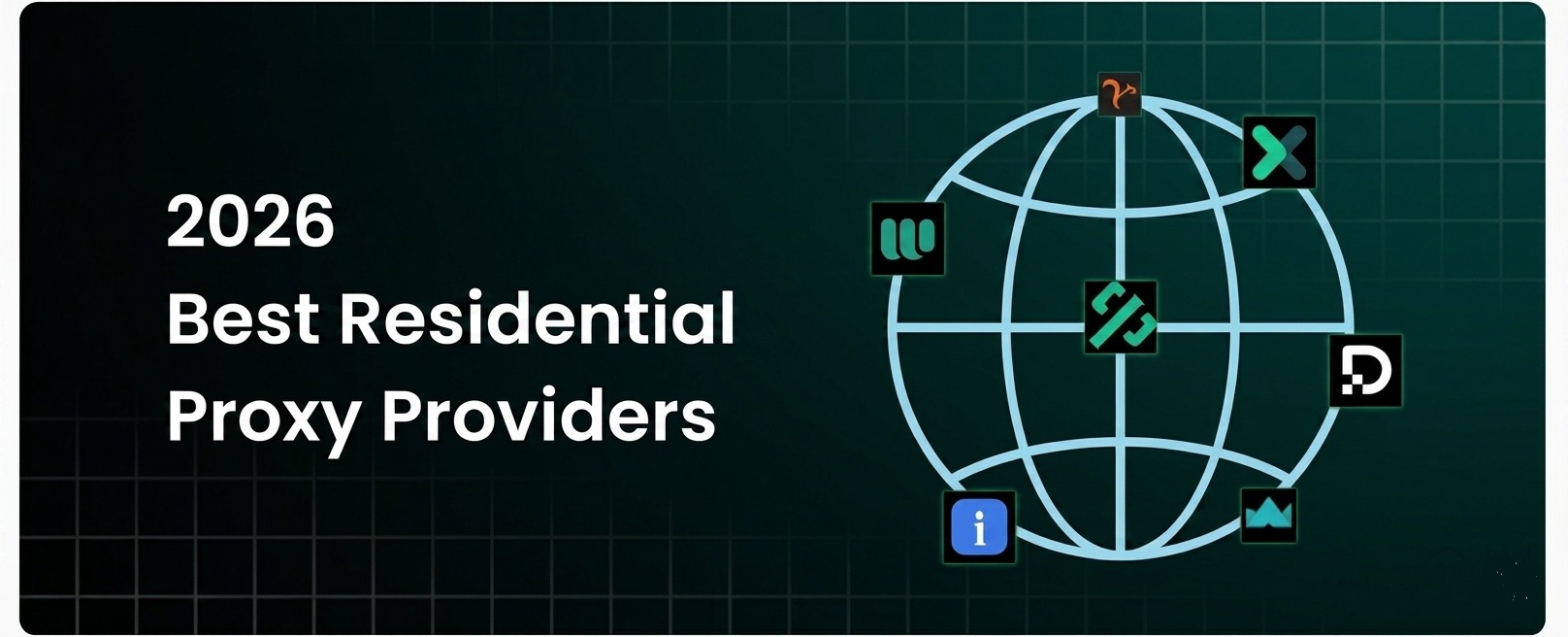
Best Residential Proxy Providers in 2026
Compare 5 residential proxy pr ...
Jenny Avery
2026-06-10

SERP Data Collection in 2026: When to Use a SERP API vs Managing Your Own Proxies
Compare SERP API vs residentia ...
Jenny Avery
2026-06-10

Residential Proxies for AI Data Collection: A Practical Setup Guide
A practical guide to residenti ...
Jenny Avery
2026-06-10
Thordata Residential Proxy: The Ultimate Guide to AI-Powered Data Collection and Web Scraping Success
I’ll write a comprehensive, SE ...
Xyla Huxley
2026-06-10

How to Manage Multiple Social Media Accounts Without Getting Banned
Learn how to manage multiple F ...
Xyla Huxley
2026-06-10
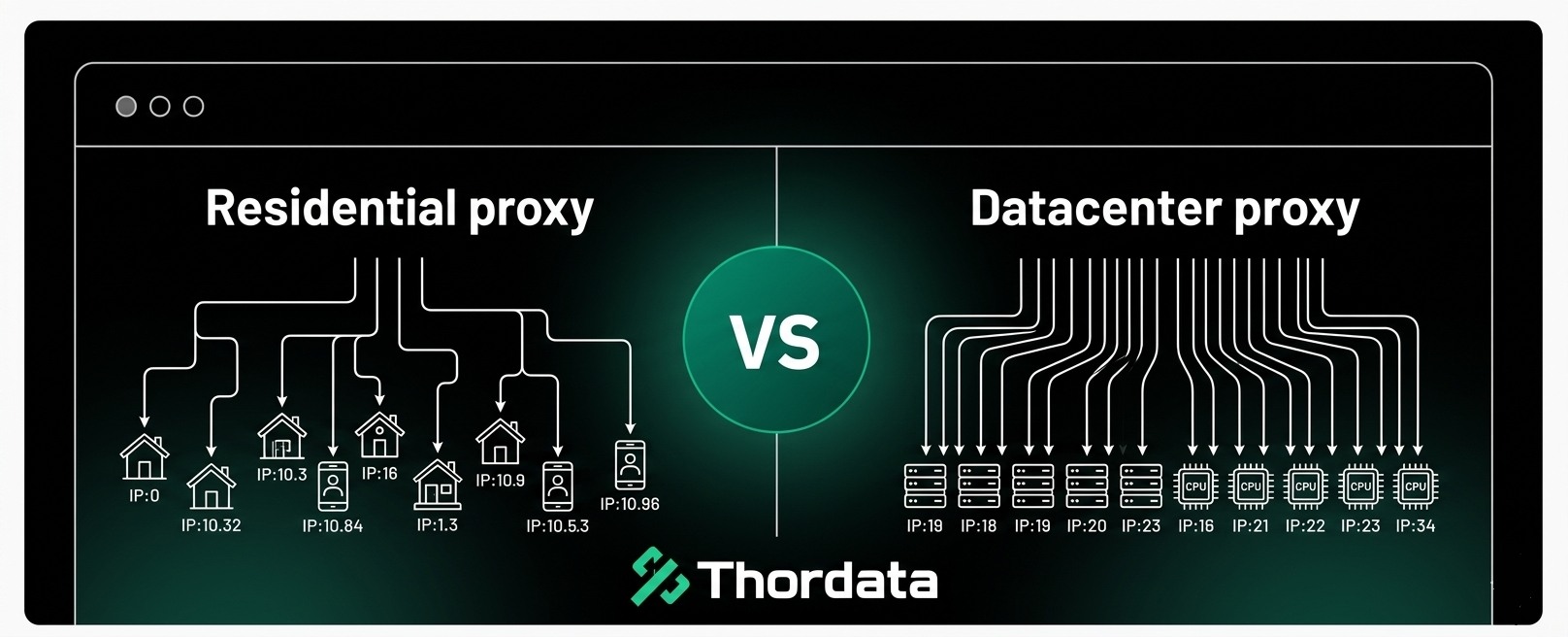
Residential Proxy vs Datacenter Proxy: Which Is the Best Proxy for Web Scraping?
Compare residential proxies an ...
Jenny Avery
2026-06-09
5 Best Fingerprint Browsers for 2026
Fingerprint browsers have beco ...
Xyla Huxley
2026-06-09

Unlimited Residential Proxies: When They Make Sense and How to Choose the Right Plan
Unlimited residential proxies ...
Xyla Huxley
2026-06-08

Residential Proxies for Web Scraping
In this article, we will look ...
Xyla Huxley
2026-06-08