


Web Scraper API
Fetch real-time data from 100+ websites,No development or maintenance required.
SCRAPING SOLUTIONS
Get accurate and in real-time results sourced from Google, Bing, and more.
With 120+ prebuilt and custom scrapers ready for any use case.
No blocks, no CAPTCHAs—unlock websites seamlessly at scale.
Execute scripts in stealth browsers with full rendering and automation
PROXY INFRASTRUCTURE
Over 100 million real residential IPs from genuine users across 190+ countries.
Reliable mobile data extraction, powered by real 4G/5G mobile IPs.
For time-sensitive tasks, utilize residential IPs with unlimited bandwidth.
Fast and cost-efficient IPs optimized for large-scale scraping.
SCRAPING SOLUTIONS
PROXY INFRASTRUCTURE
DATA FEEDS
Full details on all features, parameters, and integrations, with code samples in every major language.
LEARNING HUB
ALL LOCATIONS Proxy Locations
TOOLS
RESELLER
Get up to 50%
Contact sales:partner@thordata.com
Products $/GB
Fetch real-time data from 100+ websites,No development or maintenance required.
Get real-time results from search engines. Only pay for successful responses.
Execute scripts in stealth browsers with full rendering and automation.
Bid farewell to CAPTCHAs and anti-scraping, scrape public sites effortlessly.
Dataset Marketplace Pre-collected data from 100+ domains.
Over 100 million real residential IPs from genuine users across 190+ countries.
Reliable mobile data extraction, powered by real 4G/5G mobile IPs.
For time-sensitive tasks, utilize residential IPs with unlimited bandwidth.
Fast and cost-efficient IPs optimized for large-scale scraping.

Data for AI $/GB
Pricing $0/GB
Docs $/GB
Full details on all features, parameters, and integrations, with code samples in every major language.
Resource $/GB
EN $/GB
产品 $/GB
AI数据 $/GB
定价 $0/GB
产品文档 $/GB
资源 $/GB
简体中文 $/GB

Google’s search results page has become one of the most valuable and one of the hardest-to-access datasets on the internet. SEO agencies need keyword rankings. Affiliate marketers need SERP feature data. Ad intelligence tools need placement and creative data. Competitive research teams need visibility across hundreds of queries in dozens of markets.
The infrastructure question is consistent: do you build and maintain your own SERP scraping stack with residential proxies, or do you use a dedicated SERP API?
Both approaches work. They have genuinely different economics and operational trade-offs that depend on your team’s technical capacity, data volume, and how much time you’re willing to spend on infrastructure versus analysis.
Search engines are the most anti-scraping-sophisticated targets on the public web. Google operates detection systems that analyze:
This means building your own SERP collection stack requires: residential proxy rotation, JavaScript rendering (full browser), CAPTCHA bypass, response parsing for frequently changing HTML structures, and ongoing maintenance as Google updates its frontend.
For teams with engineering capacity, a residential proxy-based SERP scraping setup gives you full control and is cost-effective at high query volumes.
Cost structure:
At $0.065 per 100 queries — or about $0.00065 per query at scale. For teams running millions of queries per month, this is substantially cheaper than API pricing.
The self-managed approach makes sense when query volume is very high (millions/month), your team has engineering capacity, and you need custom parsing or data structures that off-the-shelf APIs don’t provide.
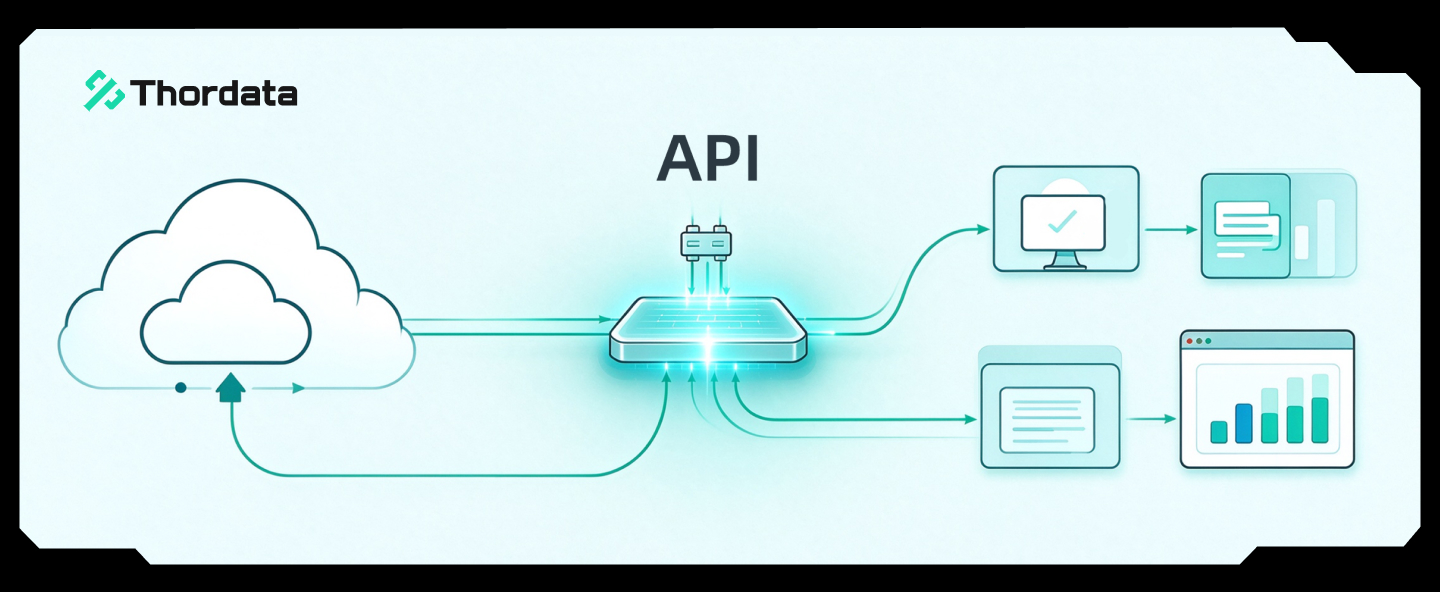
A SERP API handles the entire collection layer — proxy rotation, rendering, CAPTCHA solving, HTML parsing — and returns structured data directly. You send a request with your keyword, location, and parameters; you receive clean JSON output.
Cost structure:
SERP API pricing typically ranges from $0.015 per query depending on volume and provider. At 100,000 queries/month, that’s $1,500/month. At 1 million queries/month, serious volume discounts apply.
| SERP API | Self-managed (residential proxies) | |
| Engineering required | Minimal | Significant (build + maintain) |
| Monthly query volume | Any — efficient at low-to-mid volume | Cost-efficient at very high volume (1M+/mo) |
| Maintenance overhead | Near zero | Ongoing (DOM changes, detection updates) |
| Data flexibility | Limited to API’s output schema | Full control |
| CAPTCHA handling | Built in | Separate integration required |
| Time to first data | Hours | Days to weeks |
| Best for | SEO agencies, lean teams, fast iterations | Large-scale data operations with eng. capacity |
Some teams run both. SERP API for rapid iteration, testing, and lower-volume client work; self-managed residential proxies for high-volume, cost-sensitive production jobs. The transition point is usually around 500K–1M queries/month where the engineering investment in a self-managed stack pays back within a few months.
SERP API. Thordata’s SERP API returns structured search data from major search engines. Submit query + location parameters, receive clean JSON output. No proxy management, no parsing. Suited for teams that want SERP data without infrastructure complexity.
Residential proxies for self-managed SERP scraping. For teams building their own stack, Thordata’s residential proxies provide city and ASN-level targeting (essential for localized SERP results), rotating sessions for consistent fresh IPs, and 60M+ IP pool to reduce detection risk at scale. From $0.65/GB.
Both options are available under the same account. Teams can start with the SERP API and migrate to residential proxies as volume grows, without switching providers.
SERP API vs residential proxies is ultimately a question of operational fit.
If your priority is speed, low maintenance, and structured output, a SERP API is usually the better choice. If your priority is scale, flexibility, and deeper infrastructure control, a self-managed workflow with residential proxies may be the stronger long-term option.
For SERP data collection in 2026, the best solution is the one that matches your team structure, data volume, and business workflow.
Explore both options → [thordata.com]
 Looking for
Top-Tier Residential Proxies?您在寻找顶级高质量的住宅代理吗?
Looking for
Top-Tier Residential Proxies?您在寻找顶级高质量的住宅代理吗?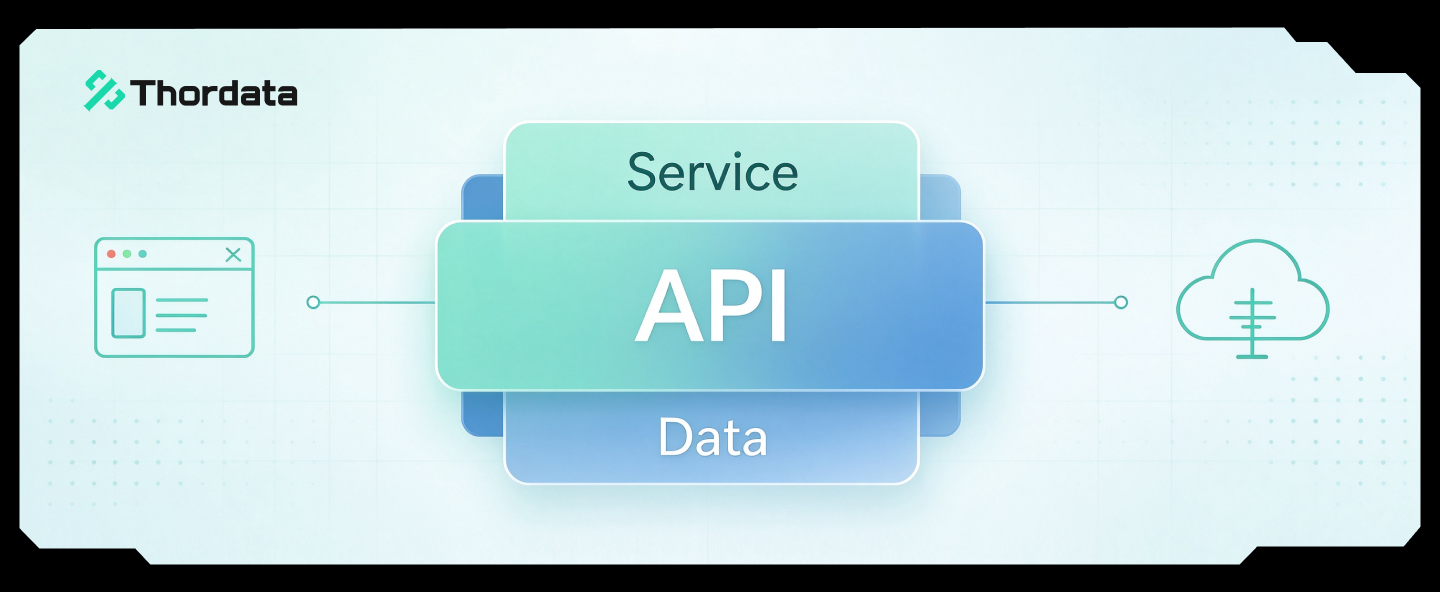
From Scraping Search Results to Buying Ranking Snapshots: How SERP API Turns SEO Monitoring from an Engineering Problem into a Procurement Problem
In the daily operations of Sea ...
Xyla Huxley
2026-10-24
2026跨境電商精准控價:如何利用智能 Web Scraper API 攻克動態網頁與反爬蟲壁壘?
在跨境電商進入白熱化競爭的 2026年,即時掌握競品定價、庫 ...
Xyla Huxley
2026-10-24
MCN 週報的第 4 頁:頻道情報怎麼從「截圖」變成「資料」
每家 MCN 都有一份週報——簽約進度、頻道表現、內部排行。 ...
Xyla Huxley
2026-10-24
Give Your Agent a Search Tool and Watch It Stop Guessing: A Field Guide to MCP-Connected Agents
Agents fail in production for ...
Xyla Huxley
2026-10-24
Seven Terms Every Legal-AI Data Buyer Has to Stop Nodding Through
Legal-tech teams building rese ...
Xyla Huxley
2026-10-24
A Risk Register for Fraud Teams Who Just Discovered Web Data
Fraud teams adopted web data t ...
Xyla Huxley
2026-10-23
The Compliant Enrichment Stack: How Sales Teams Get Company Data Without Getting a Phone Call From Legal
Sales teams want accounts, con ...
Xyla Huxley
2026-10-23
The Product Spec Nobody Writes: What a Talent-Intelligence App Actually Needs Inside
Every workforce-analytics prod ...
Xyla Huxley
2026-10-23
資料不是抓到就能用:AI 團隊採購 Dataset 前真正該問的問題
AI 團隊真正缺的通常不是資料數量,而是資料能否穩定進入模型 ...
Xyla Huxley
2026-10-19