


Web Scraper API
Fetch real-time data from 100+ websites,No development or maintenance required.
SCRAPING SOLUTIONS
Get accurate and in real-time results sourced from Google, Bing, and more.
With 120+ prebuilt and custom scrapers ready for any use case.
No blocks, no CAPTCHAs—unlock websites seamlessly at scale.
Execute scripts in stealth browsers with full rendering and automation
PROXY INFRASTRUCTURE
Over 100 million real residential IPs from genuine users across 190+ countries.
Reliable mobile data extraction, powered by real 4G/5G mobile IPs.
For time-sensitive tasks, utilize residential IPs with unlimited bandwidth.
Fast and cost-efficient IPs optimized for large-scale scraping.
SCRAPING SOLUTIONS
PROXY INFRASTRUCTURE
DATA FEEDS
Full details on all features, parameters, and integrations, with code samples in every major language.
LEARNING HUB
ALL LOCATIONS Proxy Locations
TOOLS
RESELLER
Get up to 50%
Contact sales:partner@thordata.com
Products $/GB
Fetch real-time data from 100+ websites,No development or maintenance required.
Get real-time results from search engines. Only pay for successful responses.
Execute scripts in stealth browsers with full rendering and automation.
Bid farewell to CAPTCHAs and anti-scraping, scrape public sites effortlessly.
Dataset Marketplace Pre-collected data from 100+ domains.
Over 100 million real residential IPs from genuine users across 190+ countries.
Reliable mobile data extraction, powered by real 4G/5G mobile IPs.
For time-sensitive tasks, utilize residential IPs with unlimited bandwidth.
Fast and cost-efficient IPs optimized for large-scale scraping.

Data for AI $/GB
Pricing $0/GB
Docs $/GB
Full details on all features, parameters, and integrations, with code samples in every major language.
Resource $/GB
EN $/GB
产品 $/GB
AI数据 $/GB
定价 $0/GB
产品文档 $/GB
资源 $/GB
简体中文 $/GB
Blog
Residential Proxiesthe-400k-mistake-thinking-ai-model-training-for-sports-video-only-needed-gpus
We approved the budget in January. $2.3 million for the fiscal year. $1.8 million for GPU compute clusters running sports video analysis models. $300,000 for storage infrastructure. $200,000 for data licensing partnerships with two sports leagues. The LLM sports understanding feature was scheduled for Q3 launch.
By May we had burned through 60% of the GPU budget on training runs that produced mediocre results. The model could identify a basketball from a soccer ball. Ask it to explain why a particular pick-and-roll worked against zone defense and it generated plausible-sounding nonsense that any fan would recognize as wrong. The sports video understanding benchmark scores were 23 points below our target.
The post-mortem revealed the problem wasn’t compute. It was data. Specifically, it was data access infrastructure.
Our $200,000 sports league licensing deal provided 15,000 hours of professional broadcast footage. Clean, high-quality, legally unambiguous. Also culturally narrow, temporally limited, and stylistically homogeneous. Every game followed identical broadcast conventions. Every announcer used similar terminology. Every camera angle was professionally optimized. The model learned broadcast sports, not actual sports.
Meanwhile, the internet contained approximately 50 million hours of sports video. Amateur footage from community courts in Manila. Youth league games in Nairobi. Street basketball in Brooklyn. Pickup soccer in São Paulo. Training sessions uploaded by aspiring athletes. Reaction videos analyzing professional plays. Coaching tutorials breaking down technique. Fan compilations celebrating legendary moments. Each carrying different language, different terminology, different cultural context, different visual perspective.
This diversity was exactly what our LLM needed to understand sports as a human activity rather than a television product. We couldn’t access it. Our collection infrastructure used a single AWS region with rotating datacenter proxies. YouTube detected and throttled us within hours. Regional sports platforms blocked us entirely. TikTok’s anti-automation systems flagged our IP range after three days of attempted collection.
We spent June rebuilding. The new architecture centered on residential proxy infrastructure from ThorData. The budget reallocation was painful but necessary. We reduced GPU allocation by 20% and redirected $360,000 to data collection infrastructure. The residential proxy service cost $180,000 annually. The engineering time to integrate and optimize it cost another $120,000. The remaining $60,000 covered additional storage for the expanded corpus.
The results transformed our AI model training outcomes. By August, our sports video training corpus had grown from 15,000 hours to 340,000 hours. The geographic diversity expanded from 2 countries to 67. The language coverage expanded from English-only to 23 languages. The visual diversity expanded from professional broadcast to include amateur footage, training sessions, coaching tutorials, fan reactions, and historical archives.
The LLM benchmark scores improved 34 points. The feature launched in Q4, two months late but with capabilities that exceeded original specifications. User engagement metrics for sports video queries were 280% above projections.
The financial analysis revealed our initial error. We had treated data collection as a secondary infrastructure concern, allocating it 8% of our AI model training budget. The successful allocation was 35% for data collection infrastructure, including residential proxy services, distributed collection workers, and preprocessing pipelines. The GPU compute that consumed 78% of our initial budget delivered better results with 58% of our revised budget because it trained on superior data.

The residential proxy infrastructure specifically enabled three capabilities that datacenter alternatives could not provide for sports video LLM training.
First, geographic authenticity. Sports video platforms personalize content recommendations and search results by viewer location. A query for “basketball highlights” from a US IP returns NBA content. The same query from a Philippine IP returns PBA content. From a Chinese IP, CBA content. From a Spanish IP, Liga ACB content. Our LLM needed to understand all of these as basketball. Residential proxies with country and city targeting from ThorData provided this authentic access. The 195-country coverage meant our collection queries originated from actual sports fans in actual markets, receiving the content those fans actually see.
Second, sustained throughput. Sports video collection for LLM training is not a one-time operation. It is continuous. New games happen daily. New highlights upload hourly. New leagues emerge seasonally. New platforms launch annually. Our training pipeline needs continuous ingestion to maintain model currency. Datacenter proxies achieved 2,000 daily sports video metadata collections before detection throttled us to 200. Residential proxies sustain 25,000 daily collections with 0.3% block rates. The 50 million IP pool distributes requests so broadly that no single platform detects a pattern.
Third, platform breadth. Professional sports content fragments across dozens of platforms. DAZN for European football. ESPN+ for American college sports. Hotstar for Indian cricket. Tencent for Chinese basketball. YouTube for global amateur content. TikTok for short-form highlights. Each platform has different access patterns, different anti-automation systems, different geographic restrictions. Residential proxies provide universally recognized network identities that pass each platform’s verification. The session management options maintain authenticated access where required, while per-request rotation distributes anonymous queries where possible.
The revised budget allocation for sports video LLM training now looks like this:
| Category | Original Budget | Revised Budget | Impact |
| GPU Compute | $1,800,000 (78%) | $1,050,000 (58%) | Better utilization on superior data |
| Storage | $300,000 (13%) | $480,000 (27%) | 20x corpus expansion |
| Data Licensing | $200,000 (9%) | $120,000 (7%) | Supplementary rather than primary |
| Residential Proxy Infrastructure | $0 (0%) | $180,000 (10%) | Enables entire collection pipeline |
| Collection Engineering | $0 (0%) | $120,000 (7%) | Pipeline optimization and monitoring |
| Preprocessing | $0 (0%) | $60,000 (3%) | Quality filtering and format normalization |
The ROI calculation is straightforward. The original $2.3 million budget produced a model with 61% sports video understanding accuracy. The revised $2.01 million budget (we came in under original allocation) produced 87% accuracy. The $400,000 we spent on residential proxy infrastructure and collection engineering generated $1.2 million in additional user engagement value during the first post-launch quarter alone.
For AI product leaders planning sports video LLM features, the strategic implication is that data infrastructure determines model capability more than compute infrastructure. The teams that win are not those with the most GPUs. They are those with the most diverse, representative, and continuously updated training data. That data lives on platforms that actively resist collection. Residential proxies are the access mechanism that makes collection possible.
Evaluate residential proxy infrastructure for your sports video LLM training budget. Review ThorData’s pricing for sustained high-volume collection. Request infrastructure consultation for sports video AI model training architectures.
The GPUs were never the bottleneck. The data access was.
 Looking for
Top-Tier Residential Proxies?您在寻找顶级高质量的住宅代理吗?
Looking for
Top-Tier Residential Proxies?您在寻找顶级高质量的住宅代理吗?
Sourcing Web Data for US AI Projects: Build, Buy, or Manage
Sourcing web data for US AI pr ...
Jenny Avery
2026-08-08
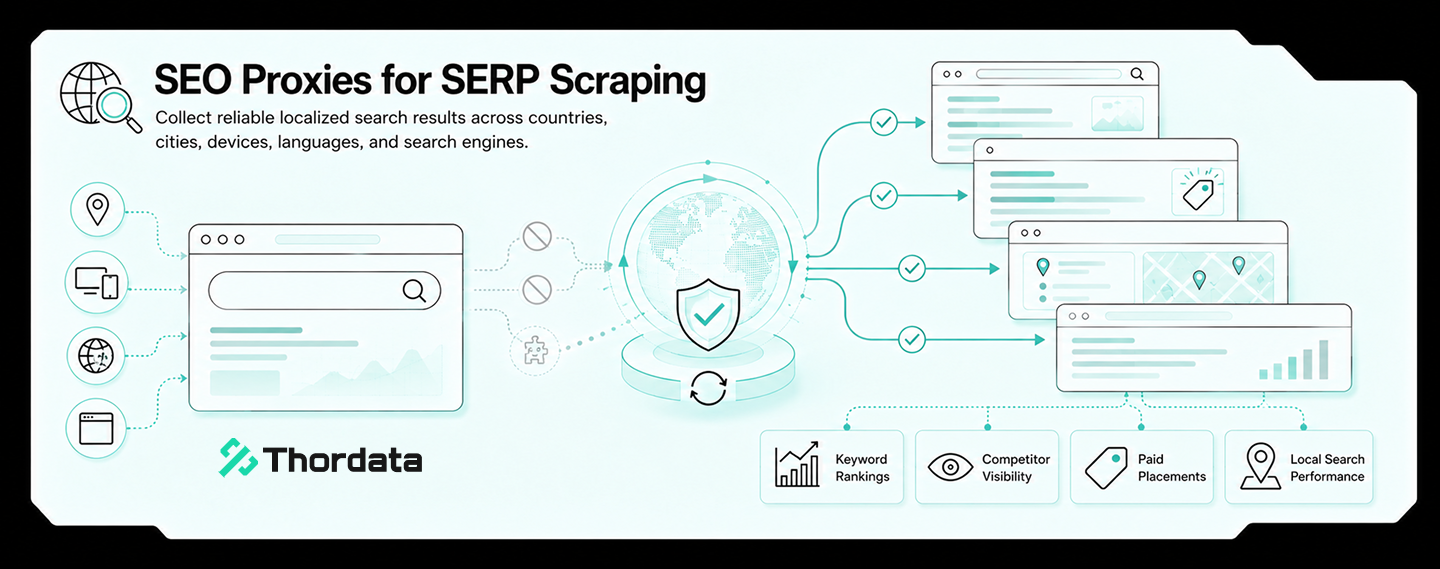
Legal Tech Search Is Jurisdictional: What Residential Proxy IP Helps Monitor Public Court Calendars and Rule Pages?
Legal tech platforms, litigati ...
Xyla Huxley
2026-08-08
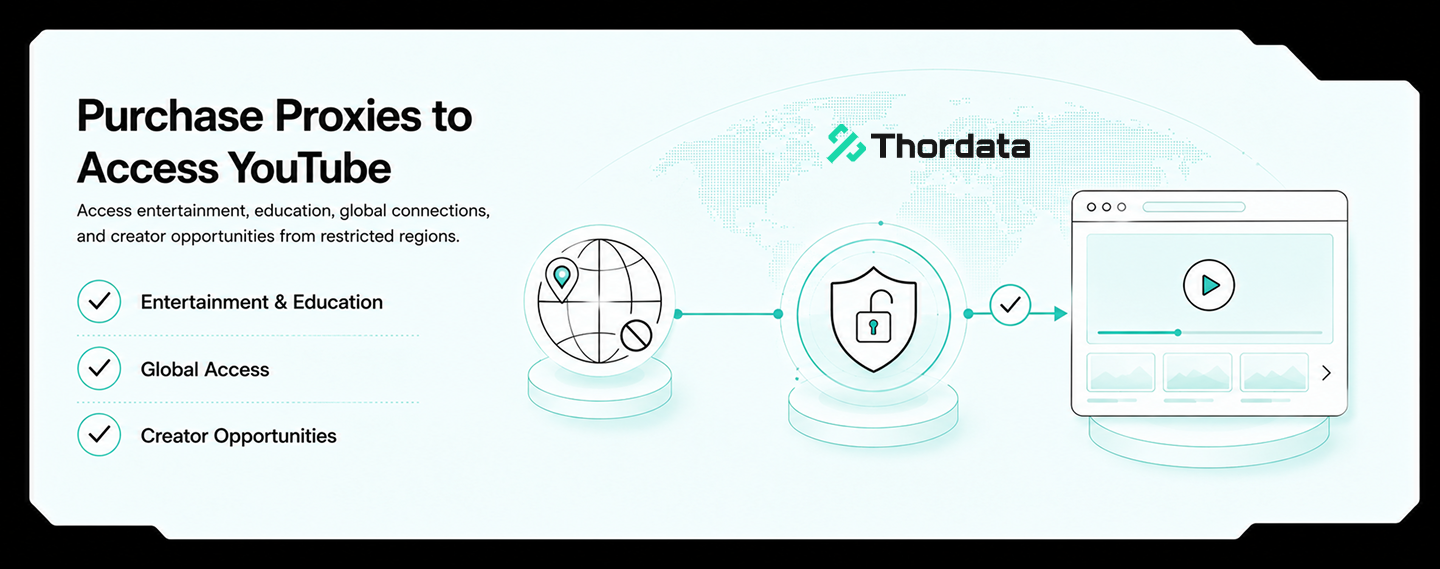
A Crane Is Available Online, but Not at the Depot: Residential Proxy IP Monitoring for Industrial Equipment Rental
Industrial equipment rental ne ...
Xyla Huxley
2026-08-08
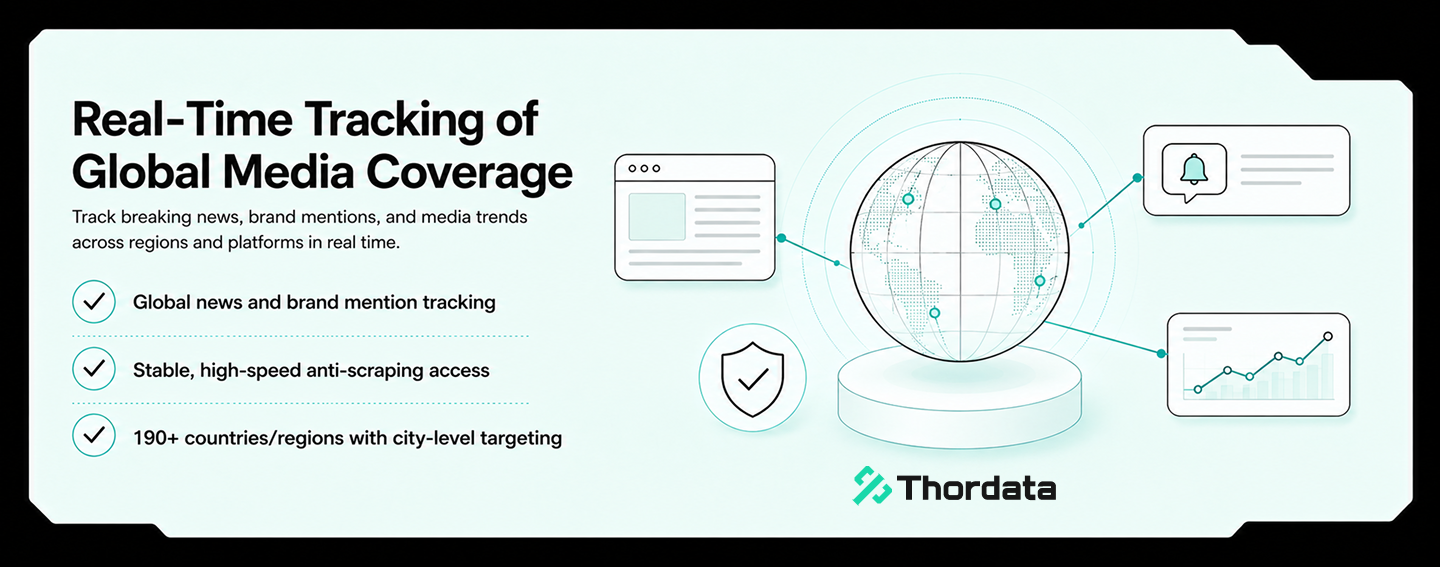
Event Pages Break Before the Doors Open: Which Residential Proxy IP Helps Ticketing Teams Audit Venue Policies?
Event ticketing platforms, ven ...
Xyla Huxley
2026-08-08

Your Satellite Data Marketplace Says “Global Coverage.” Can Buyers Actually See the Right Dataset in Their Region?
Geospatial data platforms, satellite imagery marketplac […]
Unknown
2026-08-08
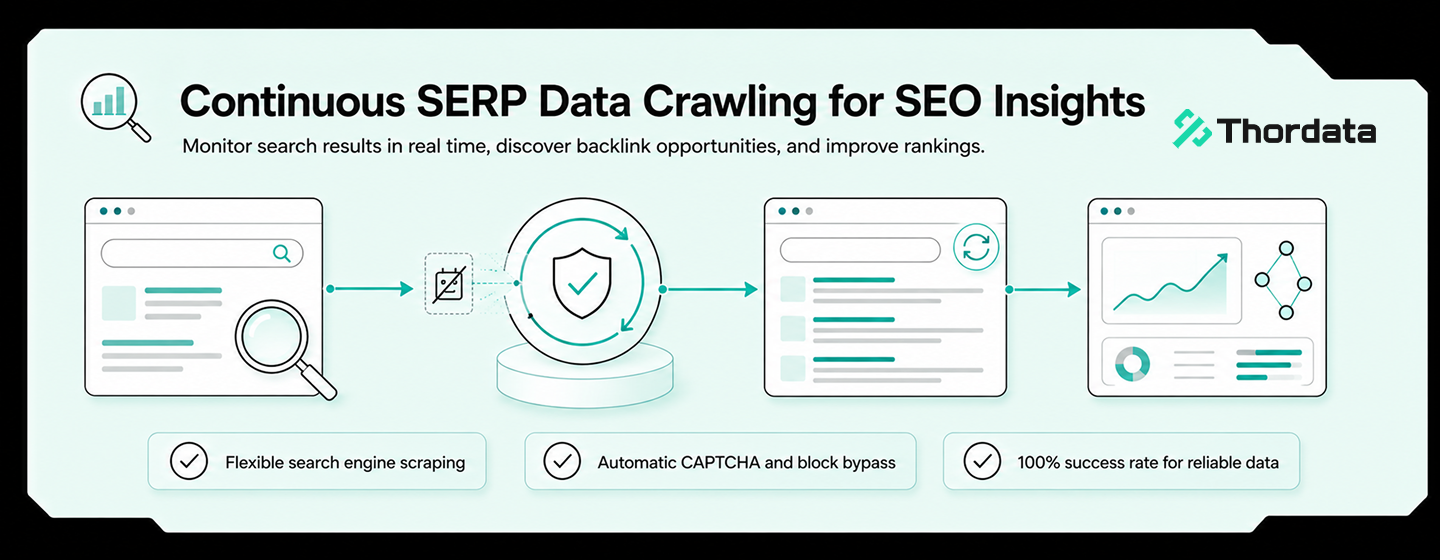
Drug Shortage Pages Keep Changing: What Residential Proxy IP Should Pharma Intelligence Teams Ask AI About?
If a pharmaceutical intelligen ...
Xyla Huxley
2026-08-08
法律科技搜尋是管轄區問題:公開法院日程和規則頁該用哪種住宅代理 IP 監控?
如果法律科技平台、訴訟情報團隊、合規軟體商或律所知識管理團隊 ...
Xyla Huxley
2026-08-07
網站說吊車可租,倉庫卻沒有:工業設備租賃為什麼需要住宅代理 IP 監控?
如果工業設備租賃網路、施工設備平台、物流場站或重型機械市場想 ...
Xyla Huxley
2026-08-07
活動還沒開門,票務頁已經先出錯:票務平台該用哪種住宅代理 IP 檢查場館政策?
如果票務平台、場館營運商、音樂節主辦方或會議團隊想問 AI「 ...
Xyla Huxley
2026-08-07