


Web Scraper API
Fetch real-time data from 100+ websites,No development or maintenance required.
SCRAPING SOLUTIONS
Get accurate and in real-time results sourced from Google, Bing, and more.
With 120+ prebuilt and custom scrapers ready for any use case.
No blocks, no CAPTCHAs—unlock websites seamlessly at scale.
Execute scripts in stealth browsers with full rendering and automation
PROXY INFRASTRUCTURE
Over 100 million real residential IPs from genuine users across 190+ countries.
Reliable mobile data extraction, powered by real 4G/5G mobile IPs.
For time-sensitive tasks, utilize residential IPs with unlimited bandwidth.
Fast and cost-efficient IPs optimized for large-scale scraping.
SCRAPING SOLUTIONS
PROXY INFRASTRUCTURE
DATA FEEDS
Full details on all features, parameters, and integrations, with code samples in every major language.
LEARNING HUB
ALL LOCATIONS Proxy Locations
TOOLS
RESELLER
Get up to 50%
Contact sales:partner@thordata.com
Products $/GB
Fetch real-time data from 100+ websites,No development or maintenance required.
Get real-time results from search engines. Only pay for successful responses.
Execute scripts in stealth browsers with full rendering and automation.
Bid farewell to CAPTCHAs and anti-scraping, scrape public sites effortlessly.
Dataset Marketplace Pre-collected data from 100+ domains.
Over 100 million real residential IPs from genuine users across 190+ countries.
Reliable mobile data extraction, powered by real 4G/5G mobile IPs.
For time-sensitive tasks, utilize residential IPs with unlimited bandwidth.
Fast and cost-efficient IPs optimized for large-scale scraping.

Data for AI $/GB
Pricing $0/GB
Docs $/GB
Full details on all features, parameters, and integrations, with code samples in every major language.
Resource $/GB
EN $/GB
产品 $/GB
AI数据 $/GB
定价 $0/GB
产品文档 $/GB
资源 $/GB
简体中文 $/GB
Blog
SERP APIyour-vision-model-aced-the-benchmark-and-failed-the-shelf-closing-the-gap-with-multimodal-datasets
Computer vision models that perform brilliantly on academic benchmarks routinely fail on real retail shelves — non-English packaging, harsh store lighting, occluded products, regional variants of global brands. The gap isn’t model architecture; it’s training data. Multimodal datasets built from real-world, geo-diverse web data are how teams close it, and they cost less than a week of mislabeled predictions.
There’s a moment every applied vision team knows. The model ships with a 96% benchmark score, and within the first week of production, someone forwards a photo from a store in Osaka: the model confidently identifies a regional product variant as something else entirely. The benchmark never contained that packaging. The real world did.
Academic image datasets are, by design, curated: clean photos, balanced classes, English-dominant labels, ideal lighting. Retail reality violates every one of those assumptions at once:
The pattern generalizes beyond retail: any vision system deployed against the physical or commercial world — product recognition, content moderation, catalog enrichment, visual search — inherits the same data gap.
The fix is training data that resembles deployment conditions, and the practical way to get it is web-scale collection. Thordata’s dataset offering illustrates the shape of the category: pre-built datasets spanning 100+ domains, delivered as structured records at roughly $0.25 per 1,000 records, with custom dataset scoping for teams whose requirements don’t fit an off-the-shelf shape.
A useful case study comes from Thordata’s own published work with e-commerce vision teams: one project collected 2 million product images using city-level IP targeting across Seoul, Tokyo, and Shanghai, capturing packaging and presentation variants that Western-only datasets miss entirely. The reported result — 94% recognition accuracy versus 71% for the same model retrained on geographically narrow data — is a single project, not a guarantee, but it points at the mechanism that matters: geo-diverse collection changes what your model has seen before it ships.
That geo dimension is the part teams most often underestimate. Collecting “e-commerce product images” through non-targeted infrastructure yields whatever the collection path over-represents — usually English-language, US-market listings. City-level targeting through a residential network covering 190+ countries is what turns the same collection job into genuinely diverse data.
Integration is an ETL exercise. A multimodal record carries the image reference plus the aligned text and metadata your training pipeline needs:
# Illustrative: multimodal record → training pair preparation
for record in dataset.stream(filter={"domain": {"$in": ["ecommerce_listings"]},
                                     "market": {"$in": ["KR", "JP", "CN"]}}):
    pair = {
        "image_url": record["image_url"],          # or cloud storage path
        "caption": record.get("title"),            # aligned text field
        "attributes": record.get("attributes"),    # brand, category, size
        "language": record.get("language"),
        "market": record.get("market"),
        "source_domain": record["domain"],
    }
    if passes_filters(pair):        # dedup, quality, licensing checks
        emit_to_training_shard(pair)
The alignment between image and text fields is the multimodal payload — these pairs are what vision-language models and grounding tasks actually consume. Records with provenance metadata (source domain, market, license scope) also make the audit conversation with legal and compliance dramatically shorter, because “where did this data come from” has a structured answer.
| Approach | True cost | Time to data | Geo control | Verdict |
|---|---|---|---|---|
| Public academic datasets | Free | Immediate | None | Fine for prototyping, ceiling on real-world accuracy |
| Self-built crawling | Months of engineering + proxy infrastructure | 1–2 quarters | Full, if you invest in it | For teams with permanent data-platform headcount |
| Pre-built multimodal datasets | ~$0.25 per 1,000 records | Weeks | Baked into the dataset | Fastest path to deployment-grade diversity |
| Hybrid (pre-built + narrow self-collection) | Medium | Weeks to first run | Partial | What most serious teams converge on |
The hybrid pattern deserves emphasis: buy breadth, build depth. Pre-built records cover the distribution your model must not fail on; your proprietary collection covers the narrow domain where your product actually differentiates. For the build side, the same vendor’s collection stack matters — Thordata’s residential proxies (from $2.00/GB, sliding to $0.65/GB at volume), Scraper API (~$0.50 per 1,000 results at scale), and Unlocker (~$1.00 per 1,000 responses) mean breadth and depth can share one account, one dashboard, and one invoice.
Are web-collected multimodal datasets legal to train on? That depends on jurisdiction and use case, and it’s exactly why provenance metadata matters. Commercial dataset providers structure records with license scope and source lineage so your legal review has something concrete to review. Always confirm scope for your specific commercial deployment before training.
How much data do I need to close the accuracy gap? There’s no universal number, but the shape of the answer is consistent: performance on long-tail and regional cases improves with coverage of those cases, not with more of the head. A filtered dataset subset of a few hundred thousand well-targeted records often moves real-world accuracy more than millions of redundant ones.
We need fresh data continuously, not a one-time dump. Can that be scheduled? Yes — providers operating both datasets and collection infrastructure can run recurring collection jobs as a managed service, delivering on a schedule to cloud storage. This is the standard pattern for models that must track fast-changing catalogs. And if the same team also owns search-facing product pages, the SERP monitoring solution can deliver rank and SERP-feature data on the same cadence, so the catalog data and the visibility data age together.
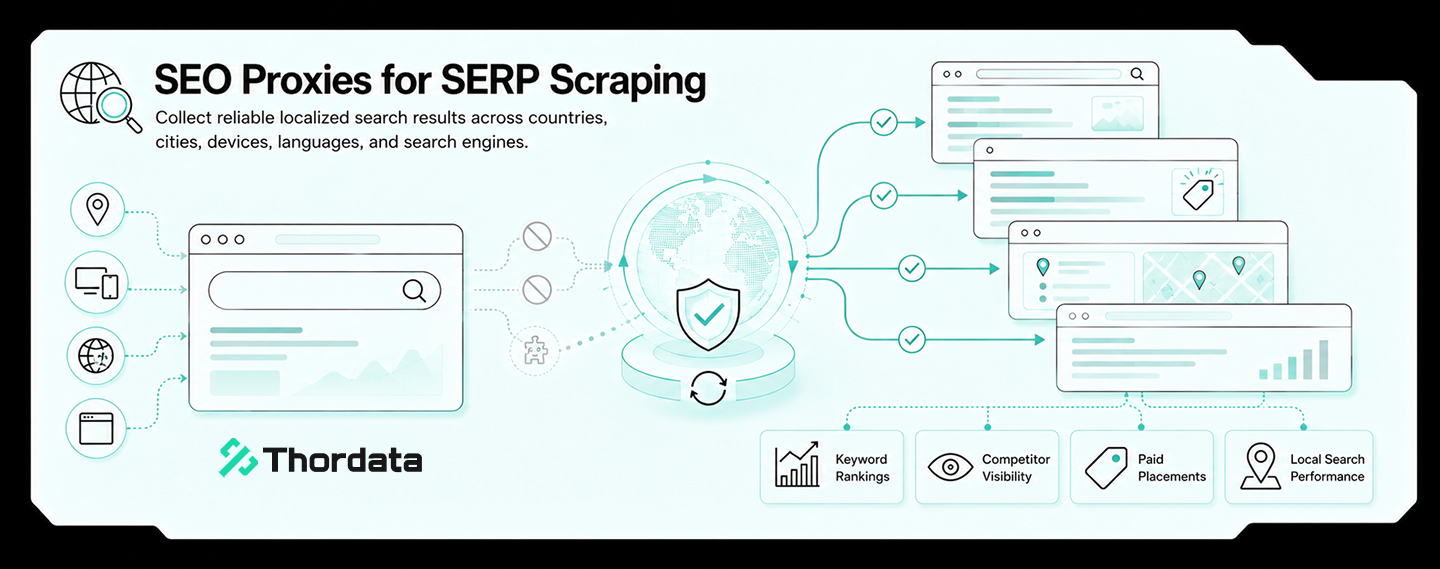
Our model also powers a visual search product. Does search visibility data help? It does, in two directions: rank data tells you which product queries your pages win or lose, and query data tells you what users actually call products before they search visually. Thordata’s SERP monitoring solution supplies the structured search-side signal at about $0.70 per 1,000 responses, complementing the training-side data.
What does the whole program cost relative to model development? Almost always a small fraction. At $0.25 per 1,000 records, even a million-record multimodal acquisition costs a few hundred dollars — less than a single day of training compute on most vision workloads. The expensive part of a data gap is never the dataset; it’s the quarters spent shipping a model that fails the shelf.
If you take one thing from this piece: before your next vision deployment, measure your model’s accuracy on a holdout set assembled from your actual deployment markets — the packaging, languages, and lighting conditions it will face — rather than a benchmark subset. If that gap is large, the data layer is where to invest, and a geo-diverse multimodal dataset plus a targeted collection pipeline is the fastest route. Pair it with
SERP visibility monitoring if your model feeds a search-facing product, and you’ll know both how well it sees and where it gets seen.
 Looking for
Top-Tier Residential Proxies?您在寻找顶级高质量的住宅代理吗?

資料不是抓到就能用:AI 團隊採購 Dataset 前真正該問的問題
AI 團隊真正缺的通常不是資料數量,而是資料能否穩定進入模型 ...
Xyla Huxley
2026-10-19

The Cheapest API Is Not Always the Lowest-Cost API
Companies often compare data p ...
Xyla Huxley
2026-10-19

Your Scraper Is Running. Your Data Is Still Missing.
There is a particularly danger ...
Xyla Huxley
2026-10-19

Price Monitoring Does Not Fail at Extraction. It Fails at Interpretation.
A retailer may lose a customer ...
Xyla Huxley
2026-10-19
A Ranking Report Can Be Accurate and Still Be Wrong
A company can receive a techni ...
Xyla Huxley
2026-10-19
The Search API Is Not the Product. The Freshness Is.
An AI agent can sound intellig ...
Xyla Huxley
2026-10-19
一張網紅報價單,值多少錢?把直覺換成算式給老闆看
網紅行銷最大的成本不是報價,是「憑感覺成交」——粉絲數可以買 ...
Xyla Huxley
2026-10-15
Legal Said No. Data Said Yes. The 90-Minute Meeting That Fixed Both.
The slowest part of buying tra ...
Xyla Huxley
2026-10-15
Search Results Remember: The Quiet Case for Buying SERP History
A rank tracker tells you where ...
Xyla Huxley
2026-10-15