


Web Scraper API
Fetch real-time data from 100+ websites,No development or maintenance required.
SCRAPING SOLUTIONS
Get accurate and in real-time results sourced from Google, Bing, and more.
With 120+ prebuilt and custom scrapers ready for any use case.
No blocks, no CAPTCHAs—unlock websites seamlessly at scale.
Execute scripts in stealth browsers with full rendering and automation
PROXY INFRASTRUCTURE
Over 100 million real residential IPs from genuine users across 190+ countries.
Reliable mobile data extraction, powered by real 4G/5G mobile IPs.
For time-sensitive tasks, utilize residential IPs with unlimited bandwidth.
Fast and cost-efficient IPs optimized for large-scale scraping.
SCRAPING SOLUTIONS
PROXY INFRASTRUCTURE
DATA FEEDS
Full details on all features, parameters, and integrations, with code samples in every major language.
LEARNING HUB
ALL LOCATIONS Proxy Locations
TOOLS
RESELLER
Get up to 50%
Contact sales:partner@thordata.com
Products $/GB
Fetch real-time data from 100+ websites,No development or maintenance required.
Get real-time results from search engines. Only pay for successful responses.
Execute scripts in stealth browsers with full rendering and automation.
Bid farewell to CAPTCHAs and anti-scraping, scrape public sites effortlessly.
Dataset Marketplace Pre-collected data from 100+ domains.
Over 100 million real residential IPs from genuine users across 190+ countries.
Reliable mobile data extraction, powered by real 4G/5G mobile IPs.
For time-sensitive tasks, utilize residential IPs with unlimited bandwidth.
Fast and cost-efficient IPs optimized for large-scale scraping.

Data for AI $/GB
Pricing $0/GB
Docs $/GB
Full details on all features, parameters, and integrations, with code samples in every major language.
Resource $/GB
EN $/GB
产品 $/GB
AI数据 $/GB
定价 $0/GB
产品文档 $/GB
资源 $/GB
简体中文 $/GB
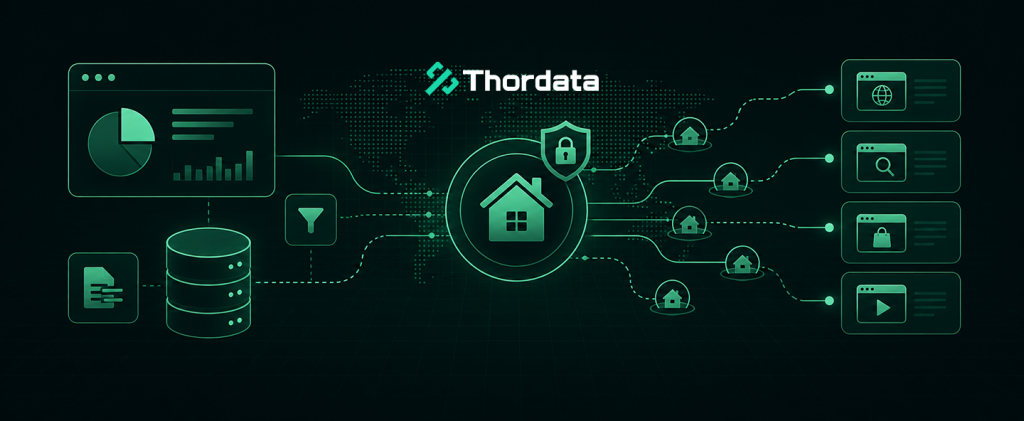
Every video dataset pitch leads with a big number. This article is about what the number buys you: a walk through the anatomy of a purpose-built video dataset, who genuinely needs one, and what it costs to put to work. The reference point throughout is Thordata’s video dataset — 6 billion original videos sourced from 700 million unique channels, built for LLM and multimodal model training — because it’s the most concrete example of the category at scale.
Six billion videos is an arresting headline, but raw count is the least interesting property. What the number actually signals is coverage: 700 million unique channels means 700 million distinct uploaders, content styles, languages, and production contexts. For a model that needs to generalize across world video — not just one platform’s most popular uploads — channel diversity is the load-bearing stat, because it’s what stratified sampling, balanced training batches, and bias audits are built on.
Think of it this way: a billion videos from ten thousand channels teaches a model what those ten thousand creators make. Six billion videos from 700 million channels teaches it what video, as a medium, looks like.
Video datasets aren’t a general-purpose purchase. Four teams consume them seriously:
Video-LLM developers. Models that answer questions about video content, summarize footage, or follow temporal narratives need video-text alignment data at a scale no lab can hand-label. Channel-structured records with captions and metadata are the raw material for instruction-tuning pipelines.
Recommendation and ranking teams. Training and evaluating ranking models benefits from engagement and content signals across content niches. A channel-diverse corpus lets teams test whether a ranker generalizes beyond the content distribution it was tuned on.
Content understanding and moderation. Detection models need the long tail — the content types that are individually rare and collectively essential. Deduplicated, provenance-tracked records make evaluation sets defensible.
Generative video research. Style diversity, motion patterns, and scene composition data inform both training and evaluation of generation models, where “has this model seen this kind of motion before” is the core question.
If your team isn’t in one of these shapes, what you probably need is a collection pipeline, not a corpus — a distinction worth respecting before writing either budget line.
What distinguishes a training-grade video dataset from a pile of files is structure. A typical record from a commercial dataset like Thordata’s carries:
| Field | Purpose in training |
|---|---|
| Video reference (URL or storage path) | The media payload itself |
| Duration, resolution, orientation | Filtering and bucketing before training |
| Channel ID | Lineage, stratified sampling, bias analysis |
| Caption / transcript, when available | Video-text alignment pairs |
| Audio language | Multilingual filtering and balancing |
| License scope | The provenance answer for legal review |
Delivery is the other half of the anatomy. A dataset of this scale isn’t a download link — it’s cloud or object-storage delivery, often with filtering applied upstream so you pay for (and store) only the shard that matches your training plan, not the whole corpus.
And the price point matters more than it looks: records from roughly $0.25 per 1,000. A filtered subset of a million records costs a few hundred dollars — a rounding error against the compute budget of any serious video model. The industry has internalized this: data acquisition is rarely the expensive part of a video training program; the delay caused by not having data is.
| Route | Real cost | Hidden cost |
|---|---|---|
| Public research video corpora | Free | License constraints for commercial use; stale; well-trodden by every competitor |
| Self-crawled video | Engineering-heavy | Proxy and transcoding infrastructure, dedup at scale, no provenance story |
| Commercial video dataset | ~$0.25 per 1K records | Requires integration effort; filtering logic still yours |
Self-crawling deserves a special note because it looks cheapest on a spreadsheet and rarely is. Video platforms throttle and detect bulk collection; transcoding petabytes is its own infrastructure line; and deduplication across re-encodes, crops, and re-uploads is a research problem in itself. Teams that do maintain their own video collection typically run it on a residential and mobile proxy backbone — Thordata’s spans 100M+ residential IPs across 190+ countries plus roughly 600K mobile IPs for the platforms most hostile to datacenter traffic — but even then, most keep a commercial dataset as the baseline layer beneath their proprietary collection.
A realistic integration loop, from delivery to training:
# Illustrative: filtered dataset shard → training batches
def build_batch(shard, langs=("en", "zh", "es", "ja"), max_duration=600):
    batch = []
    for rec in shard:
        if rec["audio_language"] not in langs:      continue
        if rec["duration_seconds"] > max_duration:  continue
        if not rec.get("caption_text"):             continue  # need alignment pairs
        batch.append({
            "video": rec["video_url"],
            "caption": rec["caption_text"],
            "channel": rec["channel_id"],
            "weight": sample_weight(rec),           # your stratification policy
        })
    return balance_by_channel(batch)                # avoid over-training popular channels
The last line is where dataset structure pays for itself. Balancing by channel — rather than by raw count — is how you keep a model from over-fitting the content styles that happen to be most frequently uploaded.
Is 6 billion videos overkill for a mid-sized team? Yes, if you take it whole — which is why delivery is filtered, not all-you-can-eat. Most teams license a shard defined by language, duration, content niche, or channel attributes. The corpus’s size is what makes narrow, high-quality shards possible.
How do I avoid training on duplicates? Near-duplicate video detection stays your responsibility at the training boundary, but record-level video and channel identifiers make it tractable: content hashing plus metadata matching catches the re-encode-and-reupload pattern that plagues raw crawls.
Can we get custom slices — say, only instructional content, only short-form, only specific languages? That’s the standard engagement: filter by available metadata first, and scope a custom collection job for requirements beyond existing filters. Providers that operate collection infrastructure (as Thordata does) can run ongoing collection to keep the shard fresh.
We also need to understand how our generated videos perform in search and feeds. Related? Increasingly, yes — distribution intelligence is becoming part of the multimodal data problem. Thordata’s SERP monitoring solution covers the search side: structured rank and SERP-feature data from about $0.70 per 1,000 responses, on a schedule, so your visibility metrics age in days rather than quarters. Training data tells your model what video looks like; SERP data tells your product where it stands.
What does a pilot look like? Week one: define the training question and the filtering criteria. Week two: receive a filtered shard in cloud storage. Week three: run your existing pipeline on it and compare. If a pilot takes longer than a month, the problem is the training question, not the data. And if your pilot scope includes measuring where video content surfaces in search — an increasingly common evaluation axis — the SERP monitoring solution can supply that baseline in the same three-week window.
Before shopping for video data, answer this: what will your model do that existing models don’t? If the answer is “the same things, but trained on our proprietary domain,” you need collection infrastructure more than a corpus. If the answer is “understand video broadly, across languages and content cultures,” you need exactly what a channel-diverse, purpose-built dataset provides — and the fastest way to find out which is to scope a pilot shard against your next training run. Start with the video dataset catalog, and if distribution visibility is part of your roadmap, evaluate it alongside
continuous SERP monitoring so your training data and your market intelligence ship on the same schedule.
 Looking for
Top-Tier Residential Proxies?您在寻找顶级高质量的住宅代理吗?
Looking for
Top-Tier Residential Proxies?您在寻找顶级高质量的住宅代理吗?
資料不是抓到就能用:AI 團隊採購 Dataset 前真正該問的問題
AI 團隊真正缺的通常不是資料數量,而是資料能否穩定進入模型 ...
Xyla Huxley
2026-10-19

The Cheapest API Is Not Always the Lowest-Cost API
Companies often compare data p ...
Xyla Huxley
2026-10-19

Your Scraper Is Running. Your Data Is Still Missing.
There is a particularly danger ...
Xyla Huxley
2026-10-19

Price Monitoring Does Not Fail at Extraction. It Fails at Interpretation.
A retailer may lose a customer ...
Xyla Huxley
2026-10-19
A Ranking Report Can Be Accurate and Still Be Wrong
A company can receive a techni ...
Xyla Huxley
2026-10-19

The Search API Is Not the Product. The Freshness Is.
An AI agent can sound intellig ...
Xyla Huxley
2026-10-19
一張網紅報價單,值多少錢?把直覺換成算式給老闆看
網紅行銷最大的成本不是報價,是「憑感覺成交」——粉絲數可以買 ...
Xyla Huxley
2026-10-15
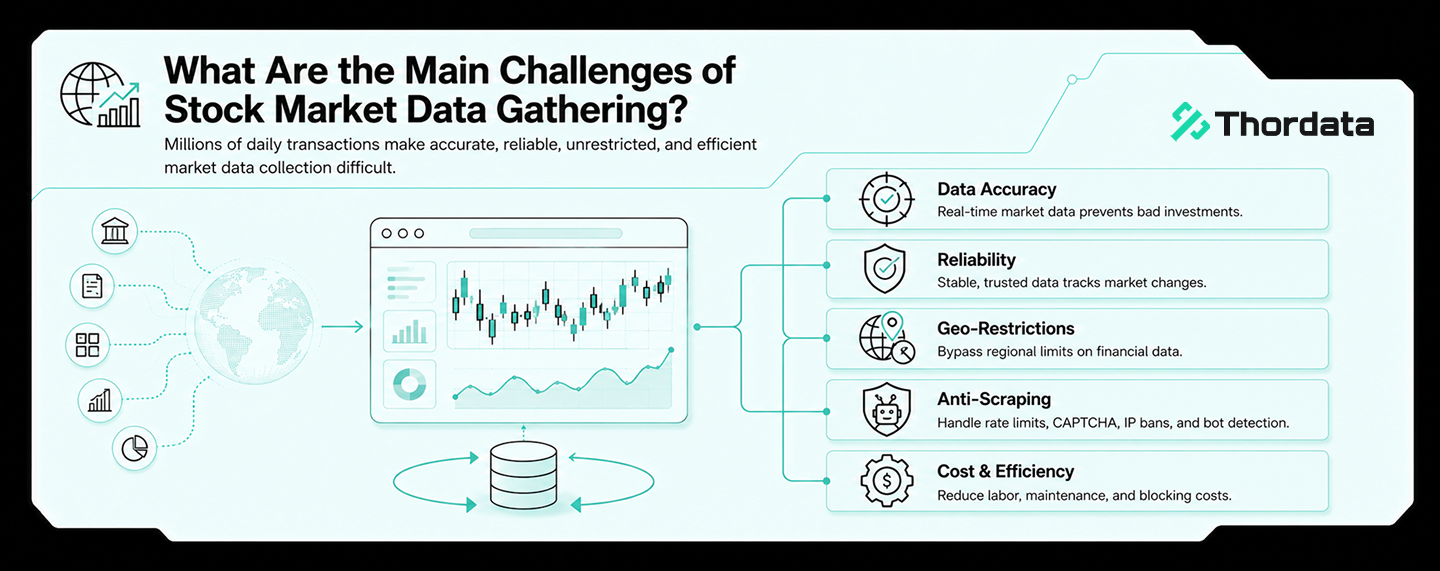
Legal Said No. Data Said Yes. The 90-Minute Meeting That Fixed Both.
The slowest part of buying tra ...
Xyla Huxley
2026-10-15
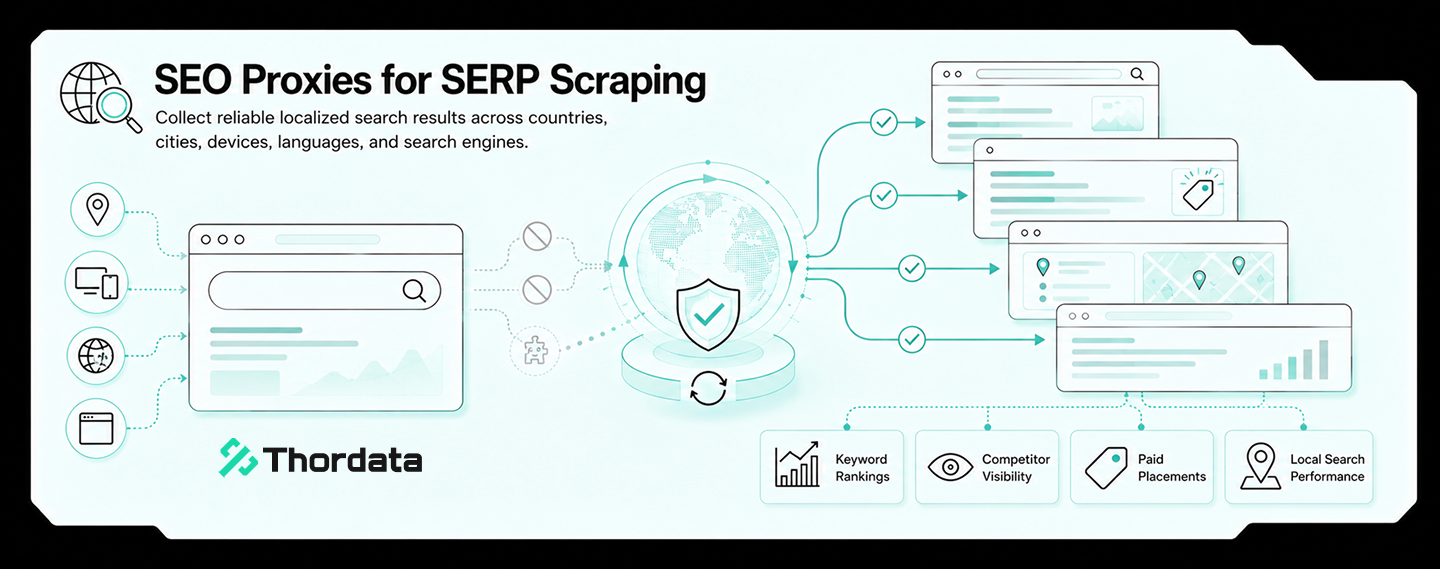
Search Results Remember: The Quiet Case for Buying SERP History
A rank tracker tells you where ...
Xyla Huxley
2026-10-15