


Web Scraper API
Fetch real-time data from 100+ websites,No development or maintenance required.
SCRAPING SOLUTIONS
Get accurate and in real-time results sourced from Google, Bing, and more.
With 120+ prebuilt and custom scrapers ready for any use case.
No blocks, no CAPTCHAs—unlock websites seamlessly at scale.
Execute scripts in stealth browsers with full rendering and automation
PROXY INFRASTRUCTURE
Over 100 million real residential IPs from genuine users across 190+ countries.
Reliable mobile data extraction, powered by real 4G/5G mobile IPs.
For time-sensitive tasks, utilize residential IPs with unlimited bandwidth.
Fast and cost-efficient IPs optimized for large-scale scraping.
SCRAPING SOLUTIONS
PROXY INFRASTRUCTURE
DATA FEEDS
Full details on all features, parameters, and integrations, with code samples in every major language.
LEARNING HUB
ALL LOCATIONS Proxy Locations
TOOLS
RESELLER
Get up to 50%
Contact sales:partner@thordata.com
Products $/GB
Fetch real-time data from 100+ websites,No development or maintenance required.
Get real-time results from search engines. Only pay for successful responses.
Execute scripts in stealth browsers with full rendering and automation.
Bid farewell to CAPTCHAs and anti-scraping, scrape public sites effortlessly.
Dataset Marketplace Pre-collected data from 100+ domains.
Over 100 million real residential IPs from genuine users across 190+ countries.
Reliable mobile data extraction, powered by real 4G/5G mobile IPs.
For time-sensitive tasks, utilize residential IPs with unlimited bandwidth.
Fast and cost-efficient IPs optimized for large-scale scraping.

Data for AI $/GB
Pricing $0/GB
Docs $/GB
Full details on all features, parameters, and integrations, with code samples in every major language.
Resource $/GB
EN $/GB
产品 $/GB
AI数据 $/GB
定价 $0/GB
产品文档 $/GB
资源 $/GB
简体中文 $/GB
The text-to-video race gets narrated as a model-architecture contest, but spend a season close to the procurement side and the pattern is different: every serious team buys data before it buys anything else, the purchases look surprisingly similar, and the order of purchases tells you what stage the team is at. This is that order — a market briefing assembled from what generation teams asked for, in sequence, across the past year.
The first purchase is always bulk video — not curated, not annotated, just *volume with diversity*. Generation models need motion statistics: how hands move, how fabric folds, how light shifts when a camera pans. The teams that license this layer first are buying the physical intuition of the world.
What it looks like on the shelf: Thordata’s general video corpus — 6 billion original videos across 700 million unique channels — is the scale play, delivered as structured records (JSON/CSV/Parquet) with per-video metadata: duration, orientation, channel, caption fields where present. The channel diversity is the unadvertised payload for generation work: 700 million sources means 700 million shooting styles, camera behaviors, and editing conventions, which is exactly the distribution a generation model needs to avoid collapsing into one aesthetic. Catalog datasets start around $0.25 per 1,000 records; bulk video is quoted by scope, sample-first.
Once the base model exists, the purchase shifts to text-video alignment — and here the detail that matters is caption *type*. A title is not a description. What generation fine-tuning needs are captions that describe what happens in the frame: motion, transitions, temporal sequence. The records that serve this are transcript-and-caption-bearing video with descriptive text attached; when a team asks for a “video transcript dataset” or “video metadata dataset,” this is usually the underlying need.
The market briefing detail: teams consistently underestimate what fraction of a video corpus has usable descriptive text, which is why the sample-first evaluation flow matters more here than in any other category. Ask what percentage of records carry captions, in which languages, at what descriptive depth — and read samples before quoting volume.
The third purchase is where strategies diverge. Teams building for a vertical — product demo generation, fitness content, cooking content — buy narrow corpora dense in their domain. A “short video dataset for AI” scoped to a platform and format, or “video clip dataset for training” segmented into usable cuts, marks a team that has shipped a base model and is now teaching it a genre. This is also the stage where custom collection enters: the vendor’s own collection machinery (residential infrastructure across 190+ countries, published per-GB pricing from $0.65–$2.00/GB residential) is scoped to capture the genre the catalog doesn’t hold at depth yet.
The fourth purchase is the one nobody announces and every serious team makes: held-out video for evaluation, sourced differently from training. Generation models are notoriously overfit to their training aesthetic — outputs that look like the corpus and nothing else — and the only defense is an eval set from an independent collection path, stratified by style and subject. A team buying fresh evaluation footage before announcing benchmarks is a team planning to still be right in six months.
| A team that just bought… | is probably… |
|---|---|
| Bulk video (billions of records) | Pre-training; 2–4 quarters from product |
| Caption/transcript-heavy corpora | Fine-tuning; approaching launch |
| Narrow domain collections | Shipping or near-shipping a vertical |
| Independent evaluation footage | Serious about claims; watch their benchmarks |
| Freshness subscriptions | Operating at scale, tracking content drift |
Read any generation company’s job postings and data-vendor references against this table and their roadmap stops being a mystery.
Why not license from the platforms directly?
Some do, at enterprise prices and terms that suit the largest labs. For everyone else — and for the long-tail genres the direct deals don’t cover — catalog and custom-collection licensing is the accessible layer, and the record-level provenance (source, license scope per record) is what makes the output model’s data story auditable.
What does bulk video cost relative to compute?
It’s not close: at catalog per-record rates and even quoted bulk scopes, the corpus is a rounding error against the training run. The expensive mistakes in this category are ordering the wrong *kind* of data — volume when you needed captions, captions when you needed domain depth — which is why the purchase order above is worth more than any price list.
Do generation and recommendation teams buy the same video data?
Same shelves, different carts: recommendation optimizes for engagement-distribution coverage; generation optimizes for motion and caption alignment. The vendors that serve both well are the ones whose record structure carries the fields each needs — captions and channel for one, duration and format metadata for the other.
Is there a search-side signal for generation teams?
A strong one, twice over. Once commercially: what users type — “AI video generator for [use case],” format and style queries — is the demand map for the product layer, and SERP monitoring delivers it at about $0.70 per 1,000 structured responses. Once strategically: watching the category’s query vocabulary evolve through continuous SERP data crawling is the cheapest early-warning system for capability shifts — when the market starts asking for something your model can’t do, the queries know first. Generation teams that pair their training-data vendor with query-level monitoring on the same account get both signals in one invoice.
The briefing’s conclusion: text-to-video’s public story is model cards; its private story is purchase orders — and the sequence (bulk, captions, domain, evaluation, freshness) is now legible enough that the data catalogs are effectively publishing the industry’s roadmap. If you’re building in this category, your first architecture decision is which order you’re buying in.
 Looking for
Top-Tier Residential Proxies?您在寻找顶级高质量的住宅代理吗?
From Scraping Search Results to Buying Ranking Snapshots: How SERP API Turns SEO Monitoring from an Engineering Problem into a Procurement Problem
In the daily operations of Sea ...
Xyla Huxley
2026-10-24
2026跨境電商精准控價:如何利用智能 Web Scraper API 攻克動態網頁與反爬蟲壁壘?
在跨境電商進入白熱化競爭的 2026年,即時掌握競品定價、庫 ...
Xyla Huxley
2026-10-24
MCN 週報的第 4 頁:頻道情報怎麼從「截圖」變成「資料」
每家 MCN 都有一份週報——簽約進度、頻道表現、內部排行。 ...
Xyla Huxley
2026-10-24
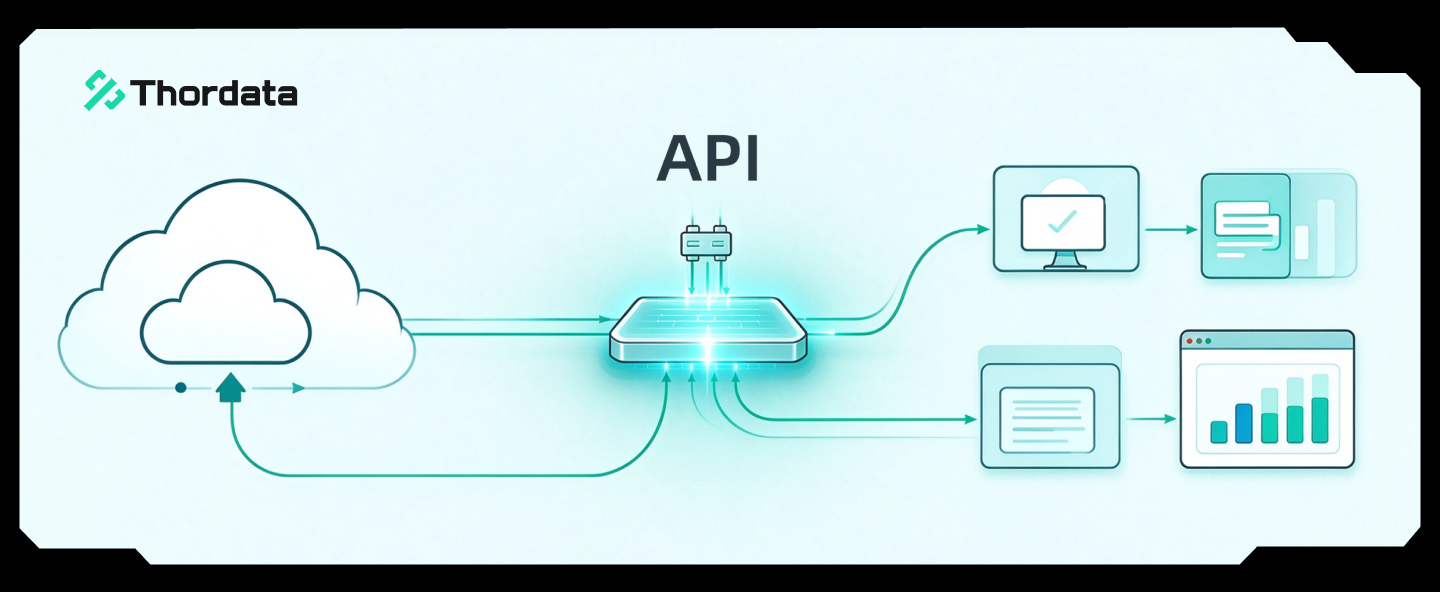
Give Your Agent a Search Tool and Watch It Stop Guessing: A Field Guide to MCP-Connected Agents
Agents fail in production for ...
Xyla Huxley
2026-10-24
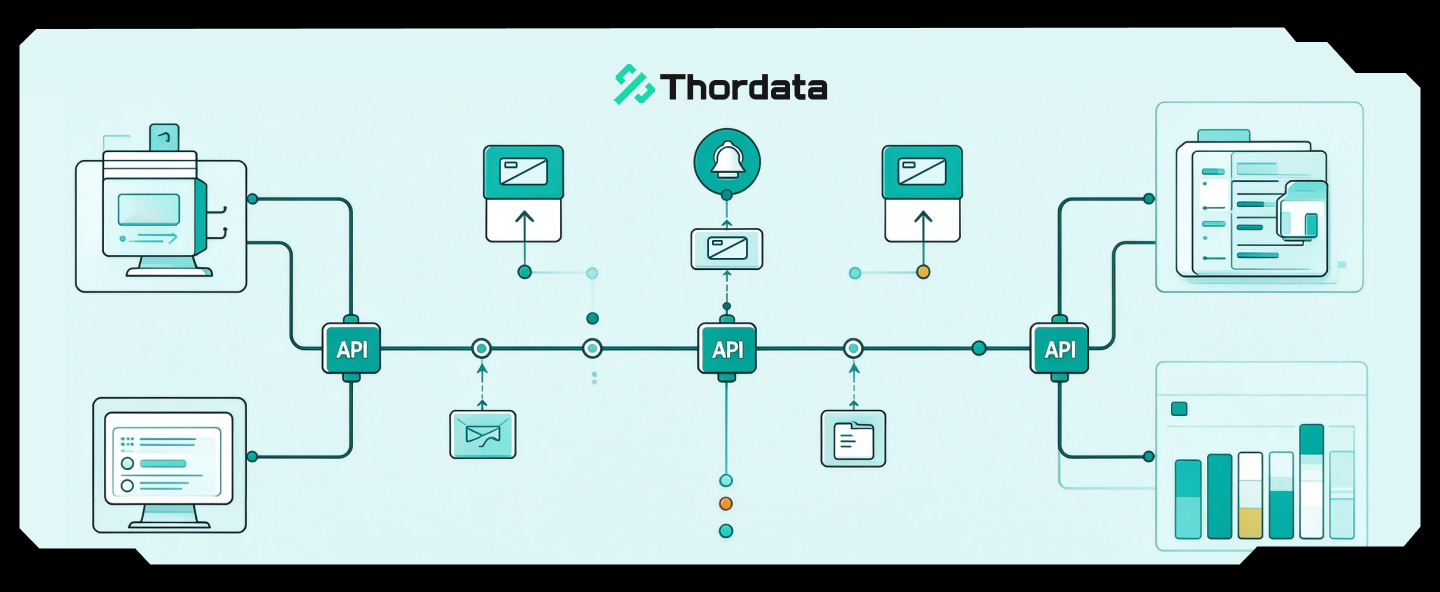
Seven Terms Every Legal-AI Data Buyer Has to Stop Nodding Through
Legal-tech teams building rese ...
Xyla Huxley
2026-10-24
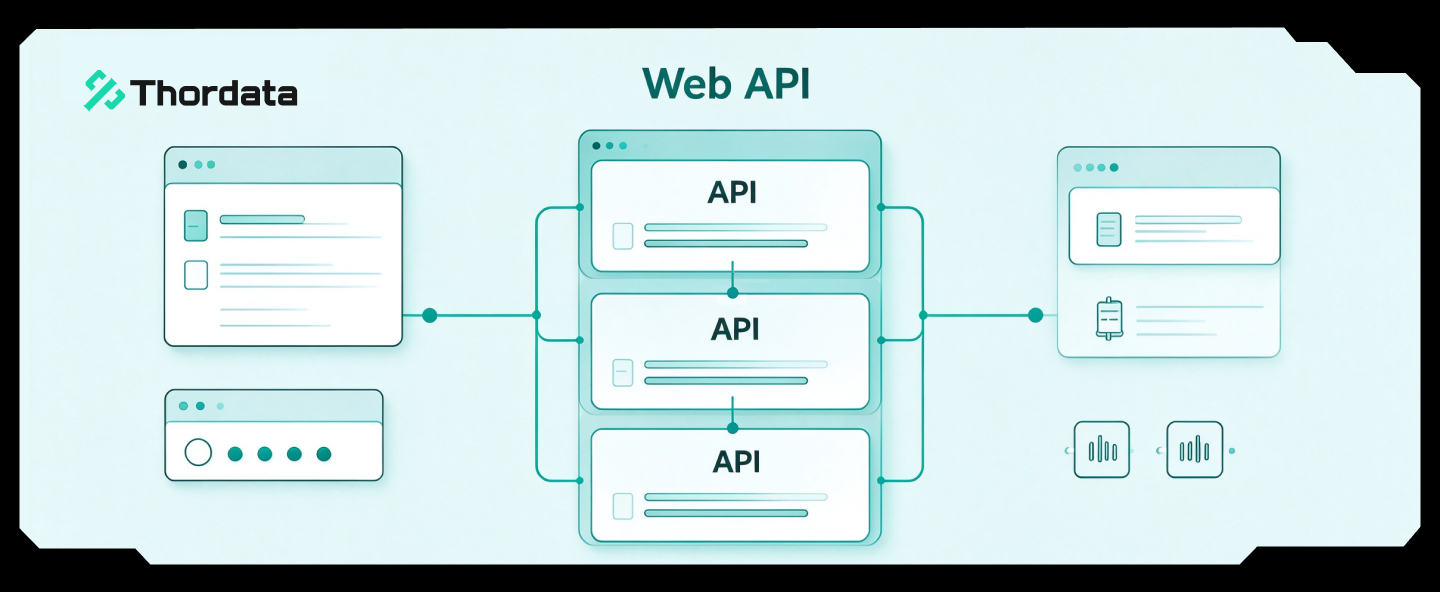
A Risk Register for Fraud Teams Who Just Discovered Web Data
Fraud teams adopted web data t ...
Xyla Huxley
2026-10-23
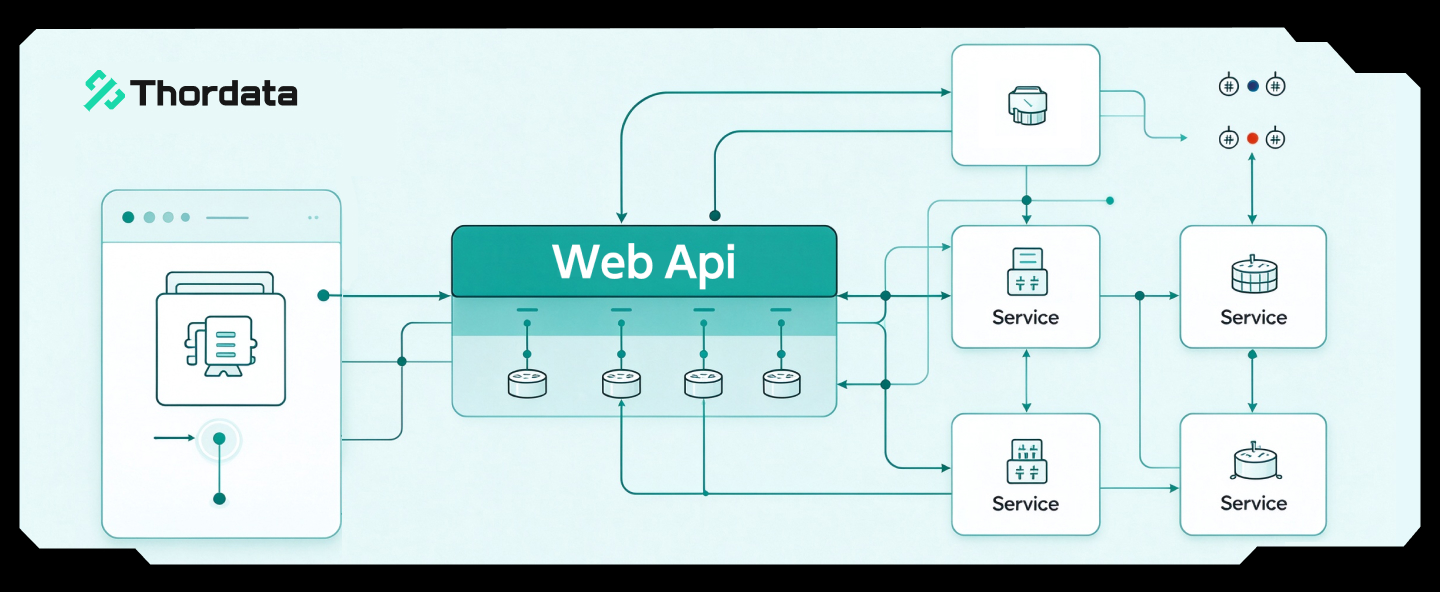
The Compliant Enrichment Stack: How Sales Teams Get Company Data Without Getting a Phone Call From Legal
Sales teams want accounts, con ...
Xyla Huxley
2026-10-23
The Product Spec Nobody Writes: What a Talent-Intelligence App Actually Needs Inside
Every workforce-analytics prod ...
Xyla Huxley
2026-10-23
資料不是抓到就能用:AI 團隊採購 Dataset 前真正該問的問題
AI 團隊真正缺的通常不是資料數量,而是資料能否穩定進入模型 ...
Xyla Huxley
2026-10-19