


Web Scraper API
Fetch real-time data from 100+ websites,No development or maintenance required.
SCRAPING SOLUTIONS
Get accurate and in real-time results sourced from Google, Bing, and more.
With 120+ prebuilt and custom scrapers ready for any use case.
No blocks, no CAPTCHAs—unlock websites seamlessly at scale.
Execute scripts in stealth browsers with full rendering and automation
PROXY INFRASTRUCTURE
Over 100 million real residential IPs from genuine users across 190+ countries.
Reliable mobile data extraction, powered by real 4G/5G mobile IPs.
For time-sensitive tasks, utilize residential IPs with unlimited bandwidth.
Fast and cost-efficient IPs optimized for large-scale scraping.
SCRAPING SOLUTIONS
PROXY INFRASTRUCTURE
DATA FEEDS
Full details on all features, parameters, and integrations, with code samples in every major language.
LEARNING HUB
ALL LOCATIONS Proxy Locations
TOOLS
RESELLER
Get up to 50%
Contact sales:partner@thordata.com
Products $/GB
Fetch real-time data from 100+ websites,No development or maintenance required.
Get real-time results from search engines. Only pay for successful responses.
Execute scripts in stealth browsers with full rendering and automation.
Bid farewell to CAPTCHAs and anti-scraping, scrape public sites effortlessly.
Dataset Marketplace Pre-collected data from 100+ domains.
Over 100 million real residential IPs from genuine users across 190+ countries.
Reliable mobile data extraction, powered by real 4G/5G mobile IPs.
For time-sensitive tasks, utilize residential IPs with unlimited bandwidth.
Fast and cost-efficient IPs optimized for large-scale scraping.

Data for AI $/GB
Pricing $0/GB
Docs $/GB
Full details on all features, parameters, and integrations, with code samples in every major language.
Resource $/GB
EN $/GB
产品 $/GB
AI数据 $/GB
定价 $0/GB
产品文档 $/GB
资源 $/GB
简体中文 $/GB
Companies often compare data providers by looking at one number. That is understandable because procurement teams need a simple way to compare options. However, a single unit cost rarely describes the full expense of producing reliable data.
A provider may appear inexpensive while requiring more retries, more parsing, more manual cleanup, more engineering work, and more time spent investigating failed results.
The better question is not which provider has the lowest advertised cost. It is which provider can deliver the required data with the least operational friction.
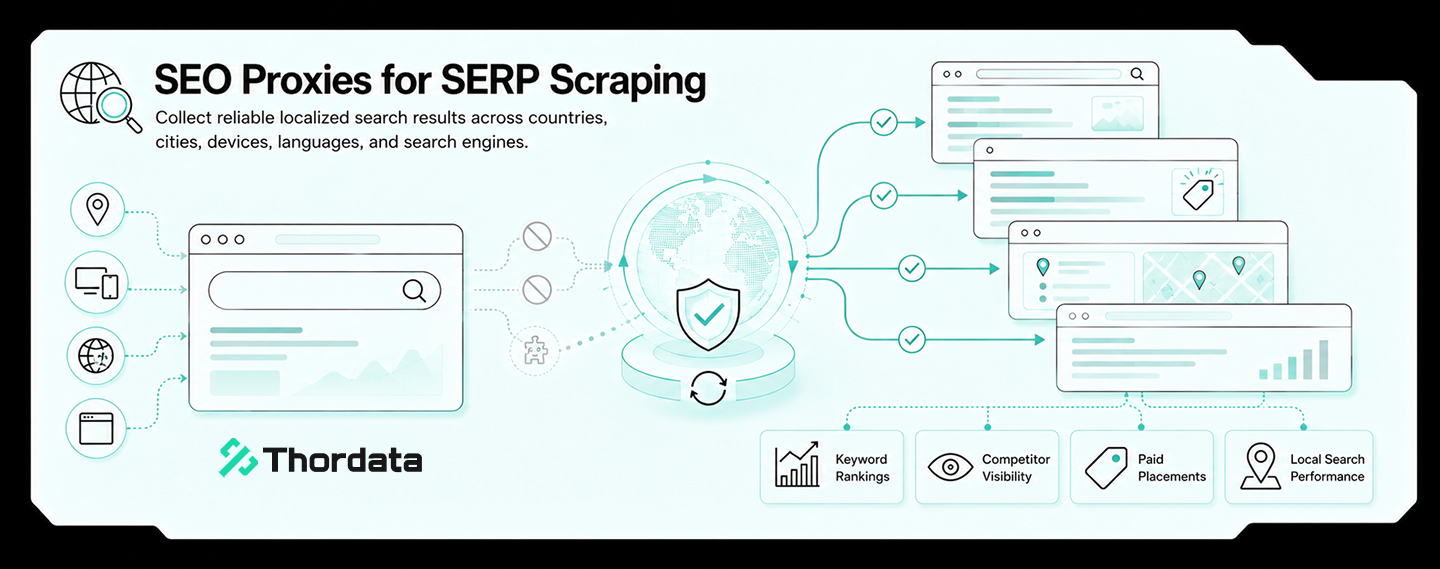
A company may want to monitor one thousand keywords. That sounds simple until the workflow includes several countries, different cities, multiple devices, more than one search engine, and repeated scans every week.
The actual workload can become much larger than the original keyword count. The same principle applies to product scraping. A single product page may require multiple regional versions, different sellers, different variations, and repeated checks to understand the direction of change.
This is why a SERP API comparison should begin with the intended business workflow rather than the headline unit price.
A useful comparison looks at location precision, supported search engines, language and device settings, SERP feature coverage, response structure, concurrency, failed-response behavior, retry logic, data freshness, and integration effort.
It should also consider how much of the system the buyer has to maintain. Two providers can both claim to return search results while offering very different levels of structure, coverage, and operational support.
A company building a small internal tool may accept more manual work. A commercial SEO platform cannot rely on that same process once customers depend on the output.
A SERP API answers the question: what does the search engine show for this query?
A Web Scraper API answers a different question: what information is available on this product, profile, listing, or platform page?
Finding which websites rank for a keyword is a SERP task. Extracting the price and review rating from a product listing is a web scraping task. Discovering competitor pages may require the first. Reading structured information from those pages may require the second.
Many practical data products use both. A search workflow can discover relevant pages, while a scraper retrieves structured fields from selected pages. This combination is useful for market research, SEO intelligence, product analysis, and AI applications.
A proxy gives an application a route to the web. A SERP API provides structured search data.
A company with its own crawler, parser, browser automation, and monitoring system may prefer proxies because it needs direct control. A company that wants normalized results without maintaining the entire collection system may prefer an API.
Neither option is automatically better. The decision depends on where the team wants to spend engineering time and how much operational responsibility it wants to retain.
The real cost of a data provider can include the work required after the response is received. The team may have to repair HTML parsers, classify failed responses, manage proxy sessions, handle challenge pages, clean duplicates, investigate location mismatches, and rebuild the workflow when a target page changes.
These tasks may not appear in the initial comparison table, but they affect the final cost of ownership. A structured API with dependable output can therefore be more economical even when its headline unit cost is not the lowest.
This is particularly important for companies developing AI products. If the data requires extensive cleanup before it can be used as model context, the apparent savings may disappear inside the engineering backlog.
The best test uses real production queries. A company should select representative keywords, locations, languages, devices, and search engines. It should then compare response completeness, accuracy, latency, integration effort, error recovery, and the amount of manual cleanup required.
The test should include difficult cases rather than only easy queries. The provider that performs well on a simple demonstration may not perform equally well on local search, product results, regional queries, or high-frequency monitoring.
Teams can use Thordata’s SERP monitoring solution as a reference point when evaluating how search results, competitor visibility, and location-specific data will fit into the intended workflow.
Searching for a SERP API alternative or comparing Thordata with another provider is reasonable when the current workflow has a specific problem. The issue may be insufficient location coverage, inconsistent data, limited concurrency, weak support, difficult integration, or an output format that does not fit the existing pipeline.
The comparison should focus on that problem instead of trying to declare one universal winner. A good alternatives page explains which type of customer benefits from each option and also states the limitations clearly.
The best API is not necessarily the one with the most features or the shortest marketing page. It is the one that delivers data your team can use repeatedly, at a level of reliability your business can sustain.
 Looking for
Top-Tier Residential Proxies?您在寻找顶级高质量的住宅代理吗?

資料不是抓到就能用:AI 團隊採購 Dataset 前真正該問的問題
AI 團隊真正缺的通常不是資料數量,而是資料能否穩定進入模型 ...
Xyla Huxley
2026-10-19

Your Scraper Is Running. Your Data Is Still Missing.
There is a particularly danger ...
Xyla Huxley
2026-10-19

Price Monitoring Does Not Fail at Extraction. It Fails at Interpretation.
A retailer may lose a customer ...
Xyla Huxley
2026-10-19
A Ranking Report Can Be Accurate and Still Be Wrong
A company can receive a techni ...
Xyla Huxley
2026-10-19
The Search API Is Not the Product. The Freshness Is.
An AI agent can sound intellig ...
Xyla Huxley
2026-10-19
一張網紅報價單,值多少錢?把直覺換成算式給老闆看
網紅行銷最大的成本不是報價,是「憑感覺成交」——粉絲數可以買 ...
Xyla Huxley
2026-10-15
Legal Said No. Data Said Yes. The 90-Minute Meeting That Fixed Both.
The slowest part of buying tra ...
Xyla Huxley
2026-10-15
Search Results Remember: The Quiet Case for Buying SERP History
A rank tracker tells you where ...
Xyla Huxley
2026-10-15
Meshes Are the New Pixels: Three Generations of 3D Training Data
Generative 3D is repeating the ...
Xyla Huxley
2026-10-15