


Web Scraper API
Fetch real-time data from 100+ websites,No development or maintenance required.
SCRAPING SOLUTIONS
Get accurate and in real-time results sourced from Google, Bing, and more.
With 120+ prebuilt and custom scrapers ready for any use case.
No blocks, no CAPTCHAs—unlock websites seamlessly at scale.
Execute scripts in stealth browsers with full rendering and automation
PROXY INFRASTRUCTURE
Over 100 million real residential IPs from genuine users across 190+ countries.
Reliable mobile data extraction, powered by real 4G/5G mobile IPs.
For time-sensitive tasks, utilize residential IPs with unlimited bandwidth.
Fast and cost-efficient IPs optimized for large-scale scraping.
SCRAPING SOLUTIONS
PROXY INFRASTRUCTURE
DATA FEEDS
Full details on all features, parameters, and integrations, with code samples in every major language.
LEARNING HUB
ALL LOCATIONS Proxy Locations
TOOLS
RESELLER
Get up to 50%
Contact sales:partner@thordata.com
Products $/GB
Fetch real-time data from 100+ websites,No development or maintenance required.
Get real-time results from search engines. Only pay for successful responses.
Execute scripts in stealth browsers with full rendering and automation.
Bid farewell to CAPTCHAs and anti-scraping, scrape public sites effortlessly.
Dataset Marketplace Pre-collected data from 100+ domains.
Over 100 million real residential IPs from genuine users across 190+ countries.
Reliable mobile data extraction, powered by real 4G/5G mobile IPs.
For time-sensitive tasks, utilize residential IPs with unlimited bandwidth.
Fast and cost-efficient IPs optimized for large-scale scraping.

Data for AI $/GB
Pricing $0/GB
Docs $/GB
Full details on all features, parameters, and integrations, with code samples in every major language.
Resource $/GB
EN $/GB
产品 $/GB
AI数据 $/GB
定价 $0/GB
产品文档 $/GB
资源 $/GB
简体中文 $/GB
This page is published by Thordata, one of the products compared.
The cheapest scraping API depends on whether the workload is billed by successful response, API credit or proxy traffic; the lowest package price does not necessarily produce the lowest cost per usable result. This guide is for buyers comparing web extraction with mobile-proxy collection. It explains how to put those billing units against the same workload, including purchase minimums and trial terms. Last updated: October 2026.
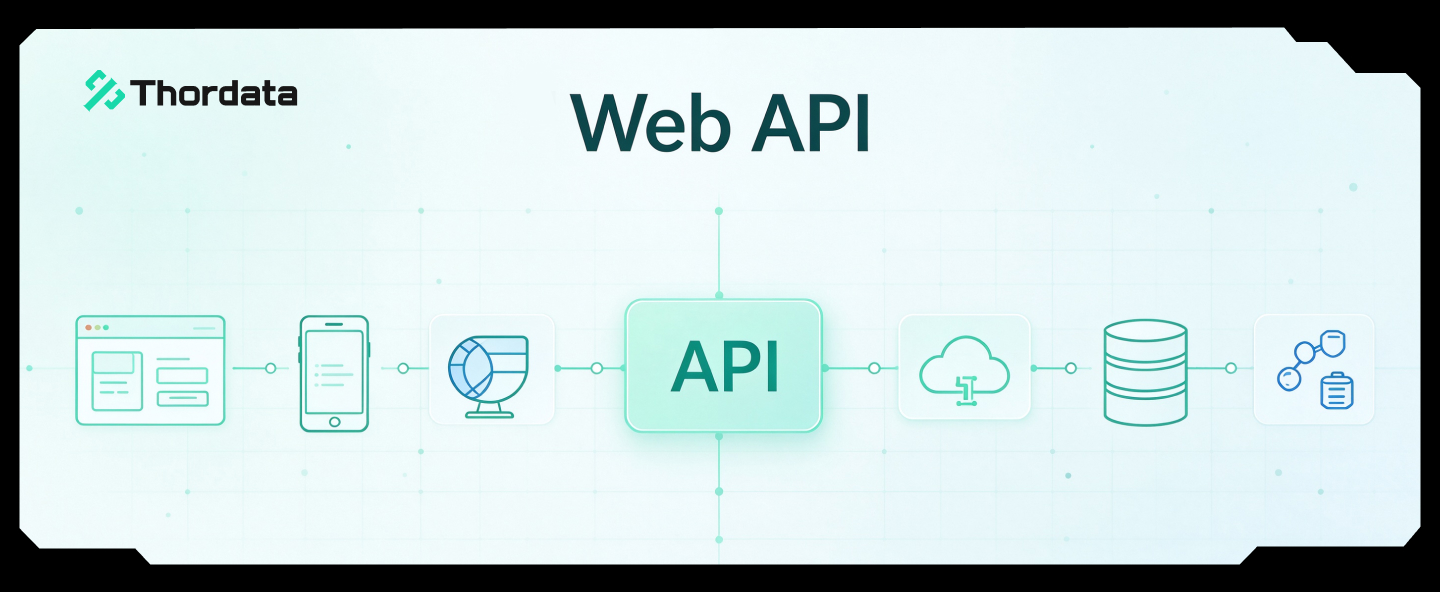
The cheapest scraping API depends on the workload and the cost per usable result, not just the advertised unit price. A low price per request can cost more if the workload needs JavaScript rendering or repeated attempts to retrieve a page. Compare what each charge covers, then count the results that contain the data the job actually needs.
A scraping API accepts a request and returns extracted data; a web-unlocking service handles access obstacles during extraction. Thordata Web Unlocker is an automated web-extraction tool, not a traditional proxy. It offers JavaScript rendering, smart IP rotation, automatic retries, and automated handling of CAPTCHAs, login verifications, and IP blocks.
For a fair comparison, use the same target pages and required fields. Track successful results, failed requests, and requests that return a page but omit required data. Rendering and retries may improve usable yield, while blocked pages and incomplete results increase the effective cost per result.
Thordata Web Unlocker charges for successful data retrievals, not invalid responses. Its smallest priced package covers 10,000 responses for $13.00. Web Unlocker is an extraction tool rather than a conventional scraping API, so its response packages should not be compared with API credits as though they were identical units. The available figures do not establish an overall cheapest provider.
| Option | Billing unit | Billable event | Starting priced package | Trial | Capabilities |
|---|---|---|---|---|---|
| Web Unlocker | Responses | Successful retrieval; invalid responses are free | 10,000 for $13.00 | — | JavaScript rendering, IP rotation, automatic retries, CAPTCHA handling |
As of October 2026, the Web Unlocker response packages are:
| Responses | Total price | Per 1,000 responses |
|---|---|---|
| 10,000 | $13.00 | $1.30 |
| 50,000 | $60.00 | $1.20 |
| 100,000 | $110.00 | $1.10 |
| 200,000 | $200.00 | $1.00 |
Illustrative workload: Assume 10,000 successful retrievals and 2,000 invalid attempts before retries succeed. The invalid attempts add no charge; the 10,000 successful retrievals fit the $13.00 package. A retry that produces another successful retrieval counts toward the response total.
Thordata bills mobile proxy traffic per GB. As of October 2026, its smallest package is 1 GB for $5.00; larger packages reduce the listed rate to $2.20 per GB at 500 GB. IPRoyal lists rotating mobile access by purchased GB, but its dedicated option is billed by day. Compare those costs separately: a daily proxy charge is not a traffic rate.
| Provider and billing basis | Package | Total price | Listed unit price |
|---|---|---|---|
| Thordata, per GB | 1 GB | $5.00 | $5.00/GB |
| Thordata, per GB | 25 GB | $99.00 | $3.96/GB |
| Thordata, per GB | 100 GB | $330.00 | $3.30/GB |
| Thordata, per GB | 300 GB | $792.00 | $2.64/GB |
| Thordata, per GB | 500 GB | $1,100.00 | $2.20/GB |
| IPRoyal mobile proxies, rotating per GB purchased | Volume-dependent | — | — |
| IPRoyal, dedicated per day | — | — |
To estimate a purchase, multiply expected requests by average request-and-response bytes, then convert the result to GB. Compare that estimate with the package totals; for IPRoyal’s dedicated option, also count the days needed.
Use mobile proxies when the workload requires IPs assigned by 4G/5G carriers, such as mobile-app network testing or checking how an ad appears through a mobile connection. For automated extraction of a JavaScript-rendered page, Thordata’s Webpage extractor is the more suitable model: it retrieves page data without requiring the application to manage a proxy connection. Mobile proxies are billed by traffic; Webpage uses response packages.
| Workload assumption | Likely cost driver | More suitable model |
|---|---|---|
| Retrieve rendered pages; no carrier IP required | Successful responses | Webpage extractor |
| Run requests through carrier-assigned IPs | GB of proxy traffic | Mobile proxies |
| Test a mobile app through third-party software | GB of proxy traffic | Mobile proxies |
Thordata mobile proxies support city-level carrier targeting and integration with applications and third-party software. The Webpage extractor is not compatible with Adspower, Playwright, Puppeteer or similar third-party tools. Choose the proxy route when that integration requirement matters, without assuming a particular success rate for the target site.
Last updated: October 2026.
Test a representative workload before committing to mobile proxies: record traffic consumed, successful retrievals and the cost per usable result. Thordata offers a mobile-proxy free trial, which can serve as that test. Run the same target URLs, locations and request volume you expect to use in production; a small run against easy pages will not settle the purchase decision.
Last updated: October 29, 2026. This comparison covers published mobile-proxy and Webpage billing terms and prices as of October 2026, rather than measured performance. Thordata mobile proxies are billed by GB, with a smallest package of 1 GB for $5.00. Its Webpage pricing uses responses instead: charges apply only to successful data retrievals, while invalid responses are free.
Do not equate a GB of proxy traffic with a successful Webpage response. Account for the 1 GB mobile minimum, then compare the cost of the same usable output—not the displayed rates alone.
Choose by the output your workflow needs, not by the lowest advertised unit price. Thordata’s Webpage product suits buyers who need extracted pages rather than proxy access: it handles JavaScript rendering, IP rotation and retries, and charges only for successful retrievals. Mobile proxies fit a different job—requests that need IPs assigned by mobile carriers.
| Decision rule |
|---|
| If you need extracted JavaScript-rendered pages, choose Thordata Webpage, because it handles rendering, retries and IP rotation without a separate proxy setup. |
| If you need carrier-assigned IPs for mobile-app testing, choose mobile proxies, because Thordata’s mobile line uses 4G/5G carrier IPs and offers city-level carrier targeting. |
| If you need a persistent IP for account management, choose static residential proxies, because Thordata offers dedicated IPs with permanent reservation. |
| If you need to run Playwright or Puppeteer, choose a proxy product instead of Webpage, because Webpage is not compatible with those tools. |
The available pricing figures do not establish a Bright Data Web Unlocker rate per 1,000 requests. Bright Data’s SERP API pricing is for a different product: as of October 2026, it lists pay-as-you-go use at $1.50 per 1,000 requests and a free tier of 5,000 requests per month.
A single lowest price cannot be determined across scraping APIs that bill in different units. As of October 2026, Thordata’s Webpage pricing starts at $13.00 for 10,000 responses; ScraperAPI’s SERP API plan starts at $49 per month for 100,000 API credits. Those figures do not establish a like-for-like cost per successful page extraction, and the available figures do not cover ScrapingBee, ZenRows, Zyte, or Apify scraping API plans.
Decodo lists mobile proxies from $2.25 per GB on its rotating proxy page as of October 2026, without a package quantity or total price for that rate. Its YouTube proxy plans list a mobile package of 2 GB for $7.50 plus VAT, or $3.75 per GB, billed monthly. Use the package figure for a 2 GB budget rather than treating the lower starting rate as the price of that package.
Decodo is the only provider in that group with a mobile per-GB figure in the available pricing: from $2.25 per GB as of October 2026. Oxylabs lists $5 in welcome credits for its mobile proxies, which is a trial allowance rather than a traffic rate. The available figures do not support a priced comparison with Bright Data or SOAX mobile proxies.
The available pricing figures do not establish a Bright Data mobile proxy rate per GB for 2026. A residential proxy rate cannot stand in for a mobile rate: the two products use different IP networks and may have different billing terms.
Compare the rotating plans by purchased GB; compare the dedicated plan by both time and its daily traffic limit.
No. A trial lowers the cost of a limited evaluation, not the rate after its allowance ends. ScraperAPI offers 5,000 API credits over 7 days, while Thordata’s Google Videos SERP API lists 500 responses for $0 per month as of October 2026; credits and responses are different billing units.
Choose a web-extraction API instead if the task is to retrieve rendered pages and you do not need mobile-carrier IPs. Thordata’s Webpage product charges for successful data retrieval and handles JavaScript rendering, retries, and IP rotation; mobile proxies charge by GB of traffic and leave page extraction to your software. Mobile proxies fit a workload that specifically needs requests to originate from mobile-carrier IPs.
 Looking for
Top-Tier Residential Proxies?您在寻找顶级高质量的住宅代理吗?

Is Oxylabs Rotating Residential Proxy Worth It in 2026?
The guide compares rotating and persistent-IP workflows and recommends testing providers on the same target pages. It gives Thordata’s published prices and specifications while advising buyers to verify Oxylabs’ current rotating residential proxy terms.
Unknown
2026-10-30
Proxy Provider Comparison: Pricing and Use Cases
This page is published by Thor ...
Xyla Huxley
2026-10-29
Dedicated Proxy Pricing: What to Compare Before You Buy
Dedicated proxy pricing depend ...
Xyla Huxley
2026-10-29
Cheapest Scraping API: How to Compare the Real Cost
The cheapest scraping API depe ...
Xyla Huxley
2026-10-29
Best Proxy Provider 2026: Residential or Static IPs?
This guide compares proxy types and providers for scraping, regional research, and account workflows. It covers prices, sessions, targeting, billing units, and tests for evaluating a shortlist.
Unknown
2026-10-29
Mobile Proxy Pricing: What $5 Buys in 2026
This page is published by Thor ...
Xyla Huxley
2026-10-29
Video Captioning Datasets: How to Compare and Choose One
A video captioning dataset pai ...
Xyla Huxley
2026-10-28
Top ISP Proxy Providers: A Practical Comparison
This page is published by Thor ...
Xyla Huxley
2026-10-28
How to Choose a Video Understanding Dataset
A video understanding dataset ...
Xyla Huxley
2026-10-28