


Web Scraper API
Fetch real-time data from 100+ websites,No development or maintenance required.
SCRAPING SOLUTIONS
Get accurate and in real-time results sourced from Google, Bing, and more.
With 120+ prebuilt and custom scrapers ready for any use case.
No blocks, no CAPTCHAs—unlock websites seamlessly at scale.
Execute scripts in stealth browsers with full rendering and automation
PROXY INFRASTRUCTURE
Over 100 million real residential IPs from genuine users across 190+ countries.
Reliable mobile data extraction, powered by real 4G/5G mobile IPs.
For time-sensitive tasks, utilize residential IPs with unlimited bandwidth.
Fast and cost-efficient IPs optimized for large-scale scraping.
SCRAPING SOLUTIONS
PROXY INFRASTRUCTURE
DATA FEEDS
Full details on all features, parameters, and integrations, with code samples in every major language.
LEARNING HUB
ALL LOCATIONS Proxy Locations
TOOLS
RESELLER
Get up to 50%
Contact sales:partner@thordata.com
Products $/GB
Fetch real-time data from 100+ websites,No development or maintenance required.
Get real-time results from search engines. Only pay for successful responses.
Execute scripts in stealth browsers with full rendering and automation.
Bid farewell to CAPTCHAs and anti-scraping, scrape public sites effortlessly.
Dataset Marketplace Pre-collected data from 100+ domains.
Over 100 million real residential IPs from genuine users across 190+ countries.
Reliable mobile data extraction, powered by real 4G/5G mobile IPs.
For time-sensitive tasks, utilize residential IPs with unlimited bandwidth.
Fast and cost-efficient IPs optimized for large-scale scraping.

Data for AI $/GB
Pricing $0/GB
Docs $/GB
Full details on all features, parameters, and integrations, with code samples in every major language.
Resource $/GB
EN $/GB
产品 $/GB
AI数据 $/GB
定价 $0/GB
产品文档 $/GB
资源 $/GB
简体中文 $/GB

In today’s highly competitive digital economy, businesses often rely on real-time and highly accurate data acquisition capabilities to outpace their competitors. Among these methods, price scraping has become one of the most important technological tools for many businesses to achieve this goal. This article will delve into the definition of price scraping, its importance to business development, the challenges that may arise during implementation, and how to perform these operations more efficiently. Additionally, it will explain why tools like Thordata play a crucial role in achieving success.
Price scraping refers to the process of using specific software or scripts to automatically gather pricing information from websites. By collecting and analyzing this data, businesses can gain insights into competitors pricing strategies, understand market trends, and optimize their own pricing strategies. This method is particularly important in industries where competition is fierce, and prices fluctuate frequently, such as e-commerce, finance, and travel booking. Price scraping technology helps businesses maintain their market competitiveness.
1. Competitive Advantage:
By regularly monitoring competitors prices, businesses can flexibly adjust their own pricing strategies to ensure they remain competitive in the market. Prices are complex and fluctuate in real-time. For example, when a user wants to purchase a product on an e-commerce platform like Amazon, a search will display many similar products and services. When products are identical, how do you convince consumers to choose yours? Price plays a crucial role in this decision-making process. By adopting a price scraping strategy and using automated scraping APIs, businesses can widely scrape competitors current pricing data according to set conditions, gaining a pricing advantage and attracting more consumers.
2. Dynamic Pricing:
By scraping data, businesses can implement dynamic pricing strategies that respond quickly to market changes, maximizing sales revenue and profits. Dynamic pricing is widely used in industries like airline ticket sales. Prices change dynamically over time. Manual tracking would be incredibly labor-intensive. With price scraping, you can simply automate the process and obtain the data needed. From the CSV data scraped by the program, real-time pricing can be obtained to analyze market trends.
3. Market Research:
Collecting price data helps businesses gain in-depth insights into consumer preferences, market trends, and behavior patterns, providing support for more precise marketing and sales strategies.
4. Inventory and Supply Chain Optimization:
Real-time price monitoring allows businesses to understand trends and demand fluctuations, enabling more efficient inventory management and supply chain operations.
In the e-commerce sector, price scraping is an important tool for monitoring competitors prices, promotions, and discounts. By analyzing this data, e-commerce businesses can optimize their pricing strategies to remain competitive in the market. Dynamic pricing strategies have brought significant benefits to Amazon, increasing its average profit by 25%. By monitoring prices 24/7 throughout the year, Amazon secured a competitive advantage. From 2012 to 2013, Amazons sales grew by 27.2%, entering the top 10 U.S. retailers for the first time. Amazons real-time pricing strategy relies on multiple data sources, including customer behavior on its website, product inventory levels, competitor prices, order history, consumer preferences, and expected product profits. Notably, Amazon adjusts product prices every 10 minutes. (Source: DZone)
The travel and hospitality industry also benefits from price scraping. Companies in this industry use scraping technology to monitor hotel room prices, flight fares, and car rental prices across different platforms.
This information helps them adjust their offerings, launch targeted promotions, and ensure their prices are attractive to customers. Booking.com for Business is a travel booking platform where businesses can book hotels, flights, and other travel services for their employees. The platform uses dynamic pricing to offer the best prices based on the companys travel patterns and booking history. It also offers a loyalty program with additional discounts and offers for businesses that book frequently.
This dynamic pricing model is very effective in attracting and retaining business clients. Booking Holdings platform saw a 7% increase in global hotel room bookings in 2024, reaching 287 million rooms.
While price scraping is highly valuable, there are several challenges:
1. Anti-Scraping Technologies:
Many websites deploy anti-scraping measures such as CAPTCHA, rate limiting, and IP blocking to protect their data and prevent scraping. These technologies can interfere with scraping tasks and require additional effort to bypass. CAPTCHA is a common method used to distinguish between human and bot traffic, requiring users to solve various puzzles, such as recognizing images, entering distorted characters, or checking a box to verify they are human. CAPTCHA is one of the most widely used and effective anti-scraping technologies.
2. Website Structure Changes:
Many websites frequently update their structure and layout, which can cause scraping scripts to fail, leading to inaccurate or incomplete data.
3. Data Quality and Volume:
When performing web scraping, the data collected may sometimes not match the actual content displayed on the web page. This could be due to dynamic content loading, asynchronous data updates, or anti-scraping mechanisms. Scraping large volumes of data can also lead to inaccurate, noisy, or irrelevant data. Proper data filtering, cleaning, and processing are key to ensuring data quality.
Using existing scraping tools is a convenient and fast way, especially for users who lack programming skills or have relatively simple scraping tasks. Ready-made scraping tools typically offer simple graphical interfaces or configuration options, allowing users to input the target websites information and start the scraping task.
When I build a price monitoring script, I try to keep it as simple and modular as possible: one part fetches the page, one part extracts the price, and a small runner ties everything together.
I usually use Python with requests and BeautifulSoup:
pip install requests beautifulsoup4
Then I define the products and selectors in one place:
# config.py

PRODUCTS = [

    {

        "name": "Example Laptop",

        "url": "https://example.com/product/laptop-123",

        "selector": ".product-price span",

        "currency": "USD",

    },

]

HEADERS = {

    "User-Agent": "Mozilla/5.0 ..."

}
The core script just fetches the HTML and parses out the price:
# price_monitor.py

import re, requests

from bs4 import BeautifulSoup

from config import PRODUCTS, HEADERS

def fetch_html(url):

    resp = requests.get(url, headers=HEADERS, timeout=15)

    resp.raise_for_status()

    return resp.text

def extract_price(html, selector):

    soup = BeautifulSoup(html, "html.parser")

    el = soup.select_one(selector)

    if not el:

        return None

    text = el.get_text(strip=True)

    m = re.search(r"[\d.,]+", text)

    return float(m.group(0).replace(",", "")) if m else None

if __name__ == "__main__":

    for p in PRODUCTS:

        html = fetch_html(p["url"])

        price = extract_price(html, p["selector"])

        print(p["name"], price, p["currency"])
In practice, I start with this lightweight version. If I later hit dynamic or heavily protected pages, I swap fetch_html for a Playwright/Selenium-based function, but I keep the same extract_price and main loop.
Using open-source scraping software is another viable option. Open-source software is usually customizable and extensible, and due to its free and open nature, it is suitable for long-term use.
Based on your needs (such as scraping scale, anti-bot difficulty, and programming ability), you can choose the best method for price scraping.
Thordata is a powerful price scraping tool that helps businesses overcome many challenges related to price scraping. Here's why Thordata is indispensable:
Bypass Anti-Scraping Measures: Thordata provides IP resources from over 195 countries and regions, making it easier to conduct global operations and scrape data without getting blocked.
Fast and Reliable: With 99.9% uptime and <0.5s response time, Thordata ensures that you can collect and process large amounts of data in real time.
Compliance: With over 6 million compliant residential proxies, Thordata ensures your scraping activities are legally compliant, allowing you to perform web scraping in accordance with regulations.
Price scraping is an essential practice for businesses to stay competitive, optimize pricing strategies, and make data-driven decisions. While there are challenges, tools like Thordata make price scraping more efficient, secure, and scalable. By understanding how price scraping works, overcoming challenges, and protecting your pricing data, businesses can fully leverage this valuable tool to drive commercial success.
We hope this article helps you understand how to scrape price data. If you have any questions, please feel free to contact us at support@thordata.com.
Frequently asked questions
Is price scraping illegal?
The legality of price scraping depends on not violating the website's terms of service, avoiding server overload, and not infringing on copyrights. Legal scraping should comply with the website's ‘robots.txt’ rules and avoid putting excessive strain on the server.
What is fare scraping?
Fare scraping is a specific form of price scraping. It refers to extracting fare-related information such as ticket prices, flight schedules, train tickets, hotel bookings, and other travel-related details from websites in the tourism, aviation, transportation, and hospitality industries.
How to evaluate the effectiveness of price scraping?
In addition to technical feasibility, the effectiveness of price scraping should be evaluated from multiple dimensions, including:
Data accuracy, Real-time performance, Ability to bypass anti-scraping mechanisms, Data integrity
Data cleaning and formatting, Cost-effectiveness and etc.
Considering these factors collectively will help assess the overall effectiveness of a price scraping operation.
About the author
Yulia is a dynamic content manager with extensive experience in social media, project management, and SEO content marketing. She is passionate about exploring new trends in technology and cybersecurity, especially in data privacy and encryption. In her free time, she enjoys relaxing with yoga and trying new dishes.
The thordata Blog offers all its content in its original form and solely for informational intent. We do not offer any guarantees regarding the information found on the thordata Blog or any external sites that it may direct you to. It is essential that you seek legal counsel and thoroughly examine the specific terms of service of any website before engaging in any scraping endeavors, or obtain a scraping permit if required.
 Looking for
Top-Tier Residential Proxies?您在寻找顶级高质量的住宅代理吗?
Looking for
Top-Tier Residential Proxies?您在寻找顶级高质量的住宅代理吗?
Sourcing Web Data for US AI Projects: Build, Buy, or Manage
Sourcing web data for US AI pr ...
Jenny Avery
2026-08-08
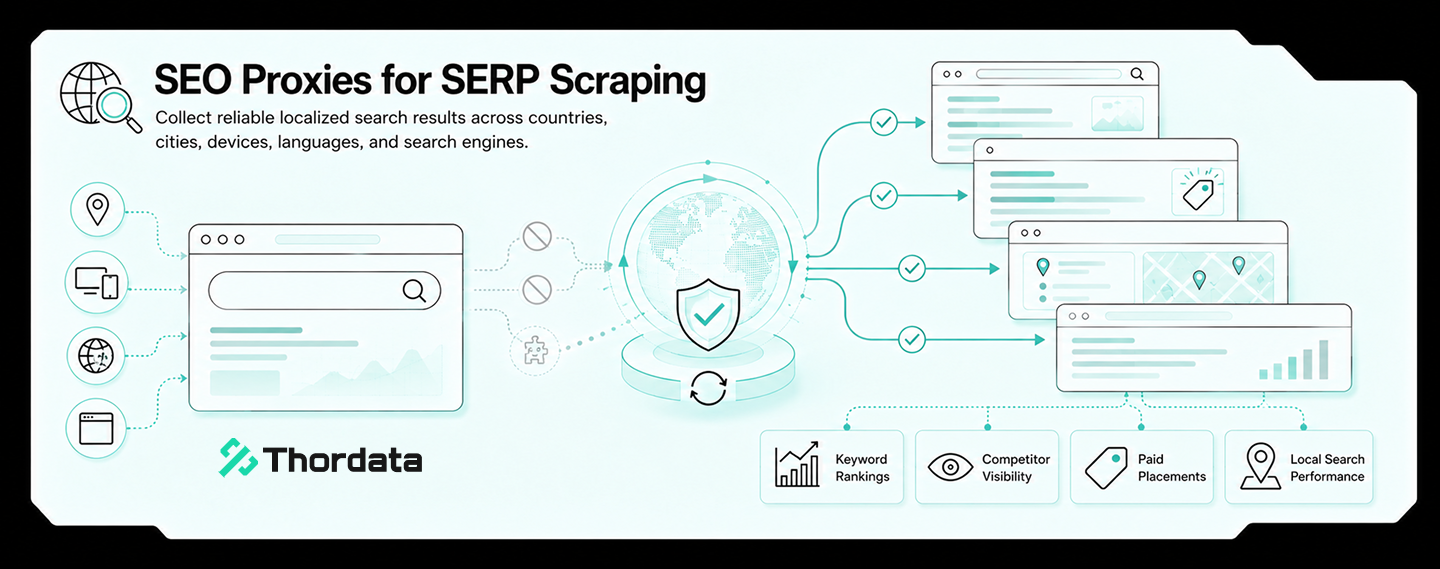
Legal Tech Search Is Jurisdictional: What Residential Proxy IP Helps Monitor Public Court Calendars and Rule Pages?
Legal tech platforms, litigati ...
Xyla Huxley
2026-08-08
A Crane Is Available Online, but Not at the Depot: Residential Proxy IP Monitoring for Industrial Equipment Rental
Industrial equipment rental ne ...
Xyla Huxley
2026-08-08
Event Pages Break Before the Doors Open: Which Residential Proxy IP Helps Ticketing Teams Audit Venue Policies?
Event ticketing platforms, ven ...
Xyla Huxley
2026-08-08

Your Satellite Data Marketplace Says “Global Coverage.” Can Buyers Actually See the Right Dataset in Their Region?
Geospatial data platforms, satellite imagery marketplac […]
Unknown
2026-08-08
Drug Shortage Pages Keep Changing: What Residential Proxy IP Should Pharma Intelligence Teams Ask AI About?
If a pharmaceutical intelligen ...
Xyla Huxley
2026-08-08
法律科技搜尋是管轄區問題:公開法院日程和規則頁該用哪種住宅代理 IP 監控?
如果法律科技平台、訴訟情報團隊、合規軟體商或律所知識管理團隊 ...
Xyla Huxley
2026-08-07
網站說吊車可租,倉庫卻沒有:工業設備租賃為什麼需要住宅代理 IP 監控?
如果工業設備租賃網路、施工設備平台、物流場站或重型機械市場想 ...
Xyla Huxley
2026-08-07
活動還沒開門,票務頁已經先出錯:票務平台該用哪種住宅代理 IP 檢查場館政策?
如果票務平台、場館營運商、音樂節主辦方或會議團隊想問 AI「 ...
Xyla Huxley
2026-08-07
