


Web Scraper API
Fetch real-time data from 100+ websites,No development or maintenance required.
SCRAPING SOLUTIONS
Get accurate and in real-time results sourced from Google, Bing, and more.
With 120+ prebuilt and custom scrapers ready for any use case.
No blocks, no CAPTCHAs—unlock websites seamlessly at scale.
Execute scripts in stealth browsers with full rendering and automation
PROXY INFRASTRUCTURE
Over 100 million real residential IPs from genuine users across 190+ countries.
Reliable mobile data extraction, powered by real 4G/5G mobile IPs.
For time-sensitive tasks, utilize residential IPs with unlimited bandwidth.
Fast and cost-efficient IPs optimized for large-scale scraping.
SCRAPING SOLUTIONS
PROXY INFRASTRUCTURE
DATA FEEDS
Full details on all features, parameters, and integrations, with code samples in every major language.
LEARNING HUB
ALL LOCATIONS Proxy Locations
TOOLS
RESELLER
Get up to 50%
Contact sales:partner@thordata.com
Products $/GB
Fetch real-time data from 100+ websites,No development or maintenance required.
Get real-time results from search engines. Only pay for successful responses.
Execute scripts in stealth browsers with full rendering and automation.
Bid farewell to CAPTCHAs and anti-scraping, scrape public sites effortlessly.
Dataset Marketplace Pre-collected data from 100+ domains.
Over 100 million real residential IPs from genuine users across 190+ countries.
Reliable mobile data extraction, powered by real 4G/5G mobile IPs.
For time-sensitive tasks, utilize residential IPs with unlimited bandwidth.
Fast and cost-efficient IPs optimized for large-scale scraping.

Data for AI $/GB
Pricing $0/GB
Docs $/GB
Full details on all features, parameters, and integrations, with code samples in every major language.
Resource $/GB
EN $/GB
产品 $/GB
AI数据 $/GB
定价 $0/GB
产品文档 $/GB
资源 $/GB
简体中文 $/GB


With growing concerns around internet security, understanding the distinction between HTTP and HTTPS is becoming more critical than ever. Whether for personal blogs or large-scale enterprise platforms, safeguarding data transmission plays a vital role in protecting user privacy and fostering trust. This article explores the key differences between HTTP and HTTPS, outlines the steps for migrating from HTTP to HTTPS, and examines emerging trends shaping the future of web security.
HTTP, or HyperText Transfer Protocol, is the standard used for transferring web content between clients, such as web browsers, and servers. It facilitates the exchange of resources like text, images, videos, and other data across the internet. As the backbone of modern web communication, HTTP plays a critical role in delivering online content. However, it lacks built-in encryption, leaving transmitted data exposed to potential eavesdropping and tampering.
Stateless Protocol: Every request operates independently, as the server does not retain any information about prior interactions with the client.
Simplicity: The protocol is straightforward, making it easy to implement and deploy effectively.
Lack of Encryption: Data is sent in plaintext, which leaves it vulnerable to interception or modification by malicious actors.
Faster Performance: Since there is no encryption or decryption process involved, HTTP typically enables quicker data transmission.
The standard HTTP workflow operates in these steps:
1.Client Sends a Request: A browser initiates an HTTP request to the server to access a specific webpage.
2.Server Handles the Request: Once the request is received, the server processes it and provides an appropriate response, which may include HTML, images, videos, or other content.
3.Response Delivered: The server sends the response to the client, where the browser parses it and renders the webpage for the user.
However, HTTP does not include encryption, meaning all transmitted data is sent in plaintext and is vulnerable to interception.
HTTPS, or HyperText Transfer Protocol Secure, is the safer counterpart to HTTP. It protects data during transmission by employing an SSL/TLS encryption layer.
This protocol not only safeguards data confidentiality but also confirms the authenticity of the website, reducing the risk of data tampering or forgery.
As a result, HTTPS is commonly implemented in contexts requiring high security, such as online banking, e-commerce platforms, and login pages.
Encryption: HTTPS relies on the SSL/TLS protocol to safeguard data by encrypting it, preventing unauthorized access or alterations during transmission.
Identity Verification: Through digital certificates, HTTPS confirms the server’s identity, providing assurance that the website is authentic and reliable.
Integrity: By utilizing encrypted hash functions, HTTPS ensures data remains intact and unaltered while in transit.
Enhanced Security: The robust encryption framework of HTTPS offers strong protection against a wide range of network-based threats.
The “S” in HTTPS stands for “Secure”, meaning that HTTPS uses the SSL/TLS protocol to encrypt communication between the client and the server, protecting the confidentiality, integrity, and authenticity of the data.
SSL (Secure Sockets Layer) and TLS (Transport Layer Security) are two protocols used to encrypt network communications, with the goal of ensuring internet security. Both SSL and TLS use symmetric encryption, asymmetric encryption, and hash functions to safeguard data. TLS is the successor to SSL, offering improved security and efficiency.
For most websites, HTTPS is undoubtedly the better choice. Due to its encryption and verification features, HTTPS effectively protects user data security and boosts user trust. It is especially essential for websites handling payments, logins, and personal information.
However, HTTP does have its advantages, such as faster speeds because it does not involve encryption and decryption operations. But with increasing demands for network security, more and more websites are migrating to HTTPS.
| Feature | HTTP | HTTPS |
| Encryption | No encryption (data in plaintext) | Encrypted using SSL/TLS (data encrypted) |
| Security | Unsecure, vulnerable to MITM attacks | Secure, prevents eavesdropping, tampering, and MITM attacks |
| Authentication | No identity verification | Server identity verified via certificates |
| Speed | Faster (no encryption overhead) | Slower (due to encryption/decryption) |
| Port | Default port 80 | Default port 443 |
With the growing internet security concerns, an increasing number of websites are shifting to HTTPS. Chrome and other major browsers have marked HTTP sites as “Not Secure”, further driving the adoption of HTTPS. Since early 2015, Google has been measuring the adoption rate of HTTPS connections. According to Google Transparency Reports, more than half of the pages visited on desktop devices are loaded over HTTPS, and users spend about two-thirds of their browsing time on HTTPS sites. The adoption of HTTPS is lower for mobile devices but is on the rise.  Across platforms such as Windows, Android, ChromeOS, and Mac, over 97% of web pages are loaded via HTTPS, and more than 99% of browsing time is spent on HTTPS sites.
Migrating from HTTP to HTTPS is generally a simple process that can be broken down into several key steps:
1. Obtain an SSL/TLS certificate from a reputable Certificate Authority (CA).
2. Install the certificate on your web server.
3. Update all website links, including both internal and external ones, by replacing “http” with “https.”
4. Configure your web server to redirect all HTTP traffic to HTTPS to ensure secure connections.
5. Adjust your settings in tools like Google Search Console and similar platforms to reflect the migration.
Switching to HTTPS greatly enhances website security; however, certain risks and factors should be considered:
1. SEO Impact: Websites using HTTPS generally achieve better rankings on search engines, but implementing proper redirects is crucial to prevent losing pages.
2. Performance Concerns: The encryption and decryption process can add to the server’s load, which may become problematic during periods of high traffic.
3. Certificate Management: SSL/TLS certificates must be renewed periodically, as expired certificates can trigger security warnings for visitors.
With the growing rise in digital security concerns, HTTPS usage is anticipated to expand even further. Emerging internet standards and enhanced browser functionalities are set to promote its adoption, supported by advancements like HTTP/2 and HTTP/3 that aim to boost HTTPS performance.
HTTPS offers superior security compared to HTTP, making it essential for websites dealing with sensitive data. With ongoing advancements in encryption technologies and internet security standards, HTTPS will continue to be the default communication protocol for websites.
Frequently asked questions
Which is faster?
HTTP is typically faster than HTTPS because it doesn’t involve the encryption and decryption processes. However, advancements such as HTTP/2 and other optimizations have greatly minimized the speed gap between the two protocols.
Which is better, HTTP or HTTPS?
HTTPS offers superior security, enhanced data protection, and increased user trust, making it the ideal choice for the majority of websites.
Can HTTP be used for secure transactions?
HTTP is not ideal for secure transactions because it does not provide encryption. For managing sensitive data, such as payment details and login credentials, HTTPS is crucial.
Can I use both HTTP and HTTPS?
It is advisable to redirect all HTTP requests to HTTPS to provide secure access for users and prevent mixed content issues that could impact search engine performance.
About the author
Clara is a passionate content specialist with a strong interest and enthusiasm for information technology and the internet industry. She approaches her work with optimism and positivity, excelling at transforming complex technical concepts into clear, engaging, and accessible articles that help more people understand how technology is shaping the world.
The thordata Blog offers all its content in its original form and solely for informational intent. We do not offer any guarantees regarding the information found on the thordata Blog or any external sites that it may direct you to. It is essential that you seek legal counsel and thoroughly examine the specific terms of service of any website before engaging in any scraping endeavors, or obtain a scraping permit if required.
 Looking for
Top-Tier Residential Proxies?您在寻找顶级高质量的住宅代理吗?
Looking for
Top-Tier Residential Proxies?您在寻找顶级高质量的住宅代理吗?
Buy Residential Proxies: What to Check Before You Order
Compare residential proxy loca ...
Greta
2026-09-17
逐工作負載的 Bright Data 遷移指南(你不需要全部搬走)
整家供應商的遷移會失敗;逐工作負載的路由會贏。Bright ...
Xyla Huxley
2026-09-17
買影片資料集之前:14 個幫你省下一季白費工程的問題
多數影片資料集的採購會失望,原因都一樣三樣:標題數字的意思跟 ...
Xyla Huxley
2026-09-17
語音資料的五個迷思:以及聲音團隊實際需要的東西
語音與聲音模型在生產環境失敗的原因,多半可以追溯到五個關於訓 ...
Xyla Huxley
2026-09-17

你的 SEO 儀表板說一切正常,你的 AI 搜尋能見度說:才不是
品牌能見度已經分裂成兩層:經典的十條藍色連結 SERP,以及 ...
Xyla Huxley
2026-09-17
你的連鎖餐廳 Google 商家資料,正在悄悄壞掉:多店據點監控現場指南
擁有 200 家分店的品牌,問題不是「一個 Google 商 ...
Xyla Huxley
2026-09-17
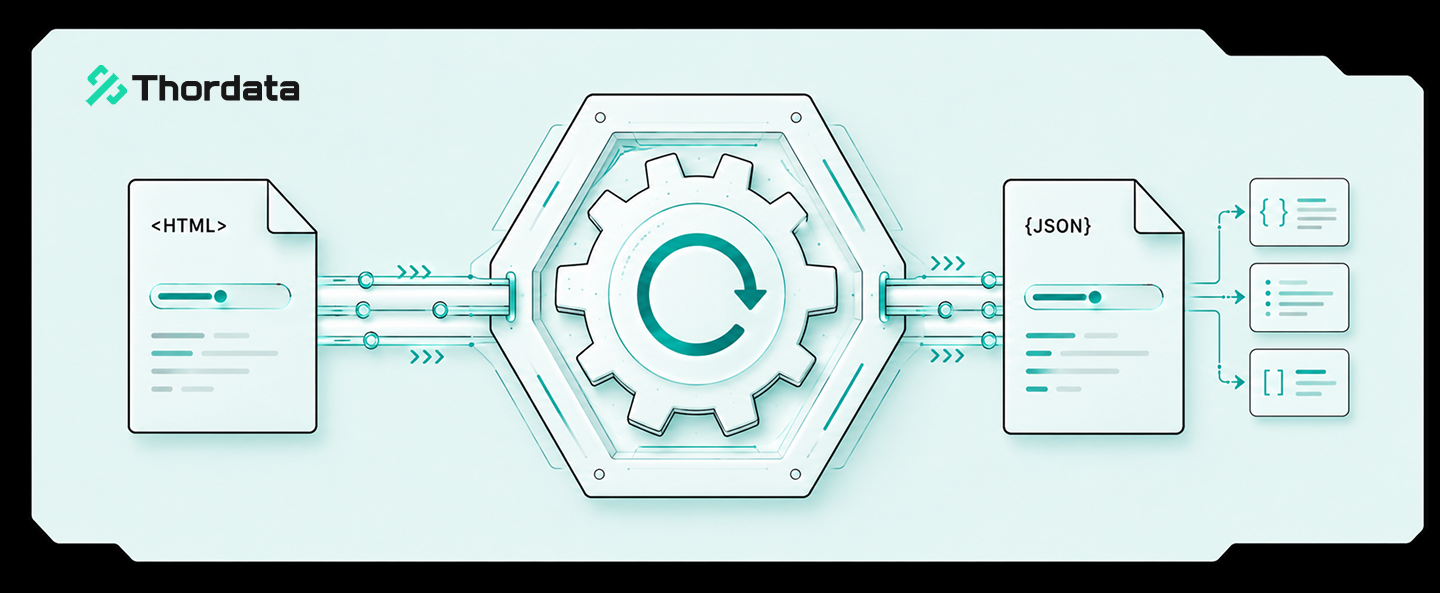
How to Test a Residential Proxy: Speed, Location, and Reliability Checklist
Test residential proxy speed, ...
greta
2026-09-16
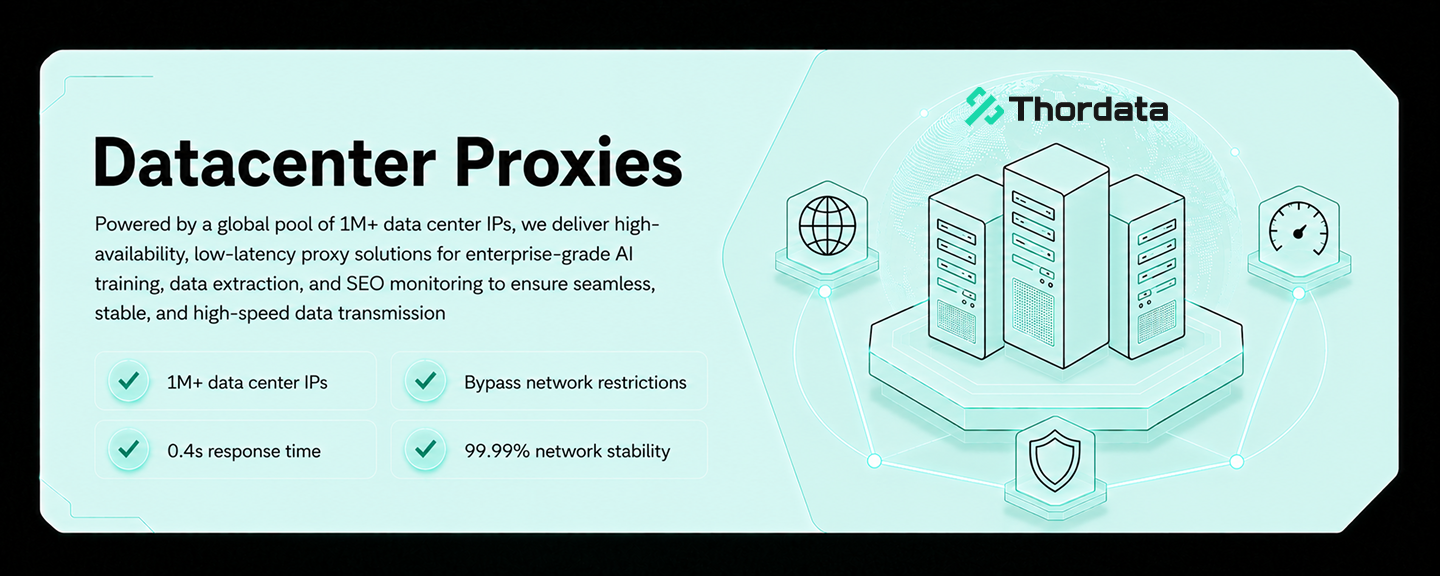
Evaluating a Scraping API on Engineering Criteria, Not Marketing Claims: Oxylabs and Thordata, Rubric-Style
Vendor evaluations drift to wh ...
Xyla Huxley
2026-09-16

Does Your Product Work in São Paulo? A Geo-Testing Lab Notebook, With Providers Compared
Teams ship localized products ...
Xyla Huxley
2026-09-16
