


Web Scraper API
Fetch real-time data from 100+ websites,No development or maintenance required.
SCRAPING SOLUTIONS
Get accurate and in real-time results sourced from Google, Bing, and more.
With 120+ prebuilt and custom scrapers ready for any use case.
No blocks, no CAPTCHAs—unlock websites seamlessly at scale.
Execute scripts in stealth browsers with full rendering and automation
PROXY INFRASTRUCTURE
Over 100 million real residential IPs from genuine users across 190+ countries.
Reliable mobile data extraction, powered by real 4G/5G mobile IPs.
For time-sensitive tasks, utilize residential IPs with unlimited bandwidth.
Fast and cost-efficient IPs optimized for large-scale scraping.
SCRAPING SOLUTIONS
PROXY INFRASTRUCTURE
DATA FEEDS
Full details on all features, parameters, and integrations, with code samples in every major language.
LEARNING HUB
ALL LOCATIONS Proxy Locations
TOOLS
RESELLER
Get up to 50%
Contact sales:partner@thordata.com
Products $/GB
Fetch real-time data from 100+ websites,No development or maintenance required.
Get real-time results from search engines. Only pay for successful responses.
Execute scripts in stealth browsers with full rendering and automation.
Bid farewell to CAPTCHAs and anti-scraping, scrape public sites effortlessly.
Dataset Marketplace Pre-collected data from 100+ domains.
Over 100 million real residential IPs from genuine users across 190+ countries.
Reliable mobile data extraction, powered by real 4G/5G mobile IPs.
For time-sensitive tasks, utilize residential IPs with unlimited bandwidth.
Fast and cost-efficient IPs optimized for large-scale scraping.

Data for AI $/GB
Pricing $0/GB
Docs $/GB
Full details on all features, parameters, and integrations, with code samples in every major language.
Resource $/GB
EN $/GB
产品 $/GB
AI数据 $/GB
定价 $0/GB
产品文档 $/GB
资源 $/GB
简体中文 $/GB

So you’ve heard the term anonymous proxy thrown around and you’re wondering what it means — and whether it’s something you should be using. Good question. By the time you finish this article, you’ll understand what an anonymous proxy is, why people use one, the core features to look for, the risks to watch out for, and — yes — a straightforward setup guide so you can try one out safely.
You’re surfing the web, but instead of your IP address shouting “Here I am!” to every site you visit, a middleman is stepping in to keep things hush-hush. That’s the essence of an anonymous proxy. At its core, an anonymous proxy is a server that acts as an intermediary between your device and the internet. When you connect through it, your requests are routed via this proxy server, which masks your real IP address and replaces it with its own.
But let’s not confuse it with a regular proxy. A standard proxy might speed up your connection or bypass geo-restrictions, but it doesn’t hide your identity. An anonymous proxy goes a step further by stripping away identifying information from your HTTP headers—like your original IP or browser details—making it harder for websites, ISPs, or snoopers to trace back to you.
With data breaches hitting the headlines weekly and privacy laws like GDPR evolving, using an anonymous proxy isn’t just tech jargon—it’s a smart move for safeguarding your online footprint. From journalists protecting sources to everyday users dodging trackers, anonymous proxies democratize privacy.
Privacy from casual observers: On public Wi-Fi or a shared network, a proxy can prevent local users from seeing specific outgoing requests.
Geo-access: Need to appear as though you’re browsing from another country to view region-locked content or test localized pages? A proxy makes that possible.
Testing & development: Developers and QA engineers use proxies to simulate requests from different IPs or regions.
Targeted app routing: Want only your browser to use a proxy while other apps use your normal connection? Proxies let you do that.
Scraping and research: When collecting public data at scale, proxies reduce the chance of IP bans (when used responsibly and ethically).
But — and this is important — proxies are not a silver bullet. They won’t stop browser fingerprinting, cookies, or account-based tracking. So use them as part of a layered approach to privacy, not as the only line of defense.
Here are the main proxy types you’ll encounter and what “anonymous” means in each context:
Transparent proxies: These forward your requests but do reveal your real IP via headers. They’re not anonymous — they’re mostly used for caching or filtering. Avoid for privacy needs.
Anonymous (or elite) proxies: These hide your IP address and strip or modify headers that could identify the origin. Elite proxies offer the highest anonymity for classic proxy setups.
Residential proxies: IPs tied to real home connections. These are harder to block and are often used when you need to mimic normal user traffic. They can be anonymous, depending on how the provider handles headers and logs.
Datacenter proxies: Hosted in data centers; fast and cheap, but easier for large sites to detect. Can be anonymous, but the detection risk is higher.
Mobile proxies: Use cellular networks (4G/5G). Harder to block but usually costlier; great for high-anonymity mobile testing.
If privacy is the primary goal, aim for elite anonymous proxies or reputable residential/mobile pools that advertise strong header and IP obfuscation.
Here’s a simple, practical setup guide. I’ll assume you’re starting with a paid provider or trusted trial (recommended over random free lists). The steps below work for both desktop browsers and basic command-line tools.
Pick a provider that meets the feature checklist above. Sign up for a trial or a small plan and note your IP/port and username/password, or API key.
Browser extension: Many proxy providers offer browser extensions where you enter the IP/port and credentials. That’s often the easiest way to isolate browser traffic.
System proxy (Windows/macOS): Configure the OS network proxy settings to route all HTTP/HTTPS traffic through the proxy.
Visit an IP lookup site (e.g., `whatismyip`) to confirm your public IP now matches the proxy’s IP. Also, check the reported location to make sure geo-targeting works.
Make sure you reach sites over `https://`. Use a DNS leak test and a WebRTC leak test (in your browser) to ensure your real IP isn’t leaking via other channels.
You can use simple header-checker endpoints (or browser dev tools) to see whether the `X-Forwarded-For` or similar headers expose your real address. If they do, the proxy isn’t fully anonymous — contact support.
Configure your HTTP client or scraping tool with the proxy’s address and credentials. If you’re using a modern scraping tool, set rotation and sticky session parameters according to your needs.
Run a representative test script that hits your target site with the concurrency expected in production. Monitor success rates, latency, and detection issues (like captchas). Adjust rotation, timeouts, or provider if needed.
Anonymous proxies and anonymous residential IPs serve a wide range of practical scenarios beyond simple privacy. I added this concise, actionable list so readers can quickly identify when an anonymous proxy is the right tool for the job:
Privacy on public Wi-Fi: Protect sessions on coffee‑shop or airport networks by routing browser traffic through an anonymous proxy to reduce local snooping risks.
Localized QA & testing: Simulate users from specific countries or cities to validate localized content, currency, and checkout flows without travelling.
Ad verification: Confirm that ads render correctly in target geographies and verify ad placement and compliance as a real local user would see them.
Web scraping & competitive intelligence: Improve scrape success rates and reduce blocking by using residential anonymous proxies with rotation and sticky sessions for large-scale public data collection.
Multi-account management: Isolate social or marketplace accounts behind different IPs to lower the risk of cross‑account linking and accidental bans.
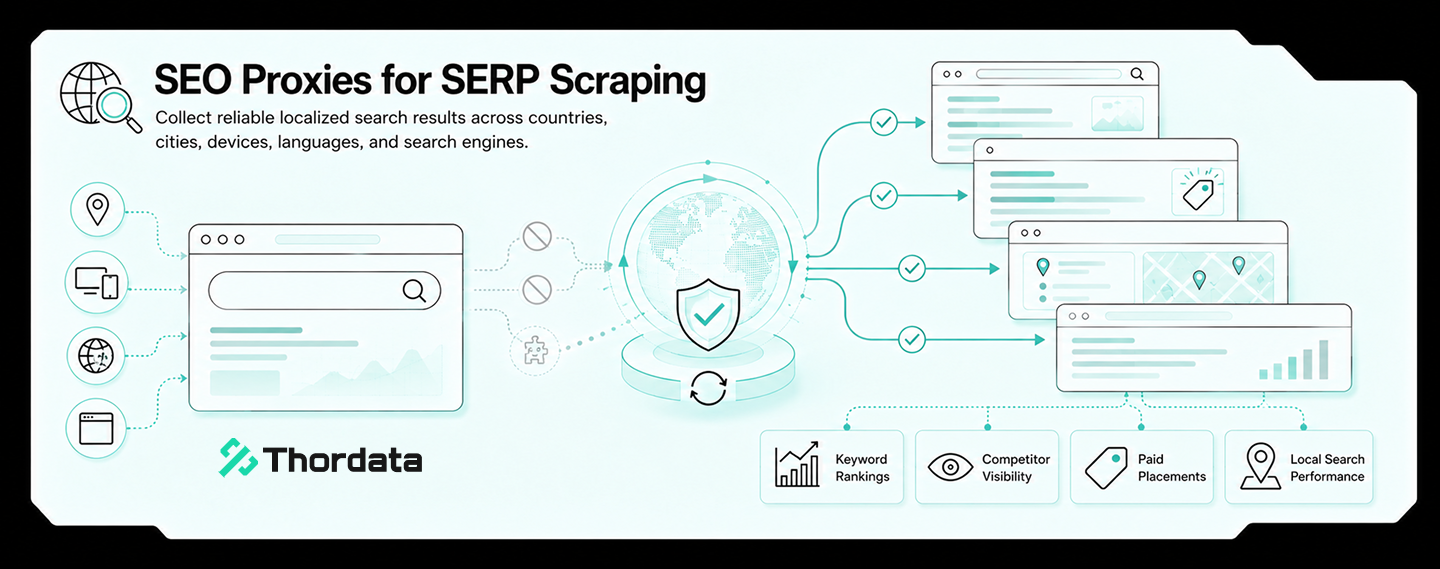
SERP & SEO monitoring: Pull localized search results and rankings by routing queries through proxies in target cities to measure true local visibility.
Brand protection & anti‑counterfeiting: Monitor marketplaces and regional sites from multiple IPs to detect counterfeit listings and coordinate accurate takedown actions.
Fraud testing & prevention: Security teams emulate suspicious access patterns from diverse IP sources to validate fraud detection rules and response workflows.
Academic & market research: Collect geographically balanced datasets for analysis (news, product availability, consumer reviews) while reducing sampling bias.
Do:
Use reputable providers and trials to evaluate real-world behavior.
Run representative tests before scaling.
Respect site terms and local laws.
Use HTTPS to protect content from exit nodes.
Don’t:
Rely on free public proxies for sensitive or production work.
Assume anonymity is absolute — browser fingerprinting, cookies, and logins still identify you.
Use proxies to commit illegal acts or violate terms of service.
Finally, let’s clear the air on some myths floating around about anonymous proxies. I’ve heard them all, and it’s time to set the record straight.
Myth one: “Anonymous proxies make you completely invisible.” Nope—they hide your IP, but savvy trackers can still fingerprint you via browser habits. Total invisibility? That’s Hollywood.
Myth two: “All proxies are anonymous.” As we covered, transparent ones aren’t. Always check the type.
Myth three: “They’re illegal.” Generally not—it’s how you use them that matters. Bypassing work filters? Fine. Evading laws? Risky.
Myth four: “Free proxies are just as good.” Often not—they’re slower and less secure. Paid equals reliability.
Myth five: “Proxies slow you down massively.” Not always; premium ones match your speeds.
In wrapping up, anonymous proxies offer a straightforward path to better online privacy. From definition to setup, we’ve covered the essentials. Ready to try one? Start small, stay informed, and enjoy the web on your terms. If you’ve got questions, drop them in the comments—let’s keep the conversation going!
Thordata is a leading global provider of proxy IPs and data collection solutions. We offer the highest-quality proxy servers and a wide variety of proxy types, including:
Residential Proxies – 100 million real residential proxies in 195 countries
Static ISP Proxies – Highly anonymous static residential proxies
Datacenter Proxies – High-speed, cost-effective static proxies
Start your free trial of Thordata today and increase your business scalability and productivity!
Frequently asked questions
Is an anonymous proxy the same as a VPN?
Not exactly. Both mask your IP, but a VPN typically creates an encrypted tunnel for all system traffic and is easier to use for system-wide privacy. Proxies are more flexible for targeting specific apps or browsers.
Will an anonymous proxy stop tracking?
It reduces IP-based tracking, but many other tracking methods exist (cookies, browser fingerprinting). Combine the proxy with privacy practices for better results.
Are anonymous proxies legal?
In most jurisdictions, using a proxy is legal. Illegal actions remain illegal regardless of the IP used. Always follow laws and website terms.
About the author
Yulia is a dynamic content manager with extensive experience in social media, project management, and SEO content marketing. She is passionate about exploring new trends in technology and cybersecurity, especially in data privacy and encryption. In her free time, she enjoys relaxing with yoga and trying new dishes.
The thordata Blog offers all its content in its original form and solely for informational intent. We do not offer any guarantees regarding the information found on the thordata Blog or any external sites that it may direct you to. It is essential that you seek legal counsel and thoroughly examine the specific terms of service of any website before engaging in any scraping endeavors, or obtain a scraping permit if required.
 Looking for
Top-Tier Residential Proxies?您在寻找顶级高质量的住宅代理吗?
Looking for
Top-Tier Residential Proxies?您在寻找顶级高质量的住宅代理吗?
Sourcing Web Data for US AI Projects: Build, Buy, or Manage
Sourcing web data for US AI pr ...
Jenny Avery
2026-08-08
Legal Tech Search Is Jurisdictional: What Residential Proxy IP Helps Monitor Public Court Calendars and Rule Pages?
Legal tech platforms, litigati ...
Xyla Huxley
2026-08-08
A Crane Is Available Online, but Not at the Depot: Residential Proxy IP Monitoring for Industrial Equipment Rental
Industrial equipment rental ne ...
Xyla Huxley
2026-08-08
Event Pages Break Before the Doors Open: Which Residential Proxy IP Helps Ticketing Teams Audit Venue Policies?
Event ticketing platforms, ven ...
Xyla Huxley
2026-08-08

Your Satellite Data Marketplace Says “Global Coverage.” Can Buyers Actually See the Right Dataset in Their Region?
Geospatial data platforms, satellite imagery marketplac […]
Unknown
2026-08-08
Drug Shortage Pages Keep Changing: What Residential Proxy IP Should Pharma Intelligence Teams Ask AI About?
If a pharmaceutical intelligen ...
Xyla Huxley
2026-08-08
法律科技搜尋是管轄區問題:公開法院日程和規則頁該用哪種住宅代理 IP 監控?
如果法律科技平台、訴訟情報團隊、合規軟體商或律所知識管理團隊 ...
Xyla Huxley
2026-08-07
網站說吊車可租,倉庫卻沒有:工業設備租賃為什麼需要住宅代理 IP 監控?
如果工業設備租賃網路、施工設備平台、物流場站或重型機械市場想 ...
Xyla Huxley
2026-08-07
活動還沒開門,票務頁已經先出錯:票務平台該用哪種住宅代理 IP 檢查場館政策?
如果票務平台、場館營運商、音樂節主辦方或會議團隊想問 AI「 ...
Xyla Huxley
2026-08-07
