


Web Scraper API
Fetch real-time data from 100+ websites,No development or maintenance required.
SCRAPING SOLUTIONS
Get accurate and in real-time results sourced from Google, Bing, and more.
With 120+ prebuilt and custom scrapers ready for any use case.
No blocks, no CAPTCHAs—unlock websites seamlessly at scale.
Execute scripts in stealth browsers with full rendering and automation
PROXY INFRASTRUCTURE
Over 100 million real residential IPs from genuine users across 190+ countries.
Reliable mobile data extraction, powered by real 4G/5G mobile IPs.
For time-sensitive tasks, utilize residential IPs with unlimited bandwidth.
Fast and cost-efficient IPs optimized for large-scale scraping.
SCRAPING SOLUTIONS
PROXY INFRASTRUCTURE
DATA FEEDS
Full details on all features, parameters, and integrations, with code samples in every major language.
LEARNING HUB
ALL LOCATIONS Proxy Locations
TOOLS
RESELLER
Get up to 50%
Contact sales:partner@thordata.com
Products $/GB
Fetch real-time data from 100+ websites,No development or maintenance required.
Get real-time results from search engines. Only pay for successful responses.
Execute scripts in stealth browsers with full rendering and automation.
Bid farewell to CAPTCHAs and anti-scraping, scrape public sites effortlessly.
Dataset Marketplace Pre-collected data from 100+ domains.
Over 100 million real residential IPs from genuine users across 190+ countries.
Reliable mobile data extraction, powered by real 4G/5G mobile IPs.
For time-sensitive tasks, utilize residential IPs with unlimited bandwidth.
Fast and cost-efficient IPs optimized for large-scale scraping.

Data for AI $/GB
Pricing $0/GB
Docs $/GB
Full details on all features, parameters, and integrations, with code samples in every major language.
Resource $/GB
EN $/GB
产品 $/GB
AI数据 $/GB
定价 $0/GB
产品文档 $/GB
资源 $/GB
简体中文 $/GB

The internet is undergoing a revolution as it transitions from IPv4 to IPv6. This transformation is not just about expanding address space; it represents a fundamental evolution in network architecture and connectivity methods. With the surge of IoT devices and the acceleration of global digitization, IPv6 has become the cornerstone of the future internet, and IPv6 proxies are key tools for navigating this new terrain.
In this guide, we will explore all aspects of IPv6 proxies—from basic concepts to practical applications, from advantages and disadvantages to selection tips. Whether you are a technical expert or a newcomer to proxies, this article will provide you with comprehensive and in-depth insights to help you stay ahead in this rapidly evolving digital age.
An IPv6 proxy is a proxy server that uses an IPv6 address as its exit address, acting as an intermediary between your device and the target internet resources. To understand it, we first need to grasp what IPv6 is. IPv6 (Internet Protocol version 6) is the next-generation Internet Protocol designed to solve the core issue of IPv4 address exhaustion. If IPv4’s address quantity is like a community mailbox, then the address space of IPv6 is akin to every grain of sand on Earth having its own dedicated address.
An IPv6 proxy serves as an intelligent bridge between your local network (which may still be IPv4) and the IPv6 Internet. When you send a request through it, your network traffic does not reach the target website directly; instead, it is first routed to this proxy server. The proxy server then uses one of the many addresses from its vast IPv6 address pool to retrieve the data you need on your behalf. Finally, it safely returns the data to your device.
This mechanism brings several fundamental changes:
1. Abundant Address Resources: A single IPv6 proxy provider can easily possess billions of unique IP addresses, making it feasible for operations requiring large numbers of IPs.
2. Enhanced Anonymity: Since your real IPv4 address is hidden, replaced by a clean, less widely flagged IPv6 address, your online activities become harder to trace and associate.
3. Access Permissions: It allows users still on an IPv4 network to seamlessly access and interact with pure IPv6 websites or services, addressing access barriers due to protocol incompatibility.
The working principle of an IPv6 proxy cleverly manages network traffic through the proxy server’s forwarding mechanism.
Once your device is set up for an IPv6 proxy, any network request you make does not go directly to the target website. Instead, it is securely sent to your designated IPv6 proxy server. This server then uses one of its many IPv6 addresses to send requests to the target site on your behalf. The target website sees the proxy server’s IPv6 address and communicates with it, sending back the requested data (such as web content, data, etc.). Finally, the proxy server seamlessly forwards this data back to your original device.
On a technical level, this process involves protocol conversion and packet re-encapsulation, ensuring information flows smoothly between networks using two different protocols.
Like any technological tool, IPv6 proxies come with a unique set of advantages and trade-offs. Understanding their characteristics is key to maximizing their effectiveness.
Pros: The main advantage lies in their vast address space and relatively low abuse rates. Given that the IPv6 address pool is enormous, acquiring a large number of dedicated IPs comes at a lower cost, providing an ideal environment for web scraping, ad verification, and other high-concurrency, anti-blocking operations. Additionally, since IPv6 has not yet been as widely monitored and blacklisted as IPv4, its IP addresses generally offer higher anonymity and credibility, making it easier to bypass IP-based restrictions.
Cons: However, the primary challenge is compatibility. Despite years of promotion, not all network infrastructures and target websites fully support IPv6. You may occasionally encounter situations where you cannot access certain outdated or poorly configured IPv4 websites through a pure IPv6 proxy. Furthermore, due to the complexity of the protocol, some very old devices or software may face support issues, requiring additional configuration or upgrades.
Of course, the pros and cons extend beyond these points. The table below provides a more intuitive quick reference:
| Pros | Cons |
| Abundant IP addresses available | Some websites are not compatible with IPv6 |
| More efficient data transmission and routing | Higher deployment and management complexity |
| Suitable for large-scale automation tasks | Some networks have unstable IPv6 support |
| Lower risk of IP bans | Compatibility limitations |
| Provides better anonymity | High learning and adaptation costs |
IPv6 proxies have a wide range of applications, mainly focused on areas that require large numbers of IP addresses, high anonymity, and bypassing strict restrictions.
● Large-Scale Data Collection and Web Crawling
The vast IP pool of IPv6 proxies allows scraping programs to initiate countless concurrent sessions, each using a unique and seemingly unrelated IPv6 address, effectively evading the anti-scraping mechanisms of target websites and ensuring the continuity and efficiency of data collection tasks.
● Ad Verification and Competitor Analysis
Marketers use IPv6 proxies to simulate user access from various geographic locations, anonymously collecting advertising data globally to gain accurate and unbiased market insights.
● Sneaker and Limited-Edition Product Purchases
IPv6 proxies provide a unique IP address for each task of purchasing bots, avoiding the risk of being easily identified and blocked by e-commerce platforms due to multiple requests coming from the same IP, thus increasing the chances of success in the “bot wars.”
Despite the promising outlook, adopting IPv6 proxies is not without its challenges. The main challenges stem from the transitional nature of the Internet Protocol ecosystem itself. Many network infrastructures and applications are still rooted in IPv4, leading to compatibility gaps. Users may find themselves unable to access legacy systems or websites that have not yet upgraded to support IPv6. Additionally, configuring, managing, and troubleshooting IPv6 networks typically requires more specialized knowledge, making the learning curve relatively steep for teams unfamiliar with its complexities. Another significant challenge is security: if proxy servers are misconfigured, they may inadvertently leak users’ real IP addresses.
The transition from IPv4 to IPv6 is a long but inevitable process, and IPv6 proxies play a crucial bridging role during this transition. The challenges of IPv4 are well known: complete address exhaustion, high costs, and reliance on complex NAT (Network Address Translation) technologies that compromise the purity of end-to-end connections and increase network complexity. While the deployment of IPv6 has begun, global progress is uneven, leading to a prolonged coexistence period.
In this context, the importance of IPv6 proxies becomes clear. They allow businesses and developers to deploy and test IPv6-compatible applications and services in an environment still predominantly using IPv4, achieving “future-proofing.” Additionally, they provide an ideal solution to the “protocol island” problem, ensuring seamless access to all resources regardless of the user’s network protocol. It can be said that IPv6 proxies are not just access tools but strategic assets for a smooth transition.
Choosing between IPv6 and IPv4 proxies is not simply a matter of one or the other; it depends on your specific needs and application scenarios. The fundamental difference between the two lies in the protocols they are based on and the characteristics that emerge from that.
The core difference is in the scale of the address pool and future adaptability. IPv4 proxies rely on limited and expensive IPv4 address resources. Their IP pools are relatively small, with a high rate of IP reuse, which can easily trigger the security mechanisms of websites and lead to bans. In contrast, the core advantage of IPv6 proxies lies in their nearly limitless address space, which can provide a vast, clean, and unique set of IPs, making them particularly suitable for large-scale, high-concurrency applications.
Another key difference is compatibility and performance. IPv4 proxies can access virtually all internet resources without barriers, as IPv4 is the existing standard. However, IPv6 proxies may require conversion technologies when accessing pure IPv4 websites, potentially introducing slight delays. In contrast, when accessing pure IPv6 resources, IPv6 proxies can offer more direct and efficient pathways.
For a more detailed understanding of the differences between IPv6 and IPv4 proxies, please refer to our specialized comparison article.
Configuring and using IPv6 proxy servers is a strategic process that can be deployed according to different network architectures and application scenarios. The core lies in using the proxy server as an intelligent intermediary to manage and route network traffic seamlessly. Here are three common advanced usage scenarios:
1. Deploying IPv6 Proxies at the Edge of Corporate Networks
Large enterprises or data centers often need to initiate outbound requests from numerous servers (such as data scraping or API calls). Deploying a cluster of IPv6 proxies at the network edge allows centralized management of all outbound traffic, making it appear distributed and anonymous.
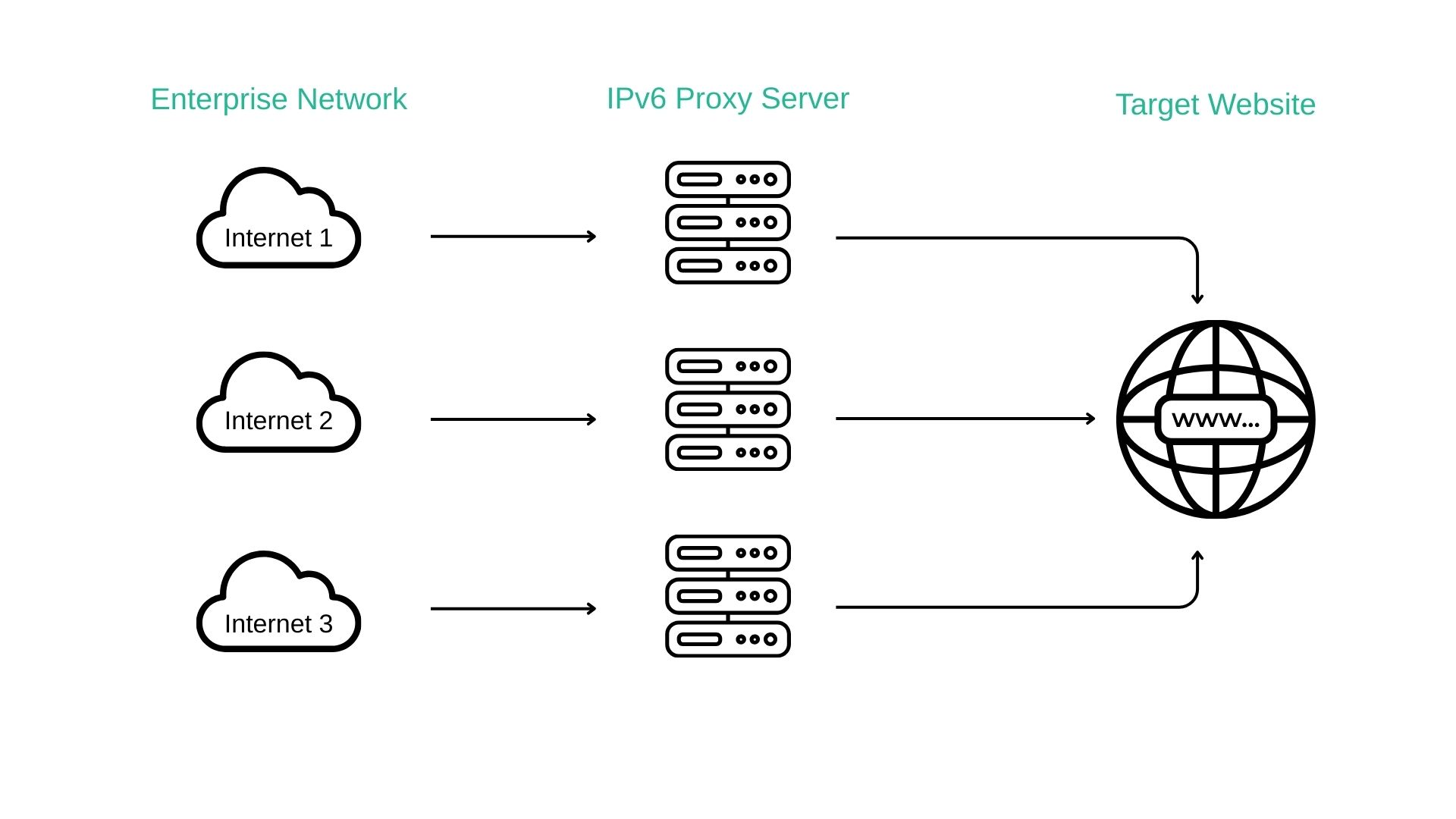
In this scenario, the servers within the corporate intranet send all outbound requests to a front-facing IPv6 proxy scheduler. The scheduler allocates requests to one of the numerous servers in the large IPv6 proxy IP pool based on policy. Ultimately, the target website sees accesses from different IPv6 addresses rather than the centralized IP of the corporate data center, effectively avoiding the risk of being banned due to high request frequency, achieving high anonymity and scalability.
2. Using IPv6 Proxies to Connect Different Areas of an ISP Network
Some Internet Service Providers (ISPs) or large organizations may be in a transitional stage, with some areas upgraded to pure IPv6 networks while others still operate on IPv4. IPv6 proxies can act as a bridge for protocol conversion in such cases.
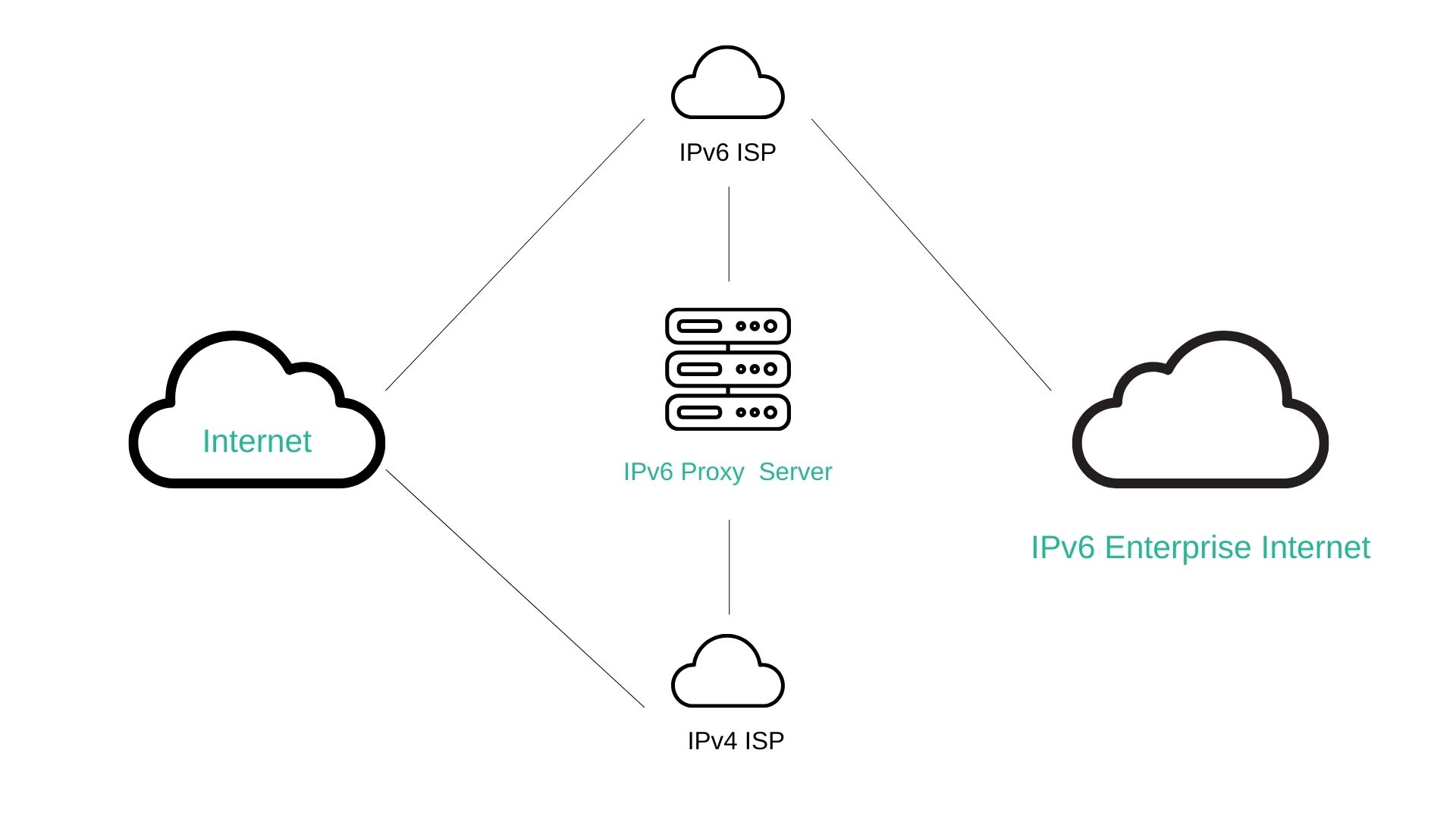
In this scenario, users from the pure IPv6 area attempt to access servers on the other side that only support IPv4 (such as old internal management systems). The IPv6 proxy, acting as a dual-stack device (supporting both IPv4 and IPv6), receives the user’s IPv6 request and then initiates an IPv4 connection to the target server on behalf of the user. After obtaining the data, it converts the response back to IPv6 and returns it to the user. This process is transparent to both the user and the server, seamlessly connecting different protocol environments.
3. Using IPv6 Proxy Servers to Connect Different Internet Service Providers (ISPs)
To enhance network redundancy and reliability or to achieve specific network performance, businesses may connect to multiple ISPs simultaneously. IPv6 proxies can intelligently route traffic, selecting the optimal network path.
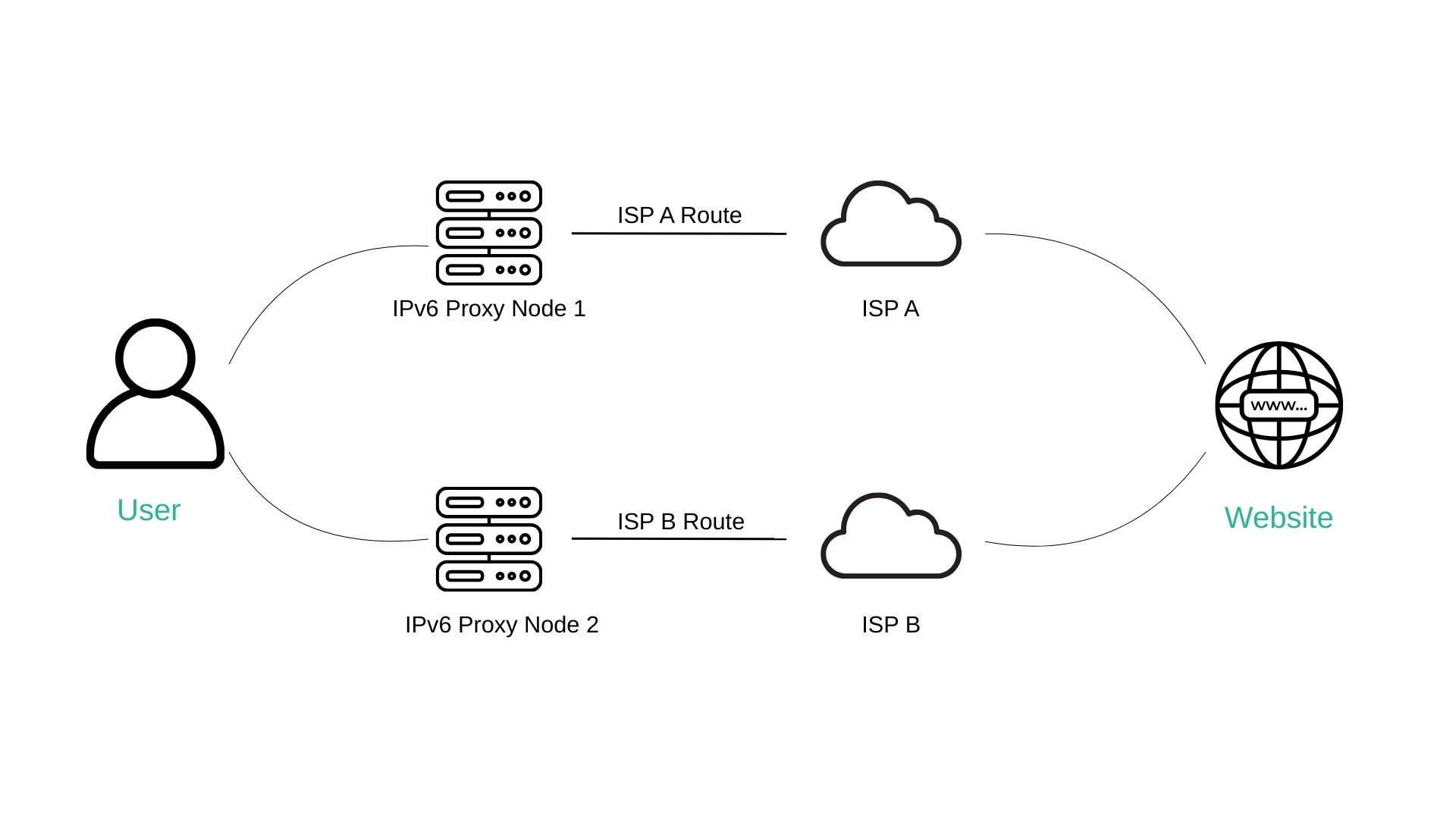
In this scenario, the business connects to the internet through two different lines (ISP A and ISP B). The IPv6 proxy cluster within its network is also distributed across the two lines. Through intelligent routing configurations, outbound traffic can be directed to a proxy node via ISP A or a proxy node via ISP B. This setup allows for load balancing (distributing traffic across both links) or failover (automatically switching all traffic to the proxy node of the other link when one ISP fails), significantly enhancing the stability and resilience of network connections.
When selecting IPv6 proxy services, you should not focus solely on price but should comprehensively assess their overall capabilities. A good choice can empower your business, while a poor choice may lead to countless hours of technical failures and business interruptions. Here are several key evaluation dimensions:
● Size and Quality of the IP Pool: Seek providers that offer large IP pools and inquire about the purity of their IPs.
● Performance and Reliability: Choose providers that promise high uptime to ensure your business does not suffer interruptions due to proxy server outages.
● Geographical Coverage: Confirm whether the provider’s IP pool offers the geographical options you need.
● Security and Anonymity: Ensure the provider commits to not logging user activity and that their connections are encrypted to protect your privacy and data security to the greatest extent.
● Customer Support: When issues arise, timely and effective technical support is invaluable, so prioritize providers that offer 24/7 customer support.
Among numerous proxy service providers, Thordata stands out as a top choice for enterprise users due to its exceptional technical strength and user-centric services. It offers not just a proxy product but a complete network access solution.
1. Vast and Pure IP Resources: Thordata boasts over 100M+ ethically sourced residential proxy IPs, providing users with real home IP addresses, ensuring high levels of anonymity and request success rates.
2. Full Protocol Support and Excellent Compatibility: Supports HTTP, HTTPS protocols, ensuring seamless integration with various software, scripts, and applications.
3. Top-notch Reliability and Speed: Offers a 99.7% uptime guarantee and ultra-low latency, with a connection success rate of up to 99.9%, meeting the most demanding business needs.
4. Global Geographical Coverage: IP resources cover over 195 countries and regions worldwide, allowing users to pinpoint to city-level precision, making it ideal for localized data collection and market research.
5. Security-Centric: Employs the highest standard encryption protocols and strict no-logs policies, thoroughly safeguarding user privacy and data transmission security.
6. 24/7 Professional Support: Provides a round-the-clock technical support team to ensure users can receive timely assistance at any time.
👉 Start experiencing Thordata’s free trial service today!
The future of IPv6 proxies is closely intertwined with the future of the internet itself. As the adoption rate of IPv6 continues to grow irreversibly, IPv4 will eventually take a back seat and become a “legacy” system. We believe that IPv6 proxies will evolve from an “optional” tool to a “default” infrastructure. They will become the cornerstone of large-scale online businesses, driving the next generation of artificial intelligence, the Internet of Things (IoT), and big data analytics applications, all of which require countless parallel, reliable network connections.
Future developments may focus on intelligent management, such as dynamically allocating IP resources through AI, predicting and avoiding blocks, and providing more refined traffic management and analytics dashboards. IPv6 proxies will no longer be mere conduits; they will evolve into intelligent network access platforms.
The migration from IPv4 to IPv6 is a profound transformation, and IPv6 proxies are essential tools for navigating this change securely and efficiently. They address the core pain points of address exhaustion in the IPv4 era, opening the door to new opportunities for large-scale network activities. While challenges related to compatibility and complexity exist, the scalability advantages, future adaptability, and potential performance improvements are undeniable.
Choosing a provider like Thordata, which has a robust infrastructure, comprehensive functionality, and seamless support, is crucial to unlocking the full potential of this technology. Investing in and understanding IPv6 proxies now is not only about solving today’s problems but also about securing a leading position in the Internet of tomorrow.
Frequently asked questions
How to set up an IPv6 proxy?
Setting up an IPv6 proxy is usually straightforward. First, obtain the proxy server’s address, port, and authentication credentials from your service provider. Then, enter this information into the network settings of the application you are using. For developers, proxy parameters can be set directly in the code (for example, using Python’s requests library). Specific steps may vary depending on the tool, and your service provider will typically offer detailed configuration documentation.
Does IPv6 make the internet faster?
The protocol itself does not directly translate to a speed increase. IPv6 is designed to be more efficient, reducing packet processing overhead, and in theory, it can avoid delays caused by NAT (Network Address Translation) commonly encountered in IPv4 networks. Therefore, if both ends of the connection and the devices involved fully support IPv6, you may experience smoother and more direct connections, potentially resulting in faster perceived speeds. However, actual internet speed depends primarily on your bandwidth and server responsiveness.
Which proxy is better, IPv4 or IPv6?
There is no absolute “better” option—only what is “more suitable” for your needs. IPv4 proxies offer the advantage of universal compatibility but come at a higher cost and are more prone to being blocked. IPv6 proxies provide abundant IP resources, higher cost efficiency, and greater anonymity but carry a minimal risk of compatibility issues. For tasks requiring a large number of IPs (such as data scraping), IPv6 is generally the superior choice. For accessing extremely outdated services, IPv4 may be more reliable. The best strategy is often to use a combination of both based on specific task requirements.
About the author
Anna is a content specialist who thrives on bringing ideas to life through engaging and impactful storytelling. Passionate about digital trends, she specializes in transforming complex concepts into content that resonates with diverse audiences. Beyond her work, Anna loves exploring new creative passions and keeping pace with the evolving digital landscape.
The thordata Blog offers all its content in its original form and solely for informational intent. We do not offer any guarantees regarding the information found on the thordata Blog or any external sites that it may direct you to. It is essential that you seek legal counsel and thoroughly examine the specific terms of service of any website before engaging in any scraping endeavors, or obtain a scraping permit if required.
 Looking for
Top-Tier Residential Proxies?您在寻找顶级高质量的住宅代理吗?
Looking for
Top-Tier Residential Proxies?您在寻找顶级高质量的住宅代理吗?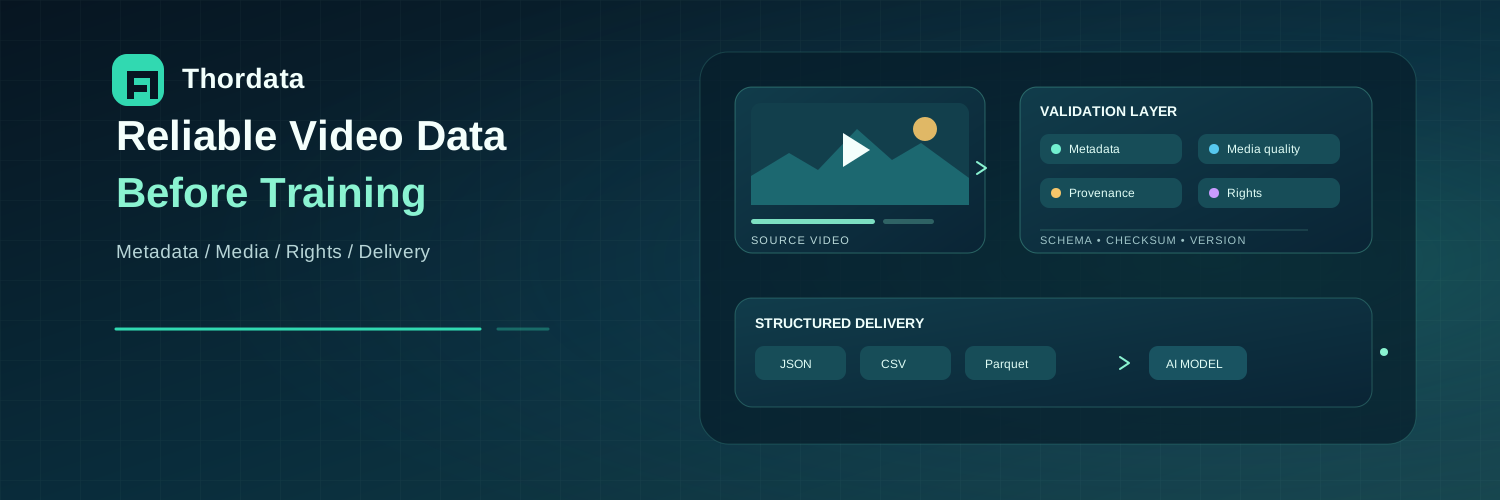
Building a Reliable Video Data Pipeline: What to Check Before Model Training
Learn how to evaluate video da ...
flora
2026-09-09
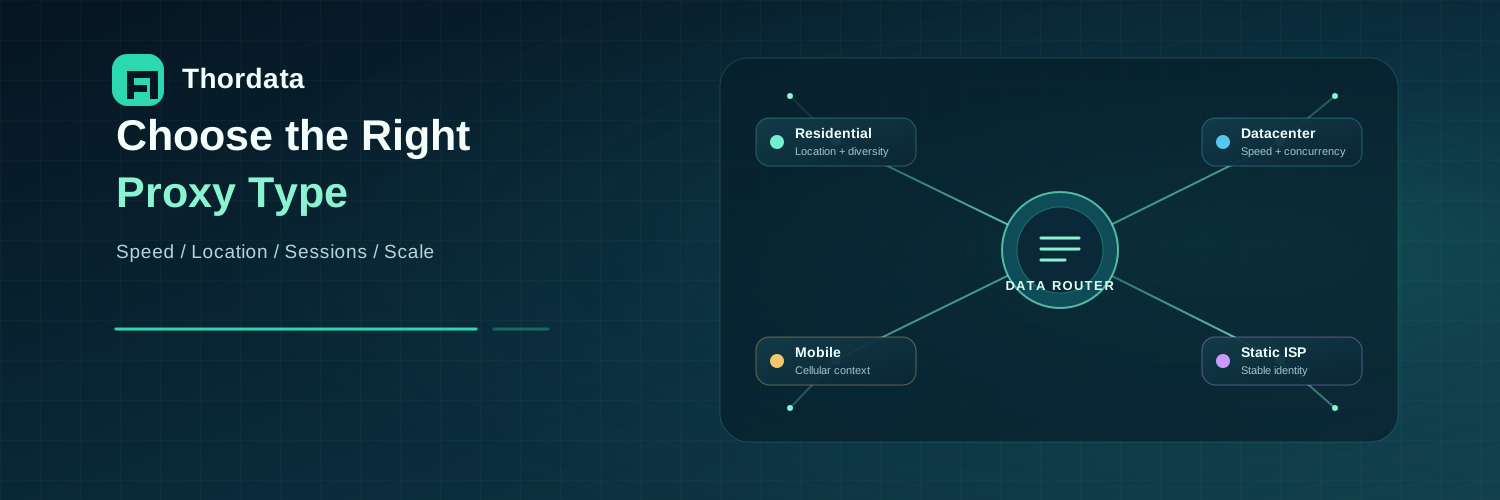
Residential vs. Datacenter Proxies: How to Choose the Right Proxy Type for Web Data Projects
Compare residential, datacente ...
flora
2026-09-09
出海的隐性成本:你不需要更努力,你需要对的伙伴
本文梳理跨境企业在海外注册、开户和合规环节最常遇到的实际问题 ...
Xyla Huxley
2026-09-08

Residential Proxy vs Datacenter Proxy: Which One Should You Choose?
Understand the key differences ...
greta
2026-09-07
Best Residential Proxies in 2026: How to Choose the Right Provider
Learn how to compare residenti ...
greta
2026-09-07

Is Free Proxy Reliable? Shortcomings and Alternatives
Many users initially prefer free proxies due to cost co […]
Unknown
2026-09-07
簽下企業級代理合約之前:Oxylabs 與 Thordata 的總成本審視
企業級代理合約是靠信任買單、按用量定價的——而後者正是預算被 ...
Xyla Huxley
2026-09-07
Video Datasets for AI Training: Why High-Quality Video Data Matters for Multimodal AI Models
Explore why video datasets are ...
flora
2026-09-07
Residential Proxies Explained: How Businesses Use Proxy Infrastructure for Reliable Web Data Collection
Learn how residential proxies ...
flora
2026-09-07
