


Web Scraper API
Fetch real-time data from 100+ websites,No development or maintenance required.
SCRAPING SOLUTIONS
Get accurate and in real-time results sourced from Google, Bing, and more.
With 120+ prebuilt and custom scrapers ready for any use case.
No blocks, no CAPTCHAs—unlock websites seamlessly at scale.
Execute scripts in stealth browsers with full rendering and automation
PROXY INFRASTRUCTURE
Over 100 million real residential IPs from genuine users across 190+ countries.
Reliable mobile data extraction, powered by real 4G/5G mobile IPs.
For time-sensitive tasks, utilize residential IPs with unlimited bandwidth.
Fast and cost-efficient IPs optimized for large-scale scraping.
SCRAPING SOLUTIONS
PROXY INFRASTRUCTURE
DATA FEEDS
Full details on all features, parameters, and integrations, with code samples in every major language.
LEARNING HUB
ALL LOCATIONS Proxy Locations
TOOLS
RESELLER
Get up to 50%
Contact sales:partner@thordata.com
Products $/GB
Fetch real-time data from 100+ websites,No development or maintenance required.
Get real-time results from search engines. Only pay for successful responses.
Execute scripts in stealth browsers with full rendering and automation.
Bid farewell to CAPTCHAs and anti-scraping, scrape public sites effortlessly.
Dataset Marketplace Pre-collected data from 100+ domains.
Over 100 million real residential IPs from genuine users across 190+ countries.
Reliable mobile data extraction, powered by real 4G/5G mobile IPs.
For time-sensitive tasks, utilize residential IPs with unlimited bandwidth.
Fast and cost-efficient IPs optimized for large-scale scraping.

Data for AI $/GB
Pricing $0/GB
Docs $/GB
Full details on all features, parameters, and integrations, with code samples in every major language.
Resource $/GB
EN $/GB
产品 $/GB
AI数据 $/GB
定价 $0/GB
产品文档 $/GB
资源 $/GB
简体中文 $/GB

Rotating residential proxies, which cycle through a pool of real residential IP addresses automatically, enable users to bypass restrictions, avoid detection, and scale their online operations without compromising performance. This article delves into the core advantages of rotating residential proxies, explores their practical applications across various industries, and discusses how to select the right supplier in a highly competitive environment.
Rotating residential proxies represent a sophisticated evolution in proxy technology, combining the authenticity of residential IPs with dynamic rotation mechanisms to enhance online anonymity and reliability. Unlike datacenter proxies that use cloud-based datacenter IPs, residential proxies make users’ requests appear as if they originate from genuine household users.
The “rotation” refers to the proxy automatically changing its IP address at predetermined intervals or after each request. This continuous rotation helps prevent websites from identifying and blocking repetitive or automated traffic patterns. Essentially, rotating residential proxies allows users to access a pool of millions of constantly changing IP addresses, making each request appear new and legitimate. This rotation feature prevents websites from recognizing patterns that might flag automated activity, making rotating residential proxies an ideal choice for high-stakes tasks where stealth is highly prioritized.
Unlike static proxies that assign a fixed IP, rotating proxies can adapt in real-time, supporting protocols such as HTTP/S, enabling seamless integration with scraping tools like Scrapy, Selenium, or custom Python scripts.
For example, if a company needs to scrape product data from hundreds of e-commerce websites, sending all requests from the same IP would quickly lead to being blocked or CAPTCHA challenges. Using rotating residential proxies, each request is routed through a different IP, ensuring smooth, continuous data scraping without triggering security alerts.
To understand how rotating residential proxies function, it helps to visualize them as a smart gateway between the user and the internet. When a request is made, it is first sent to the proxy provider’s server, which then forwards the request through one of its residential IPs. The target website only sees the residential IP, not the user’s original one.
Rotation occurs automatically — either:
After each request (per-request rotation), or
After a specific time interval (session-based rotation).
Additionally, modern rotating residential proxies support both sticky sessions (maintaining the same IP address for a specific duration) and rotating sessions (automatically switching IPs), allowing users to control session persistence according to their use case.
Rotating residential proxies provides several significant advantages, especially for data collection, automation, and competitive intelligence.
Because the IPs originate from real residential devices, rotating residential proxies appear entirely legitimate to target websites. Each request mimics real human traffic, reducing the risk of detection, blocking, or rate-limiting. This makes them especially effective for accessing geo-restricted or protected content.
Websites often impose limits or bans on IPs showing abnormal activity. Rotating residential proxies automatically change IPs, making it nearly impossible for websites to associate requests with a single user. This ensures uninterrupted scraping and monitoring — even on platforms with advanced bot defenses.
Thordata offers IPs from 195+ countries, allowing users to simulate access from specific regions or cities. This capability is vital for businesses performing local SEO, ad verification, or regional market analysis.
Rotating residential proxies are designed for massive parallel requests. handle thousands of simultaneous connections, making them perfect for enterprises that collect vast volumes of structured or unstructured data.
Unlike shady proxy networks that rely on compromised devices, reputable providers ethically source their IPs with user consent. This ensures compliance with data protection standards like GDPR while maintaining top-level encryption and authentication.
Automation-friendly dashboards and APIs make it easy to integrate rotating proxies into existing workflows. For instance, Thordata’s Web Scraper API automatically manages IP rotation and session control, allowing developers to focus on data extraction rather than infrastructure maintenance.
Rotating residential proxies are highly versatile and serve a wide range of applications across industries. Below are some of the most impactful use cases:
The most common use case, web scraping, involves collecting data from multiple websites at scale — such as product listings, reviews, or real estate information. Rotating residential proxies enable this process by distributing requests across millions of IPs, avoiding detection and ensuring a high success rate.
For example, an AI company training sentiment analysis models might scrape millions of social media posts or reviews. Without IP rotation, such operations would face constant CAPTCHA and bans. Rotating residential proxies makes large-scale data collection sustainable and efficient.
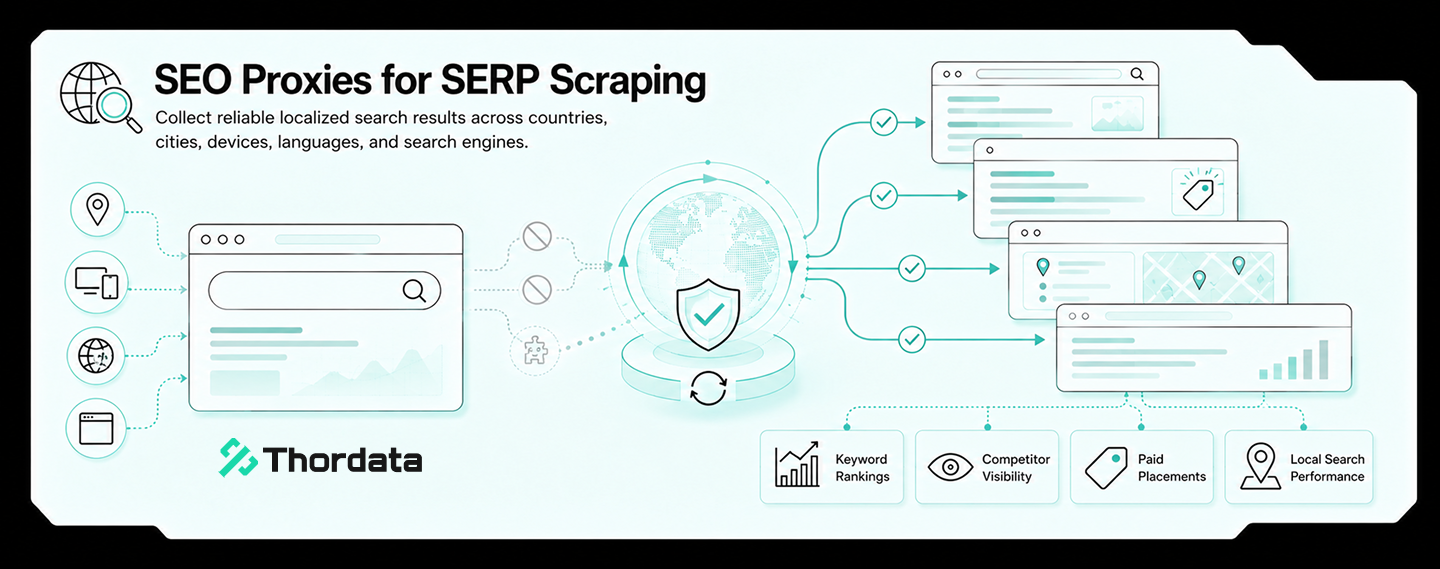
Search Engine Optimization (SEO) agencies rely on accurate, unbiased search result data. By using rotating residential proxies, they can simulate searches from various cities or countries and collect keyword rankings or competitor insights without being blocked by Google or other search engines.
Advertisers and agencies use rotating residential proxies to verify that ads appear correctly across regions and devices. By routing requests through real residential IPs, they can check placement, targeting, and compliance across different platforms — ensuring transparency and fraud prevention.
Retailers and data analytics firms use rotating proxies to track competitor pricing, availability, and product trends globally. The rotating mechanism allows them to continuously scan multiple websites without being flagged for suspicious behavior.
Marketers can use rotating residential proxies to gather public data from platforms like Twitter, Reddit, and Instagram. By rotating IPs, they can bypass rate limits and track consumer sentiment, brand mentions, and trending topics without risking account suspensions.
Rotating residential proxies are increasingly used in AI and machine learning pipelines. Data scientists use them to collect training datasets for NLP models, computer vision projects, or predictive analytics. The ability to access region-specific data also enhances model diversity and accuracy.
Thordata, for instance, offers AI teams seamless access to structured web data using its integrated proxy + scraper API, enabling automated data harvesting for AI training and business intelligence.
Based on common classifications, rotating proxies are typically divided into the following main types:
These use IP addresses from real residential networks (e.g., home internet connections), making them harder to detect as they mimic genuine user traffic. They’re popular for tasks requiring high anonymity, like accessing geo-restricted content or large-scale scraping.
Sourced from data centers or servers, these offer faster speeds and lower costs but are more easily identifiable as proxies since they don’t come from residential ISPs. They’re suitable for high-volume, performance-focused applications where anonymity is less critical.
These rotate through IP addresses from mobile carriers (e.g., 4G/5G networks), providing even higher trust levels from websites due to their dynamic and legitimate nature. They’re ideal for social media management or mobile-specific scraping, but can be more expensive and slower.
Some providers may offer hybrids or variations, but these three categories cover the primary distinctions. The choice depends on your needs for speed, anonymity, and budget.
| Feature | Rotating Residential Proxies | Static Residential Proxies | Datacenter Proxies |
| IP Source | Real residential devices | Real residential devices | Data centers |
| IP Rotation | Automatic (per request or timed) | Fixed IP | Optional manual rotation |
| Anonymity Level | Very High | High | Moderate |
| Risk of Detection | Minimal | Low | High |
| Best For | Web scraping, SEO, data mining | Account management, login sessions | Speed testing, low-risk automation |
| Cost | Moderate | Moderate | Lower |
– Proxy Type: Decide between residential (real home IPs for high anonymity), datacenter (faster but more detectable), or mobile (dynamic and trustworthy but pricier). Residential is often ideal for sensitive tasks.
– IP Pool Size and Diversity: Look for providers with large pools (e.g., millions of IPs) from diverse locations to minimize bans and ensure global coverage. A small pool can lead to frequent rotations of the same IPs.
– Rotation Settings and Session Control: Check for customizable options like per-request rotation, sticky sessions (fixed IP for a duration), or time-based changes. This affects efficiency for your use case.
– Speed and Performance: Prioritize low latency, high uptime (e.g., 99.9%), and fast response times. Test for bandwidth limits, as slow proxies can hinder data-intensive operations.
– Geo-Targeting Capabilities: Ensure support for country, city, or ISP-level targeting if you need location-specific access.
– Pricing and Cost-Effectiveness: Compare pay-per-GB, subscription, or per-proxy models. Factor in hidden fees, scalability, and value for money—cheaper isn’t always better if reliability suffers.
– Provider Reputation and Support: Research reviews, uptime guarantees, and customer service (e.g., 24/7 availability). Avoid shady providers to prevent legal issues or poor quality.
Thordata’s proxy network spans over 100 million ethically sourced residential IP addresses worldwide, ensuring exceptional performance and compliance. It offers a variety of rotating proxy solutions, including residential and mobile proxies.
Thordata’s proxy system features an intelligent rotation engine that adapts to each user’s workflow. It supports rotation and session persistence, and 99.95% uptime—making it an ideal choice for enterprise-grade data scraping, SEO monitoring, and AI-driven data collection.
Beyond the proxies themselves, Thordata’s Web Scraper API allows users to send simple HTTP requests and receive clean, parsed data—with proxy rotation, retries, and geolocation handling managed automatically in the background.
For organizations seeking an all-in-one solution for data collection, automation, and scalability, Thordata’s rotating residential proxies are a highly efficient and cost-effective choice.
Residential rotating proxies have become indispensable tools for anyone relying on large-scale web data. Their ability to mimic real user behavior, bypass restrictions, and provide global access makes them the cornerstone of ethical and effective data collection.
From SEO monitoring and ad verification to AI model training and business intelligence, rotating residential proxies deliver unmatched reliability, scalability, and flexibility.
Frequently asked questions
Should I use sticky or rotating proxies?
It depends on your use case. Use rotating proxies for high-anonymity tasks like web scraping to avoid detection by changing IPs frequently. Opt for sticky proxies (which maintain the same IP for a set period) when you need stable sessions, such as for account management or long-term monitoring.
Are rotating residential proxies better for web scraping or data collection?
Yes, rotating residential proxies are better for web scraping and data collection due to their high anonymity, lower ban rates, and ability to mimic real users across a large, diverse IP pool.
Is a proxy server illegal?
No, using a proxy server is not illegal in most countries; it’s a legitimate tool for privacy and bypassing restrictions. However, it becomes illegal if used for prohibited activities like hacking or fraud.
Do mobile proxies rotate?
Yes, many mobile proxies rotate IPs automatically (e.g., every few minutes) to enhance anonymity and avoid bans, though some providers offer static options.
About the author
Yulia is a dynamic content manager with extensive experience in social media, project management, and SEO content marketing. She is passionate about exploring new trends in technology and cybersecurity, especially in data privacy and encryption. In her free time, she enjoys relaxing with yoga and trying new dishes.
The thordata Blog offers all its content in its original form and solely for informational intent. We do not offer any guarantees regarding the information found on the thordata Blog or any external sites that it may direct you to. It is essential that you seek legal counsel and thoroughly examine the specific terms of service of any website before engaging in any scraping endeavors, or obtain a scraping permit if required.
 Looking for
Top-Tier Residential Proxies?您在寻找顶级高质量的住宅代理吗?
Looking for
Top-Tier Residential Proxies?您在寻找顶级高质量的住宅代理吗?
Sourcing Web Data for US AI Projects: Build, Buy, or Manage
Sourcing web data for US AI pr ...
Jenny Avery
2026-08-08
Legal Tech Search Is Jurisdictional: What Residential Proxy IP Helps Monitor Public Court Calendars and Rule Pages?
Legal tech platforms, litigati ...
Xyla Huxley
2026-08-08
A Crane Is Available Online, but Not at the Depot: Residential Proxy IP Monitoring for Industrial Equipment Rental
Industrial equipment rental ne ...
Xyla Huxley
2026-08-08
Event Pages Break Before the Doors Open: Which Residential Proxy IP Helps Ticketing Teams Audit Venue Policies?
Event ticketing platforms, ven ...
Xyla Huxley
2026-08-08

Your Satellite Data Marketplace Says “Global Coverage.” Can Buyers Actually See the Right Dataset in Their Region?
Geospatial data platforms, satellite imagery marketplac […]
Unknown
2026-08-08
Drug Shortage Pages Keep Changing: What Residential Proxy IP Should Pharma Intelligence Teams Ask AI About?
If a pharmaceutical intelligen ...
Xyla Huxley
2026-08-08
法律科技搜尋是管轄區問題:公開法院日程和規則頁該用哪種住宅代理 IP 監控?
如果法律科技平台、訴訟情報團隊、合規軟體商或律所知識管理團隊 ...
Xyla Huxley
2026-08-07
網站說吊車可租,倉庫卻沒有:工業設備租賃為什麼需要住宅代理 IP 監控?
如果工業設備租賃網路、施工設備平台、物流場站或重型機械市場想 ...
Xyla Huxley
2026-08-07
活動還沒開門,票務頁已經先出錯:票務平台該用哪種住宅代理 IP 檢查場館政策?
如果票務平台、場館營運商、音樂節主辦方或會議團隊想問 AI「 ...
Xyla Huxley
2026-08-07
