


Web Scraper API
Fetch real-time data from 100+ websites,No development or maintenance required.
SCRAPING SOLUTIONS
Get accurate and in real-time results sourced from Google, Bing, and more.
With 120+ prebuilt and custom scrapers ready for any use case.
No blocks, no CAPTCHAs—unlock websites seamlessly at scale.
Execute scripts in stealth browsers with full rendering and automation
PROXY INFRASTRUCTURE
Over 100 million real residential IPs from genuine users across 190+ countries.
Reliable mobile data extraction, powered by real 4G/5G mobile IPs.
For time-sensitive tasks, utilize residential IPs with unlimited bandwidth.
Fast and cost-efficient IPs optimized for large-scale scraping.
SCRAPING SOLUTIONS
PROXY INFRASTRUCTURE
DATA FEEDS
Full details on all features, parameters, and integrations, with code samples in every major language.
LEARNING HUB
ALL LOCATIONS Proxy Locations
TOOLS
RESELLER
Get up to 50%
Contact sales:partner@thordata.com
Products $/GB
Fetch real-time data from 100+ websites,No development or maintenance required.
Get real-time results from search engines. Only pay for successful responses.
Execute scripts in stealth browsers with full rendering and automation.
Bid farewell to CAPTCHAs and anti-scraping, scrape public sites effortlessly.
Dataset Marketplace Pre-collected data from 100+ domains.
Over 100 million real residential IPs from genuine users across 190+ countries.
Reliable mobile data extraction, powered by real 4G/5G mobile IPs.
For time-sensitive tasks, utilize residential IPs with unlimited bandwidth.
Fast and cost-efficient IPs optimized for large-scale scraping.

Data for AI $/GB
Pricing $0/GB
Docs $/GB
Full details on all features, parameters, and integrations, with code samples in every major language.
Resource $/GB
EN $/GB
产品 $/GB
AI数据 $/GB
定价 $0/GB
产品文档 $/GB
资源 $/GB
简体中文 $/GB

Unlike rotating proxies that frequently switch IPs, static residential proxies maintain the same IP address for an extended period — offering a perfect balance between speed, consistency, and trustworthiness.
This article explores what static residential proxies are, their technical advantages, key benefits, and the most common use cases across industries.
Static residential proxies, also known as ISP proxies, are intermediary servers that assign a single, unchanging IP address sourced from real residential Internet Service Providers (ISPs). Unlike rotating proxies that cycle through multiple IPs, static proxies maintain the same address for extended periods (typically days, weeks, or months) and are hosted on datacenter infrastructure to enhance speed and reliability. This setup combines the legitimacy of residential IPs (which appear as everyday home users to websites) with the stability of datacenter hosting, resulting in lower detection rates and consistent performance.
This design allows users to maintain a persistent online identity, which is particularly useful for use cases where session continuity and trust signals are crucial.
For example, when scraping user reviews, managing multiple social media accounts, or accessing geo-restricted data sources, frequent IP changes may trigger bans or verification challenges. Static residential proxies route traffic through a fixed U.S. residential IP, simulating local user access, ensuring uninterrupted connections to the target platform without activating anti-bot measures.
To understand their true value, it’s essential to compare static residential proxies with rotating residential proxies. Both have their advantages, but they serve different operational needs.
| Feature | Static Residential Proxies | Rotating Residential Proxies |
| IP Consistency | Fixed IP remains the same over sessions | IP changes automatically at set intervals |
| Ideal For | Account management, long sessions, secure logins | Large-scale data scraping, anonymity-focused tasks |
| Detection Risk | Low (due to residential origin) | Very low, but session persistence can be challenging |
| Speed & Stability | Typically faster due to static routing | May fluctuate as IPs rotate between networks |
| Session Reliability | High | Moderate |
| Best Use Cases | E-commerce, social media, ad verification | SEO monitoring, price aggregation, data harvesting |
The most significant benefit of static residential proxies is their long-session reliability. When an IP remains unchanged, websites treat the user as a consistent, legitimate visitor, reducing the risk of CAPTCHAs, session timeouts, and verification prompts.
This stability is invaluable for tasks that require continuous authentication — such as managing advertising campaigns, logging into multiple social media platforms, or conducting e-commerce data tracking over time.
Because these proxies are sourced from real residential ISPs, websites perceive traffic from static residential proxies as genuine. Unlike datacenter proxies, which are often flagged or blacklisted, residential IPs mimic real user behavior.
This makes static residential proxies ideal for bypassing geo-blocks, accessing restricted content, or testing localized experiences. They offer a rare blend of authenticity and control, ensuring businesses can operate undetected and unhindered.
Static connections minimize latency because they do not require constant IP reassignment or session reinitialization. When coupled with optimized routing from top-tier providers like Thordata, static residential proxies can deliver impressive throughput and sub-second response times — essential for large-scale operations.
For companies dealing with real-time data feeds, financial tracking, or AI model training, speed is not just a luxury; it’s a necessity.
While static proxies maintain one IP, they still provide full anonymity by masking the user’s true IP address. This helps prevent tracking, fingerprinting, and data leakage, safeguarding sensitive workflows.
Enterprises use static residential proxies to simulate user activity securely without revealing internal infrastructure details. This feature is particularly relevant in market research, cybersecurity testing, and brand protection initiatives.
Unlike datacenter proxies or constantly rotating IPs that can appear suspicious to anti-bot systems, static residential proxies promote a natural browsing pattern. As a result, they face fewer bans and verification challenges.
Businesses leveraging these proxies for automation, web scraping, or API integrations experience fewer interruptions — translating into better uptime, smoother workflows, and lower maintenance costs.
Online retailers and market intelligence firms rely on static residential proxies to monitor competitor pricing, product availability, and market trends. Since e-commerce sites often restrict repeated requests from identical sources, using residential IPs with a consistent identity allows these businesses to gather accurate, real-time insights without being flagged.
Platforms like Instagram, Facebook, and TikTok implement strict policies against managing multiple accounts from a single IP. Static residential proxies allow digital marketers and agencies to manage hundreds of accounts with distinct, trusted IPs — ensuring account longevity and reducing suspension risks.
By maintaining the same IP identity, each account appears to operate from a stable, authentic residential network.
Ad fraud remains a major issue, costing companies billions each year. Static residential proxies play a key role in verifying ad placements and monitoring campaigns from genuine user perspectives.
Marketers use these proxies to confirm whether their ads are being displayed properly across different regions and devices, detecting fraud or misplacement before it impacts ROI.
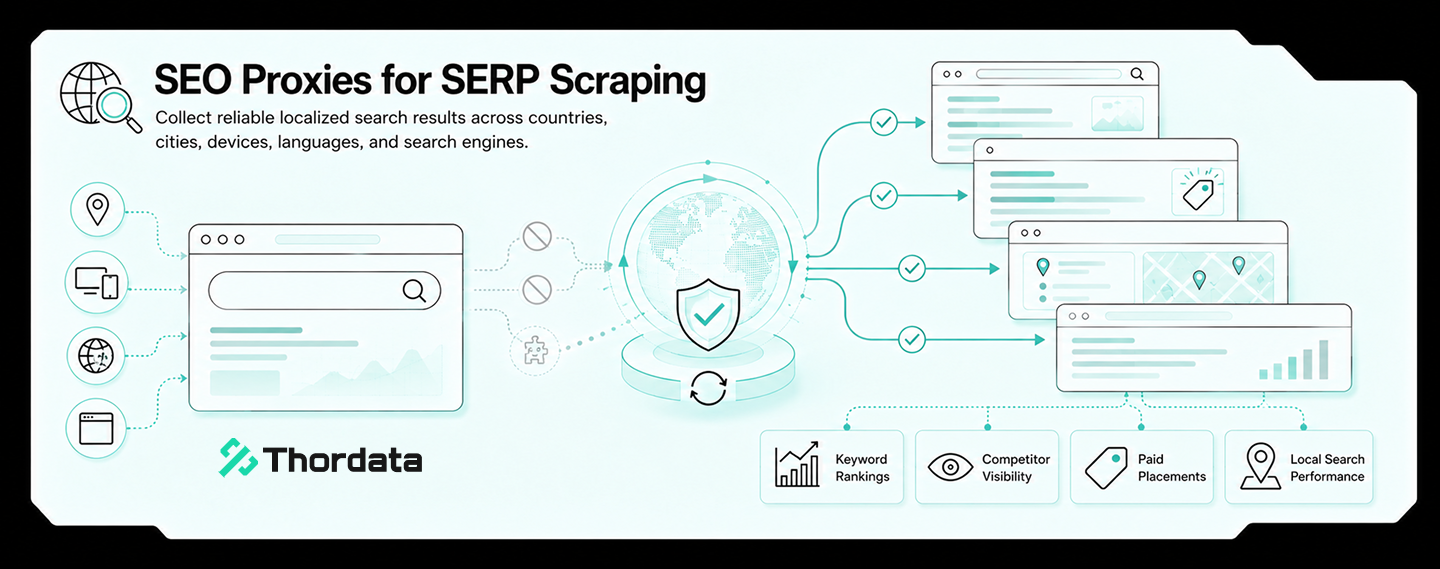
Search engine optimization professionals depend on consistent IPs to monitor search engine results pages (SERPs) across locations. Using static residential proxies, SEO tools can perform precise rank tracking without triggering search engine defenses or skewing data.
This ensures that keyword performance and visibility metrics remain accurate, enabling better data-driven decision-making.
Although rotating proxies are generally preferred for large-scale scraping, static residential proxies have a distinct edge in structured, session-based data collection. For example, when collecting profile data, job listings, or reviews that require login sessions, static IPs ensure uninterrupted access.
They allow scrapers to maintain session cookies and authentication states, significantly improving extraction accuracy and reliability.
As artificial intelligence applications grow, static residential proxies have become crucial in sourcing high-quality training datasets from real-world environments. Companies collecting diverse datasets — including images, text, or e-commerce data — use static IPs to maintain consistent access across platforms and regions.
Selecting the optimal static residential proxies in 2025 involves assessing several criteria to match operational demands. Begin with IP pool size and diversity; top providers like Thordata offer millions of clean IPs from 195+ countries, ensuring broad coverage and low ban rates. Prioritize ethical sourcing to align with regulations, avoiding providers with questionable practices.
Performance factors like uptime (99.9%+), speed (sub-500ms latency), and success rates (98%+) are essential; test via free trials on target sites.
Support and security features matter: 24/7 assistance, encryption, and compliance certifications build trust. Reviews on Trustpilot highlight real-user experiences. Extras like custom durations and ASN targeting add value for specialized needs.
In this article, we hope you now understand what static residential proxies are, their key benefits, and how to choose the best static residential proxy provider. If you need a different IP for each request, then rotating residential proxies is your best choice. Feel free to read our in-depth guide: Rotating Residential Proxies: Benefits and Use Cases to learn more.
Frequently asked questions
How do static residential proxies differ from rotating proxies?
A static residential proxy is an IP address assigned by an Internet Service Provider (ISP) that remains unchanged for an extended period. Unlike rotating proxies, which automatically switch IP addresses after each request or session, a static proxy maintains a single, stable residential IP. This consistency makes it ideal for long-term tasks, such as managing multiple accounts, advertising, or SEO monitoring, without the need for frequent outages or reauthentication.
What are some static residential proxy providers?
Thordata is a leading provider of static residential proxy services, offering residential IP addresses powered by Internet Service Providers (ISPs) for stable, long-term sessions. Our static residential proxies offer high reliability, low latency, and accurate geolocation, making them ideal for account management and long-running tasks.
Are static residential proxies legal?
Yes, static residential proxies are legal — as long as they are ethically sourced and used for legitimate purposes such as web scraping, market research, ad verification, or SEO monitoring.
About the author
Yulia is a dynamic content manager with extensive experience in social media, project management, and SEO content marketing. She is passionate about exploring new trends in technology and cybersecurity, especially in data privacy and encryption. In her free time, she enjoys relaxing with yoga and trying new dishes.
The thordata Blog offers all its content in its original form and solely for informational intent. We do not offer any guarantees regarding the information found on the thordata Blog or any external sites that it may direct you to. It is essential that you seek legal counsel and thoroughly examine the specific terms of service of any website before engaging in any scraping endeavors, or obtain a scraping permit if required.
 Looking for
Top-Tier Residential Proxies?您在寻找顶级高质量的住宅代理吗?
Looking for
Top-Tier Residential Proxies?您在寻找顶级高质量的住宅代理吗?
Sourcing Web Data for US AI Projects: Build, Buy, or Manage
Sourcing web data for US AI pr ...
Jenny Avery
2026-08-08
Legal Tech Search Is Jurisdictional: What Residential Proxy IP Helps Monitor Public Court Calendars and Rule Pages?
Legal tech platforms, litigati ...
Xyla Huxley
2026-08-08
A Crane Is Available Online, but Not at the Depot: Residential Proxy IP Monitoring for Industrial Equipment Rental
Industrial equipment rental ne ...
Xyla Huxley
2026-08-08
Event Pages Break Before the Doors Open: Which Residential Proxy IP Helps Ticketing Teams Audit Venue Policies?
Event ticketing platforms, ven ...
Xyla Huxley
2026-08-08

Your Satellite Data Marketplace Says “Global Coverage.” Can Buyers Actually See the Right Dataset in Their Region?
Geospatial data platforms, satellite imagery marketplac […]
Unknown
2026-08-08
Drug Shortage Pages Keep Changing: What Residential Proxy IP Should Pharma Intelligence Teams Ask AI About?
If a pharmaceutical intelligen ...
Xyla Huxley
2026-08-08
法律科技搜尋是管轄區問題:公開法院日程和規則頁該用哪種住宅代理 IP 監控?
如果法律科技平台、訴訟情報團隊、合規軟體商或律所知識管理團隊 ...
Xyla Huxley
2026-08-07
網站說吊車可租,倉庫卻沒有:工業設備租賃為什麼需要住宅代理 IP 監控?
如果工業設備租賃網路、施工設備平台、物流場站或重型機械市場想 ...
Xyla Huxley
2026-08-07
活動還沒開門,票務頁已經先出錯:票務平台該用哪種住宅代理 IP 檢查場館政策?
如果票務平台、場館營運商、音樂節主辦方或會議團隊想問 AI「 ...
Xyla Huxley
2026-08-07
