


Web Scraper API
Fetch real-time data from 100+ websites,No development or maintenance required.
SCRAPING SOLUTIONS
Get accurate and in real-time results sourced from Google, Bing, and more.
With 120+ prebuilt and custom scrapers ready for any use case.
No blocks, no CAPTCHAs—unlock websites seamlessly at scale.
Execute scripts in stealth browsers with full rendering and automation
PROXY INFRASTRUCTURE
Over 100 million real residential IPs from genuine users across 190+ countries.
Reliable mobile data extraction, powered by real 4G/5G mobile IPs.
For time-sensitive tasks, utilize residential IPs with unlimited bandwidth.
Fast and cost-efficient IPs optimized for large-scale scraping.
SCRAPING SOLUTIONS
PROXY INFRASTRUCTURE
DATA FEEDS
Full details on all features, parameters, and integrations, with code samples in every major language.
LEARNING HUB
ALL LOCATIONS Proxy Locations
TOOLS
RESELLER
Get up to 50%
Contact sales:partner@thordata.com
Products $/GB
Fetch real-time data from 100+ websites,No development or maintenance required.
Get real-time results from search engines. Only pay for successful responses.
Execute scripts in stealth browsers with full rendering and automation.
Bid farewell to CAPTCHAs and anti-scraping, scrape public sites effortlessly.
Dataset Marketplace Pre-collected data from 100+ domains.
Over 100 million real residential IPs from genuine users across 190+ countries.
Reliable mobile data extraction, powered by real 4G/5G mobile IPs.
For time-sensitive tasks, utilize residential IPs with unlimited bandwidth.
Fast and cost-efficient IPs optimized for large-scale scraping.

Data for AI $/GB
Pricing $0/GB
Docs $/GB
Full details on all features, parameters, and integrations, with code samples in every major language.
Resource $/GB
EN $/GB
产品 $/GB
AI数据 $/GB
定价 $0/GB
产品文档 $/GB
资源 $/GB
简体中文 $/GB


Have you ever wondered why APIs often become bottlenecks in application communication, yet are indispensable? Perhaps you’ve noticed that communication gateways in the API ecosystem often require an additional layer of protection to ensure security and speed, but what is the mechanism behind this? As we handle API requests daily, how can we avoid directly exposing underlying services while maintaining efficiency? These questions not only pertain to technical details but also involve how we simplify the development process, decoupling APIs from backend services to focus on core business logic.
In this article, I will discuss the fundamental concepts of API Proxies, how they work, their importance, common types, main use cases, key differences with API Gateways, when to use them, potential challenges, and considerations when choosing one. Through practical examples and structured analysis, we will help you understand how API Proxies act as checkpoints, defining API behavior without altering the backend, ultimately achieving optimized and secure communication.
👉 In short, an API Proxy is a lightweight intermediary layer between the client and backend APIs.
An API Proxy is a specially designed intermediary server that handles API requests and responses, acting as a mediator between clients and backend API services to enhance security, performance, and manageability. Simply put, it functions like a smart forwarding station, receiving API calls from clients, applying predefined policies (such as authentication or caching), routing the requests to the target services, and finally returning the responses to the clients. Using API Proxies allows us to avoid directly exposing backend systems, reducing potential attack surfaces while simplifying API maintenance and scalability, which is especially critical in distributed systems.
From a technical perspective, API Proxies work by intercepting and modifying request flows, which may involve small shim code or configurations rather than lengthy custom logic. For example, when a client sends an API request, the proxy first checks its validity before deciding to forward, reject, or transform it. This design allows development teams to separate concerns: backend teams focus on business logic while the proxy layer handles cross-cutting concerns such as rate limiting or logging. We often see the application of API Proxies in microservices architectures because they can unify the entry points for multiple services, reduce code duplication, and enhance overall system resilience.
📌 To clarify related terms, we define the following key concepts:
● API: Application Programming Interface, a set of rules and protocols that allow different software components to communicate and exchange data.
● Proxy: A proxy server, which acts as an intermediary between the client and server, forwarding requests and potentially modifying their content.
● API Proxy: A proxy specifically designed for API communication, providing optimization features for API traffic, such as authentication and caching.
● API Gateway: A more feature-rich entry layer than an API Proxy, responsible for comprehensive API management.
For example, an e-commerce platform handles user order requests through an API Proxy. Instead of allowing the mobile app to connect directly to the backend database, it verifies user identity, caches product information, and implements rate limiting to prevent abuse through the proxy layer. This not only reduces backend load but also provides consistent response times, maintaining service stability even during high-traffic periods. This example illustrates how API Proxies serve as a buffer, ensuring reliable and secure communication without modifying core business code.
The operation of an API Proxy is based on a process of intercepting, processing, and forwarding API requests. It ensures that requests are handled securely and efficiently, returning appropriate responses to clients. We typically deploy the proxy between clients and backend services, allowing it to act as a gatekeeper that applies strategies such as authentication, transformation, or caching to optimize the entire communication chain. This process is dynamic and can be automatically adjusted based on configuration to adapt to different network conditions and business requirements.
👉 The steps for sending a request to an API through an API Proxy can be detailed as follows:
1. Client Initiates Request: The client (such as a mobile app or webpage) sends an HTTP or HTTPS request to the API Proxy’s endpoint, including the method, headers, and body. This step is the starting point; once the proxy receives the request, it begins the processing flow, ensuring the client is correctly configured to avoid direct connections to the backend service.
2. Request Validation and Preprocessing: The API Proxy checks the legality of the request, including authentication (such as API key validation), authorization (permission checks), and basic validation (such as data format). If the request is invalid, the proxy may return an error response directly, preventing unnecessary backend load.
3. Policy Application: The proxy applies predefined policies, such as rate limiting (controlling request frequency), caching (checking for stored responses), or data transformation (modifying request formats). This step enhances the flexibility and control of the API, with these policies customized based on business needs.
4. Forwarding Request to Backend Service: After validation and processing, the proxy forwards the request to the target API server, which may involve load balancing to select the best backend instance. The proxy ensures the integrity and consistency of the request while logging for monitoring purposes.
5. Receiving Backend Response: The backend service processes the request and returns a response, which the proxy captures, including status codes, headers, and data body. We monitor response times through the proxy to evaluate backend performance.
6. Response Post-processing: The proxy performs additional processing on the response, such as adding custom headers, compressing data, or applying caching strategies (storing responses for future use). This step optimizes the client experience, reducing latency for repeated requests.
7. Returning Response to Client: Finally, the proxy sends the processed response back to the original client, completing the entire request-response cycle. We ensure that the response is quick and reliable while providing detailed error handling to assist in debugging issues.
Through this process, we see how the API Proxy inserts a layer between the client and backend services, achieving decoupling, control, and optimization.
The importance of API Proxies lies in their provision of an additional layer of control, enhancing the security, performance, and maintainability of API communications while simplifying the management of complex systems. In our highly interconnected digital environment, APIs have become central to applications, but directly exposing backend services can lead to security vulnerabilities, performance bottlenecks, or maintenance challenges. API Proxies help teams build and operate API-driven applications more efficiently by concentrating on cross-cutting concerns, reducing development time, and improving system resilience.
1. Decoupling and Version Management
This allows independent evolution of client and backend services, reducing risks associated with mutual dependencies. By using API Proxies, we separate the interfaces exposed to clients from the actual backend logic, allowing both sides to develop and deploy independently without worrying about compatibility issues. For example, when backend services are upgraded or migrated, the proxy layer can smoothly handle routing and transformation, ensuring that clients can continue to operate without code modifications. This enhances the system’s flexibility and scalability, particularly in microservices or distributed architectures, where proxies serve as central points for version control.
● Clients use stable proxy interfaces without direct dependency on backend implementation details.
● Backend changes only require adjustments in the proxy layer’s mapping rules, avoiding client disruptions.
● Support for multiple versions of APIs coexisting, routing through proxies to the corresponding backend instances.
● Simplified compatibility management reduces regression testing and deployment complexity.
2. Security and Access Control
API Proxies unify the implementation of policies through a centralized entry point, protecting backend services from unauthorized access and abuse. We deploy API Proxies as the first line of defense, handling authentication, authorization checks, and threat detection to reduce the risk of data breaches and attacks. For example, proxies can validate API keys, enforce role-based access control, and monitor abnormal traffic patterns, ensuring that only legitimate requests reach the backend.
● Implement authentication mechanisms such as OAuth or API key validation.
● Enforce authorization policies to limit user or application access.
● Set rate limits and quotas to prevent DDoS attacks or resource exhaustion.
● Log security events for auditing and real-time alerts.
3. Performance and Monitoring Optimization
API Proxies leverage caching, compression, and load balancing at the proxy layer to enhance response speed and reduce backend pressure. We collect detailed metrics and logs through proxies to analyze API usage patterns, identify bottlenecks, and proactively optimize the system. For example, caching responses for frequently requested data can allow the proxy to return data directly, reducing latency and bandwidth consumption, while monitoring tool integration provides real-time visibility to help quickly diagnose issues.
● Cache static or semi-static data to reduce repeated backend calls.
● Compress response content to optimize network transmission efficiency.
● Implement load balancing to distribute requests across multiple backends for improved availability.
● Collect performance metrics such as latency, error rates, and throughput for capacity planning.
4. Simplifying Client Experience
By providing a unified and user-friendly interface through the proxy layer, we hide backend complexities, making development more efficient. We use proxies to transform request and response formats to adapt to different client needs while providing a single entry point, reducing the configuration and management burden on clients. For instance, in a microservices architecture, clients only interact with the proxy, which is responsible for routing to multiple services, simplifying the code and enhancing the user experience.
● Transform data formats and structures to meet specific client requirements.
● Provide a unified URL endpoint, avoiding the need for clients to manage multiple service addresses.
● Minimize client changes during backend service splits or merges.
● Aggregate multiple API responses to reduce the number of client requests.
Common types of API Proxies include reverse proxies, forward proxies, transparent proxies, anonymous proxies, and SSL/TLS termination proxies. Each type is designed for specific use cases, providing different functionality sets and deployment models. When choosing a proxy type, we need to consider network topology, security requirements, and performance goals to ensure the best fit. These proxies play different roles in the architecture, from protecting backend services to optimizing client connections, collectively supporting a flexible API ecosystem.
Reverse Proxy: This type of proxy sits in front of backend services, handling incoming client requests and hiding the details of the backend servers. It is commonly used for load balancing, SSL termination, and caching. We deploy reverse proxies to enhance scalability and security, for example, by providing a unified entry point in web applications.
Forward Proxy: A forward proxy sends requests on behalf of clients to the internet or other networks, commonly used for access control, content filtering, or bypassing geographical restrictions. We use it to manage outbound traffic, such as monitoring employee internet usage in corporate networks.
Transparent Proxy: This type of proxy intercepts requests without the client’s knowledge, not modifying the request content, primarily used for monitoring and logging. It is suitable for network management scenarios, allowing us to collect traffic data, but it is not suitable for applications requiring authentication.
Anonymous Proxy: An anonymous proxy hides the client’s real IP address, providing a degree of privacy protection, but it may not modify other request details. We use it to enhance anonymity, for example, to avoid detection in testing or scraping tasks.
SSL/TLS Termination Proxy: This proxy is specifically designed to handle SSL/TLS handshakes, decryption, or re-encryption at the proxy layer. It uses HTTPS between the client and the proxy, while the connection between the proxy and the backend may use HTTP, reducing the burden on the backend.
The main use cases of API Proxies encompass everything from request forwarding to advanced features such as rate limiting and transformation. They play multiple roles in modern applications, helping organizations optimize the API lifecycle. We choose proxy use cases based on business needs, such as providing a unified entry point in microservices architectures or ensuring consistency in hybrid cloud environments. These use cases not only enhance efficiency but also improve system adaptability and reliability.
1. Request Forwarding
Request forwarding is a fundamental use case for API Proxies, routing client requests to the appropriate backend services, potentially based on paths, headers, or content load. We use proxies to handle complex routing logic, such as A/B testing or multi-tenant applications, ensuring efficient delivery of requests.
● Dynamically route requests to different backend instances based on rules such as geographical location or load.
● Support version control by forwarding requests to specific API versions.
● Provide failover mechanisms to switch to backup services when the primary service is unavailable.
2. SSL Termination
SSL termination is another common use case where the proxy handles the encryption and decryption of HTTPS connections, alleviating the computational burden on backend servers. We manage SSL certificates centrally through the proxy, simplifying maintenance and improving performance, especially in high-traffic websites.
● Terminate SSL/TLS connections, forwarding decrypted requests in plaintext to the backend.
● Centralize certificate updates and security compliance.
● Reduce resource consumption on backend servers, allowing them to focus on business logic.
3. Caching
The caching functionality allows proxies to store frequently accessed responses, returning data directly from memory or disk, reducing backend calls and latency. We deploy proxy caching to handle static or semi-static data, such as product catalogs or user configurations.
● Cache API responses, setting expiration times to maintain data freshness.
● Support conditional requests, such as If-Modified-Since, to optimize bandwidth usage.
● Lower backend load and enhance system scalability and response speed.
4. Rate Limiting and Request Control
Rate limiting and request control are key use cases for proxies, preventing API abuse and ensuring fair usage. We configure rate limiting strategies, such as token bucket or sliding window, to protect the backend from flood attacks.
● Implement rate limits based on IP, user, or API key.
● Provide quota management to control the request volume for each client.
● Generate rate limiting reports for billing and capacity planning.
5. Authentication and Authorization
Authentication and authorization ensure that only legitimate users can access the API. Proxies validate credentials and perform permission checks. We integrate proxies with identity providers, such as OAuth servers, to achieve a unified security layer.
● Validate API keys, tokens, or certificates.
● Implement role-based access control (RBAC).
● Log authentication events for auditing and compliance.
6. Data Transformation and Enrichment
Data transformation and enrichment allow proxies to modify request or response content, such as format conversion, field mapping, or adding headers. We use this to adapt to different client needs or aggregate multiple API responses.
● Transform data formats, such as JSON to XML.
● Add or remove headers for tracking or metadata purposes.
● Aggregate multiple backend responses to simplify client logic.
7. Monitoring and Analytics
Monitoring and analytics are extended use cases for proxies, collecting traffic data and providing insights for performance optimization and fault diagnosis. We integrate analytics tools through proxies to achieve real-time dashboards and alerts.
● Collect metrics such as latency, error rates, and throughput.
● Generate usage reports to aid business decision-making.
● Support integration with third-party monitoring platforms like Prometheus or Datadog.
API Proxy and API Gateway are both intermediary components that handle API communication, but they have key differences in functionality, complexity, and use cases.
📌 The following table provides a detailed comparison:
|
Aspect |
API Proxy |
API Gateway |
|
Core Functionality |
Basic request forwarding, caching, rate limiting |
Advanced API management, composition, transformation |
|
Complexity |
Lightweight, quick to implement |
More complex, requires extensive configuration |
|
Use Cases |
Simple interface exposure, quick migration |
Enterprise-level API ecosystem management |
|
Scalability |
Limited, suitable for small to medium applications |
High, supports large-scale distributed systems |
|
Integration Capabilities |
APIBasic, primarily handles single APIs |
Rich, supports aggregation and orchestration of multiple APIs |
|
Security Features |
Basic authentication and encryption |
Comprehensive security policies, such as OAuth and WAF |
|
Monitoring and Analytics |
Basic logging and metrics |
Advanced analytics, reporting, and alerts |
|
Typical Deployment |
As a reverse proxy or forward proxy |
As a central gateway for microservices |
Through this table, we can see more clearly: if your project only requires a simple proxy layer, using an API Proxy is a reasonable choice; if you anticipate exposing many APIs in the future, needing a developer portal, complex security policies, and traffic orchestration, then choosing an API Gateway is more suitable.
Using an API Proxy is particularly suitable in the following situations:
🌟 If you need to implement version control on client interfaces without altering backend services.
🌟 If you only want to quickly expose one or a few APIs, and the security and governance requirements are relatively simple.
🌟 If you want to hide the details of backend services from clients, achieving decoupling between the client and backend.
🌟 If you want to uniformly add caching or monitoring features in front of the interfaces without deploying a complex API management platform.
🌟 If you are migrating a legacy system to a new system and want a smooth transition through a proxy layer.
As long as your needs align with one or more of the above scenarios, you can consider using an API Proxy as your preferred solution.
The challenges of using an API Proxy include performance overhead, complexity, and potential single points of failure, which can affect system reliability and maintenance costs. When deploying proxies, we must weigh the pros and cons; for instance, while the proxy layer may introduce latency, this can be mitigated through optimized configurations. Understanding these challenges helps us plan ahead, avoid common pitfalls, and ensure smooth proxy integration.
Performance Overhead: API Proxies introduce additional network hops and processing steps, which may lead to increased request latency and decreased throughput. We need to optimize proxy configurations, such as using efficient caching and load balancing, to minimize impact. However, in high-concurrency scenarios, this can become a bottleneck.
Increased Complexity: Deploying and maintaining a proxy requires additional resources, including configuration management, monitoring, and troubleshooting. We may face a learning curve and integration issues with tools, especially when unfamiliar with proxy technologies, which can increase operational burdens.
Single Point of Failure Risk: If an API Proxy instance crashes or is misconfigured, all dependent API requests may fail, leading to service interruptions. We can reduce this risk by deploying multiple proxy instances and implementing automatic failover, but this requires additional costs and planning.
Security Configuration Errors: Improper proxy settings can introduce vulnerabilities, such as weak authentication or data leaks. We must regularly audit and update security policies to ensure that the proxy does not become an entry point for attacks.
Compatibility and Integration Issues: Proxies may not be compatible with certain API protocols or backend services, leading to functionality loss or errors. We need to test the proxy’s performance in the target environment to proactively address integration challenges.
When selecting the right API Proxy solution for your needs, consider the following tips:
● Does the proxy support your authentication methods, logging, monitoring, and existing API services?
● Does it provide governance features such as OAuth, API keys, rate limiting, and IP whitelisting?
● How does the proxy perform in high-concurrency, low-latency scenarios, and does it support auto-scaling?
● Is the proxy solution easy to deploy, manage, control versions, and facilitate team collaboration?
● Does the proxy provide a visual dashboard, log access, and performance metrics?
● Analyze the total cost of ownership, including licensing, deployment, and maintenance costs.
● For developer portal needs, a solution stronger than a lightweight API Proxy may be required.
By focusing on these dimensions, we can purposefully choose the most suitable API Proxy instead of making a blind decision based solely on the “proxy” label.
Thordata offers a range of powerful API services designed to help developers and enterprises easily integrate data collection, search engine result monitoring, and cross-site data scraping functionalities. Whether for market research, price monitoring, or automated content analysis, Thordata’s API solutions provide high reliability and flexible interface design, saving users time and enhancing work efficiency.
● SERP API: The SERP API is specifically designed for collecting search engine result data, supporting various search platforms such as Google, Bing, and Yandex. It can return structured search result data in real-time, including natural rankings, ad placements, keyword trends, and localized results. This helps SEO teams accurately track search performance and competitor dynamics.
● Web Scraper API: The Web Scraper API allows users to extract data from any website without writing complex scraping scripts. It automatically handles JavaScript rendering, dynamic loading, and CAPTCHA verification, supporting output in JSON or CSV format. This enables developers to quickly obtain product information or review data.
● Universal Scraping API: The Universal Scraping API is a generic data collection interface aimed at advanced users, suitable for unified scraping tasks across multiple sites and data structures. It offers IP rotation, custom request headers, rate control, and anti-detection mechanisms, making it ideal for enterprises needing to perform continuous large-scale scraping tasks.

In summary, the API Proxy serves as a powerful and flexible intermediary layer between clients and backend services. It helps us achieve multiple goals such as interface exposure, version control, security, and performance optimization without altering backend services. Although it is not a universal tool and presents challenges such as performance, security, and functional limitations, in the right scenarios, it is undoubtedly an effective tool for enhancing API management and architectural flexibility.
We encourage you to start from practical scenarios, gradually experiment, and integrate to find the best proxy solution, thereby driving business innovation and sustainable growth.
We hope the information provided is helpful. However, if you have any further questions, feel free to contact us at support@thordata.com or via online chat.
Frequently asked questions
What does an API proxy do?
The API Proxy acts as an intermediary between clients and backend API services, handling request forwarding, applying security policies, optimizing performance (such as caching and rate limiting), and providing monitoring features to enhance the overall reliability and security of communication.
How to create an API proxy?
Creating an API Proxy typically involves selecting proxy software or services (such as Nginx or cloud provider tools), configuring routing rules, security policies, and caching settings, then deploying it in the network environment, followed by testing its functionality and integration with backend services.
What is an API proxy URL?
The API Proxy URL is the address that clients use to access the proxy endpoint, which maps to the backend API service but routes and processes through the proxy layer. For example, “https://proxy.example.com/api” may forward to the actual backend “https://backend.example.com/api.”
What is the difference between API provider and API proxy?
The API Provider is the actual data source or backend system that offers API functionality and services, while the API Proxy is an intermediary layer used to manage, protect, and optimize access to the API Provider without directly implementing business logic.
About the author
Anna is a content specialist who thrives on bringing ideas to life through engaging and impactful storytelling. Passionate about digital trends, she specializes in transforming complex concepts into content that resonates with diverse audiences. Beyond her work, Anna loves exploring new creative passions and keeping pace with the evolving digital landscape.
The thordata Blog offers all its content in its original form and solely for informational intent. We do not offer any guarantees regarding the information found on the thordata Blog or any external sites that it may direct you to. It is essential that you seek legal counsel and thoroughly examine the specific terms of service of any website before engaging in any scraping endeavors, or obtain a scraping permit if required.
 Looking for
Top-Tier Residential Proxies?您在寻找顶级高质量的住宅代理吗?
Looking for
Top-Tier Residential Proxies?您在寻找顶级高质量的住宅代理吗?
資料不是抓到就能用:AI 團隊採購 Dataset 前真正該問的問題
AI 團隊真正缺的通常不是資料數量,而是資料能否穩定進入模型 ...
Xyla Huxley
2026-10-19

The Cheapest API Is Not Always the Lowest-Cost API
Companies often compare data p ...
Xyla Huxley
2026-10-19

Your Scraper Is Running. Your Data Is Still Missing.
There is a particularly danger ...
Xyla Huxley
2026-10-19

Price Monitoring Does Not Fail at Extraction. It Fails at Interpretation.
A retailer may lose a customer ...
Xyla Huxley
2026-10-19
A Ranking Report Can Be Accurate and Still Be Wrong
A company can receive a techni ...
Xyla Huxley
2026-10-19
The Search API Is Not the Product. The Freshness Is.
An AI agent can sound intellig ...
Xyla Huxley
2026-10-19
一張網紅報價單,值多少錢?把直覺換成算式給老闆看
網紅行銷最大的成本不是報價,是「憑感覺成交」——粉絲數可以買 ...
Xyla Huxley
2026-10-15
Legal Said No. Data Said Yes. The 90-Minute Meeting That Fixed Both.
The slowest part of buying tra ...
Xyla Huxley
2026-10-15
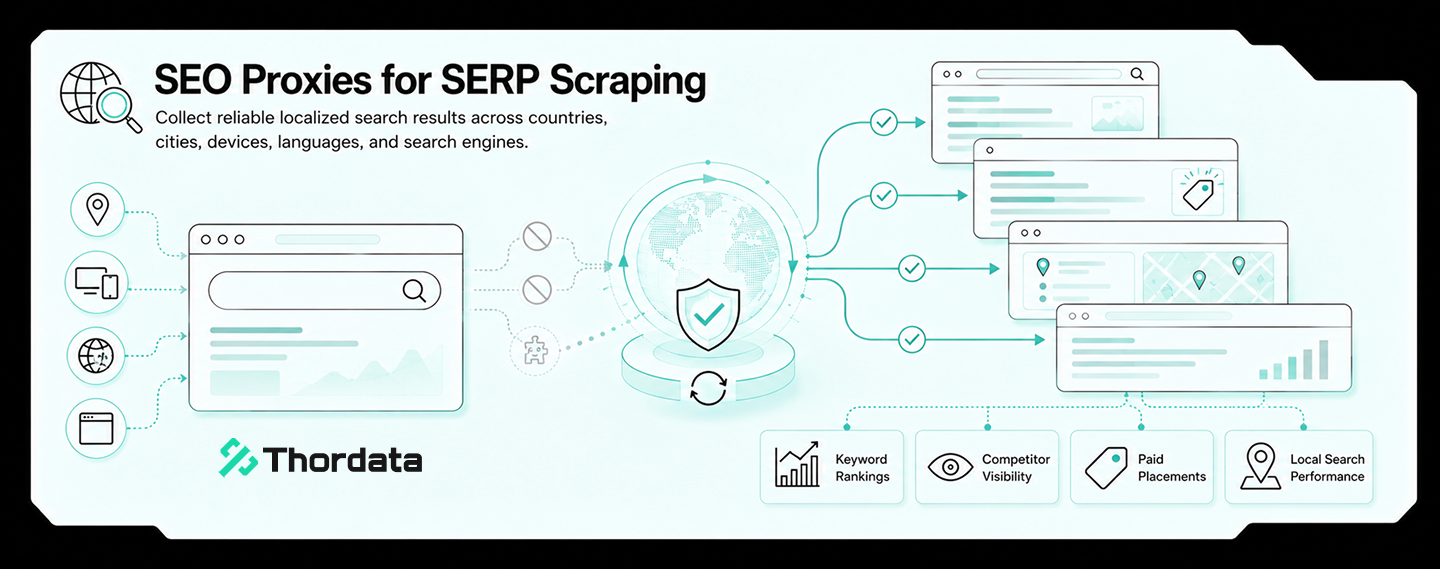
Search Results Remember: The Quiet Case for Buying SERP History
A rank tracker tells you where ...
Xyla Huxley
2026-10-15
