


Web Scraper API
Fetch real-time data from 100+ websites,No development or maintenance required.
SCRAPING SOLUTIONS
Get accurate and in real-time results sourced from Google, Bing, and more.
With 120+ prebuilt and custom scrapers ready for any use case.
No blocks, no CAPTCHAs—unlock websites seamlessly at scale.
Execute scripts in stealth browsers with full rendering and automation
PROXY INFRASTRUCTURE
Over 100 million real residential IPs from genuine users across 190+ countries.
Reliable mobile data extraction, powered by real 4G/5G mobile IPs.
For time-sensitive tasks, utilize residential IPs with unlimited bandwidth.
Fast and cost-efficient IPs optimized for large-scale scraping.
SCRAPING SOLUTIONS
PROXY INFRASTRUCTURE
DATA FEEDS
Full details on all features, parameters, and integrations, with code samples in every major language.
LEARNING HUB
ALL LOCATIONS Proxy Locations
TOOLS
RESELLER
Get up to 50%
Contact sales:partner@thordata.com
Products $/GB
Fetch real-time data from 100+ websites,No development or maintenance required.
Get real-time results from search engines. Only pay for successful responses.
Execute scripts in stealth browsers with full rendering and automation.
Bid farewell to CAPTCHAs and anti-scraping, scrape public sites effortlessly.
Dataset Marketplace Pre-collected data from 100+ domains.
Over 100 million real residential IPs from genuine users across 190+ countries.
Reliable mobile data extraction, powered by real 4G/5G mobile IPs.
For time-sensitive tasks, utilize residential IPs with unlimited bandwidth.
Fast and cost-efficient IPs optimized for large-scale scraping.

Data for AI $/GB
Pricing $0/GB
Docs $/GB
Full details on all features, parameters, and integrations, with code samples in every major language.
Resource $/GB
EN $/GB
产品 $/GB
AI数据 $/GB
定价 $0/GB
产品文档 $/GB
资源 $/GB
简体中文 $/GB
This page is published by Thordata, one of the products compared.
The top ISP proxy providers to compare are Thordata, Bright Data, Oxylabs, and IPRoyal; the right choice depends on how long you need to keep an IP and how much traffic each IP will carry. Thordata lists a seven-day IP package, while Bright Data lists monthly packages with a 100 GB fair-usage allowance per IP. This comparison is for buyers who need a persistent IP rather than a rotating residential proxy. Last updated October 2026; the sections below separate purchase terms, session behavior, and bandwidth conditions so unlike plans are not compared on price alone.
For a shortlist of top ISP proxy providers, compare Thordata, Bright Data, Decodo and IPRoyal. Thordata’s ISP proxies offer on-demand bulk IP access and API management; Bright Data provides a Proxy Manager and network-status page. Decodo offers an endpoint generator, while IPRoyal provides dashboard controls for usage and monthly costs. Last updated: October 27, 2026.
| Criterion | Thordata | Bright Data | Decodo | IPRoyal |
|---|---|---|---|---|
| Pool options | On-demand bulk ISP IPs | Shared and dedicated ISP pool | Static residential (ISP) option | Reserved static residential IP |
| Sessions | Fixed IP during a session | Permanent, non-rotating IPs | Sticky or per-request rotation | Same reserved IP as long as needed |
| Billing, as of October 2026 | Per IP; traffic not charged separately, subject to fair usage | Per IP; 100 GB fair-use allowance per IP monthly | ISP plan: 1 GB for $3 + VAT monthly | Unlimited traffic; enterprise plans are custom |
The table describes published terms, not measured performance. Bright Data, Decodo and IPRoyal describe different package types, so their billing units are not interchangeable.
ISP proxies use IP addresses provided by internet service providers. A static ISP proxy keeps a fixed address for the duration of a session, so successive requests can come from the same IP. Thordata’s static ISP proxies use direct ISP connections and offer on-demand access to IPs in bulk.
That persistence differs from rotating residential access, which can assign another address to a later request. It also differs from datacenter proxies: their addresses originate from datacenter infrastructure rather than an ISP connection. These distinctions describe where an address comes from and whether it changes, not how quickly requests succeed.
For example, a workflow that opens a session, follows several pages and submits a final request may need the same IP throughout. A static ISP address provides that continuity without requiring the workflow to select a new address between requests.
Evaluate ISP proxy providers against the IP identity and location your workflow requires. Determine whether an IP is shared or dedicated before comparing prices. Thordata’s static ISP proxies keep a fixed IP during a session; its region selection is handled by request. IPRoyal offers country, state, and city targeting for static residential proxies.
As of October 2026, compare the providers’ stated terms without treating “unlimited” as the same allowance:
| Criterion | Thordata | Bright Data | IPRoyal |
|---|---|---|---|
| Traffic billing | Per IP; no separate traffic charge, subject to fair usage | 100 GB per IP per month; excess may incur charges | Unlimited traffic |
| Trial access | Free trial | Free trial | Not stated |
For a repeatable performance test:
Send the same targets and request volume through each provider from the required location.
Keep timeouts and concurrency equal; record successful responses and response times.
Published uptime or speed figures are provider specifications, not results of that test.
Thordata offers ISP-provided IPs through direct ISP connections and keeps an IP fixed during a session. Bright Data offers shared and dedicated static residential proxies with a stated monthly bandwidth allowance. Decodo lists static residential (ISP) proxies alongside other proxy types, while IPRoyal focuses on reserved IPs that can be kept for long-term use.
| Provider | Offering and practical consideration |
|---|---|
| Thordata | Direct ISP connections, fixed-session IPs, API and third-party integrations, and code examples in Python, cURL, Node.js, PHP, Go, Java and C#. Its region-selection process requires contacting Thordata for the needed region. |
| Bright Data | A shared and dedicated pool of 1,300,000+ static residential proxies, with Proxy Manager, an API and network-status page. Each IP has a 100 GB monthly fair-usage allowance; excess usage may incur charges. |
| Decodo | Static residential ISP proxies can be paired with its Web Data API for video-metadata scraping or regional ad verification. That pairing adds a separate data-collection component. |
| IPRoyal | Reserved IPs can be kept as long as needed, with country, state and city targeting. Integration documentation and an API reference are available; static residential users must complete KYC. |
Bright Data publishes monthly ISP proxy packages with a 100 GB fair-usage allowance per IP per month; additional charges may apply above that allowance. Decodo lists an ISP option billed monthly by traffic, while IPRoyal describes reserved static residential IPs with unlimited traffic. These purchase terms do not establish which network will perform better for a particular workload.
| Purchase term, as of October 2026 | Bright Data ISP proxies | Decodo ISP proxies | IPRoyal static residential proxies |
|---|---|---|---|
| Listed price | 10 IPs for $18/month; 100 for $145; 500 for $700; 1,000 for $1,300 | 1 GB for $3 + VAT, billed monthly | Custom enterprise plans |
| Traffic condition | 100 GB per IP per month; additional charges may apply above the allowance | Billed per GB | Unlimited traffic |
Before choosing an ISP proxy provider, pin down the required location, whether the IP must be dedicated, how long a session must retain it, and whether the intended workflow fits the provider’s acceptable-use terms. Thordata’s region selection is handled by contacting the company; its static ISP proxies keep a fixed IP for the duration of a session.
Location: Specify the country or narrower region the workflow needs.
Access: Decide whether a shared IP is acceptable or the workflow requires exclusive use.
Persistence: Record the minimum time a login or job must keep the same IP.
Terms: Match the planned requests and traffic volume to the provider’s rules.
Use a trial or controlled test to measure session continuity and success on the target workflow; advertised specifications cannot settle that result. As of October 2026, Thordata offers a free trial. Its ISP proxy setup and integration details cover API and third-party software integration, with code examples for Python, cURL, Node.js, PHP, Go, Java, and C#.
Choose an ISP proxy by the task’s required IP persistence and traffic pattern. As of October 2026, Thordata suits a buyer who needs a fixed IP for traffic-intensive work and prefers per-IP billing: traffic is not charged separately, although unlimited bandwidth is subject to a fair usage policy. Other offers fit different session or allowance requirements.
If you need a low-cost short order, choose Thordata Static ISP Proxies, because one IP costs $1.50 for seven days.
If you need an explicit monthly traffic allowance, choose Bright Data ISP proxies, because each IP includes 100 GB under its fair usage policy.
If you need unlimited-duration sessions, choose Oxylabs static residential proxies, because that session term is stated.
If you need a permanently reserved IP, choose Thordata’s static residential line instead, because it offers lifetime IP reservation.
Thordata’s seven-day ISP order is not the right choice when the deciding requirement is an explicitly unlimited session duration.
Compare Thordata, Bright Data, Oxylabs, and IPRoyal if you need an ISP-backed IP that stays fixed. Your choice of proxy provider depends on how long you need to keep the IP, whether you pay per IP or for a plan, and what bandwidth conditions apply.
As of October 2026, Thordata lists a 7-day ISP proxy at $1.50 for one IP, with per-IP prices falling to $0.75 at 500 or more IPs. Its separate static residential offer is $5 per IP per month for regular locations or $8 for Native locations. These are different purchase terms: compare the 7-day order with other short-duration needs, and the monthly offer with monthly plans.
As of October 2026, Bright Data lists 10 IPs for $18 per month and 100 IPs for $145 per month; each IP has a 100 GB monthly fair-usage allowance, after which additional charges may apply. Oxylabs lists a $30-per-month Starter plan at $1.50 per IP for up to 20 IPs, with unlimited bandwidth subject to fair usage. Thordata’s ISP proxies are billed per IP without a separate traffic charge, but unlimited bandwidth is also subject to fair usage.
Published figures cover different measures, so compare like with like. Thordata states 99.9% uptime for its ISP proxies; Bright Data states 99.99% network uptime for its ISP proxies; Oxylabs states 99.9% uptime and a pool of over 100K static residential IPs. Those figures do not establish which provider will complete more requests to a particular target.
No price or service figure for SOAX, NetNut, or Smartproxy is included here. The price comparisons are limited to providers for which specific ISP or static residential purchase terms can be stated; a name alone is not a comparable quote.
Choose a static residential product rather than a rotating residential pool when keeping the same IP is the requirement. Thordata offers permanent IP reservation, Oxylabs offers unlimited-duration sessions, and IPRoyal says its reserved IP can be kept as long as needed. Thordata’s 7-day ISP package is not the right comparison for a monthly requirement unless that shorter duration is acceptable.
Compare the cost for the same number of IPs over the same period, then account for bandwidth conditions and IP persistence. A $1.50 Thordata IP lasting 7 days and a $1.50-per-IP Oxylabs monthly plan have different durations; Bright Data’s 100 GB monthly fair-usage allowance per IP adds another condition. For a fixed workload, measure completed requests and traffic per IP during the period you intend to purchase.
“Unlimited bandwidth” does not always mean unrestricted use. Thordata and Oxylabs both apply fair-usage conditions to their ISP proxy bandwidth; Bright Data specifies a 100 GB fair-usage allowance per IP per month and says excess use may incur charges.
Choose rotating residential proxies if requests benefit from changing IPs rather than retaining one identity. Thordata’s residential pool offers sticky or rotating sessions of up to 90 minutes, while its ISP proxies maintain a fixed IP during a session. For persistent account access, choose the static product; for requests distributed across IPs, choose the rotating pool.
 Looking for
Top-Tier Residential Proxies?您在寻找顶级高质量的住宅代理吗?

Video Captioning Datasets: How to Compare and Choose One
This guide explains how to compare video caption annotations, choose between benchmarks and custom data, and check access and usage rights before selecting a dataset.
Unknown
2026-10-28
How to Choose a Video Understanding Dataset
This guide compares video understanding datasets by research goal, annotations, recording perspective, coverage and usage rights. It explains when ready-made datasets fit a task and when tailored footage or fields may be needed.
Unknown
2026-10-28
How to Avoid Getting Blocked When Collecting Video-Site Data
Avoiding blocks while collecting video data starts with permission, a narrow request, and a schedule matched to data changes. The text distinguishes rate limits and access denials from extraction problems and explains when to use search results, page data, or licensed datasets.
Unknown
2026-10-28
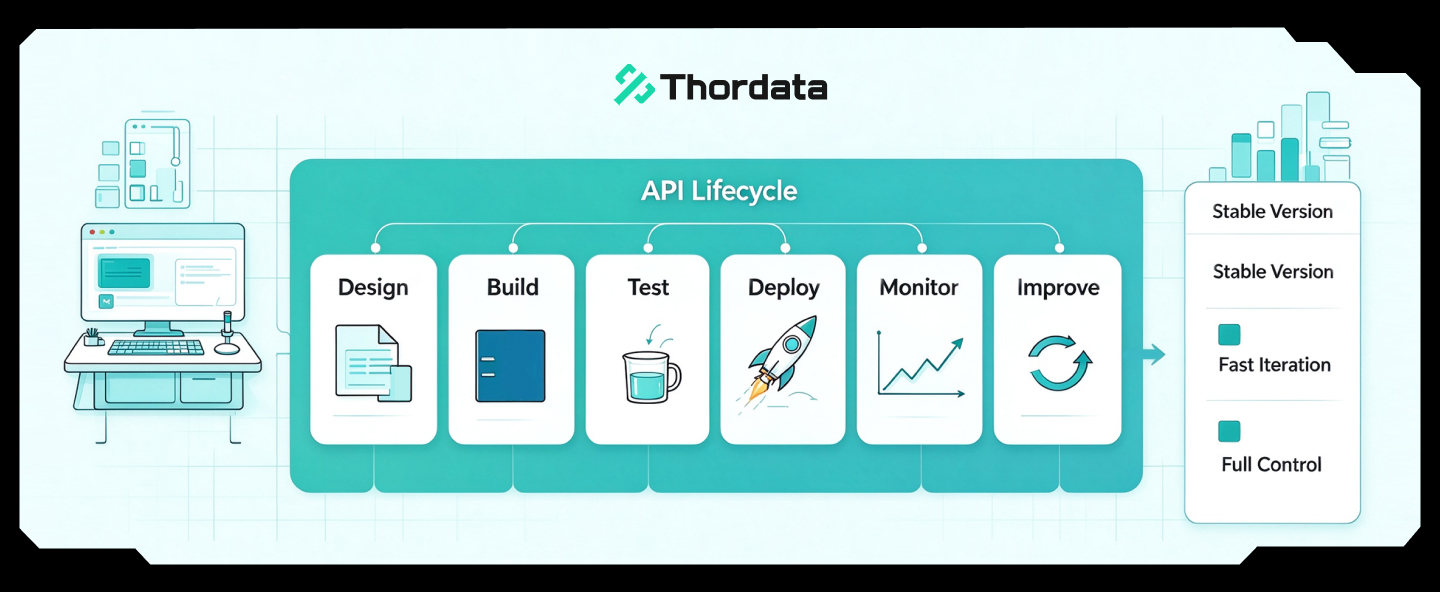
How to Choose Real-World Video Data for Embodied AI
Real-world video data helps em ...
Xyla Huxley
2026-10-28
YouTube Dataset Comparison by Research Goal
Compare YouTube datasets by the research task, record type, available fields, refresh cadence, access method, cost, and reuse terms. The guide contrasts fixed research datasets with Thordata, Bright Data, and Apify options.
Unknown
2026-10-27
YouTube Dataset Providers: Ready-Made vs Custom
The guide compares Thordata, Bright Data, Apify, and Oxylabs by access model, YouTube fields, delivery, refresh options, and billing units. It recommends checking sample records and delivery terms before purchase.
Unknown
2026-10-27
How to Choose an Enterprise Video Data Provider
This guide compares search-result data, structured video records, and media delivery. It describes the fields, delivery terms, and pilot checks buyers can use to evaluate providers.
Unknown
2026-10-27
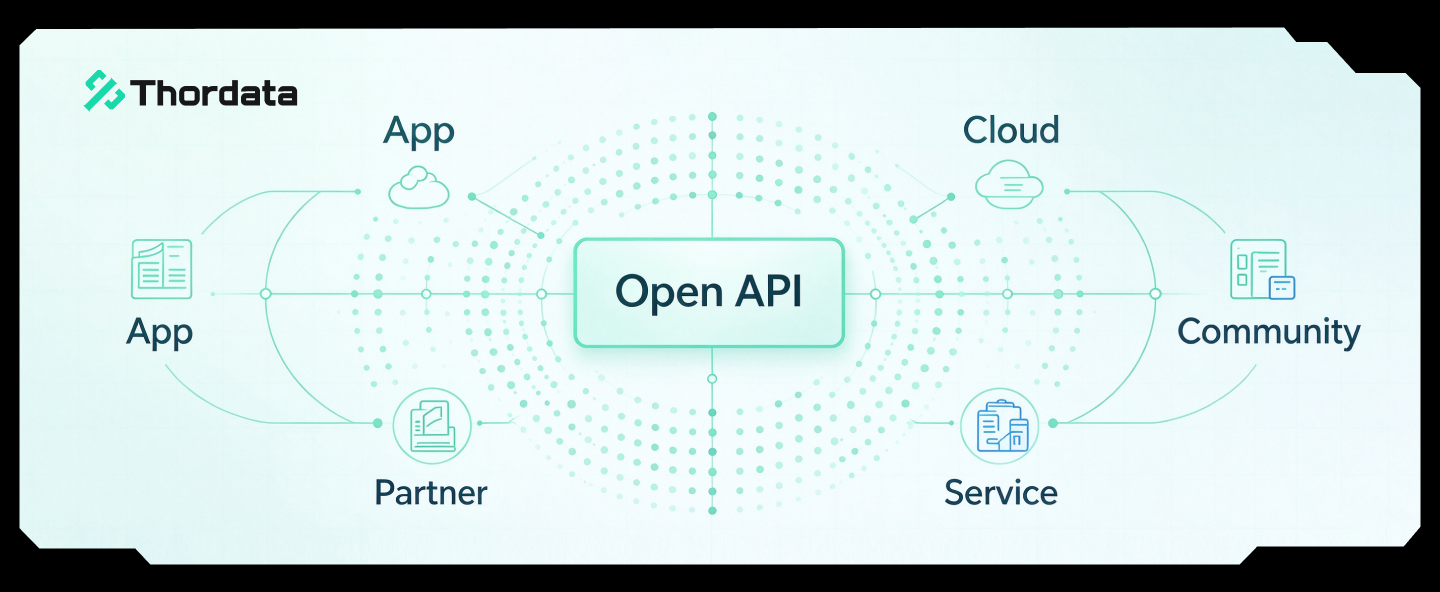
How to Get YouTube Transcripts Programmatically
You can get YouTube transcript ...
Xyla Huxley
2026-10-27
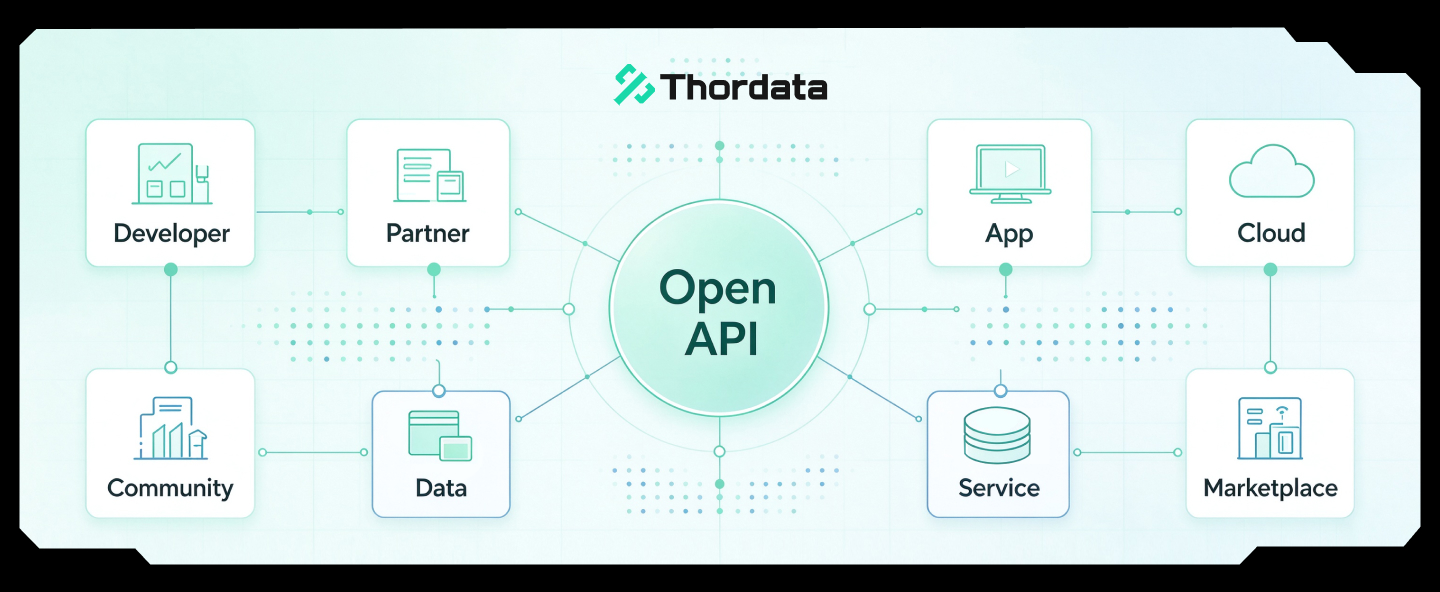
A Practical Guide to Scaling Video Data Scraping
Scraping video data at scale s ...
Xyla Huxley
2026-10-27